Super Boink | Tonde Burin | IBC-13 90s English-Dubbed Anime

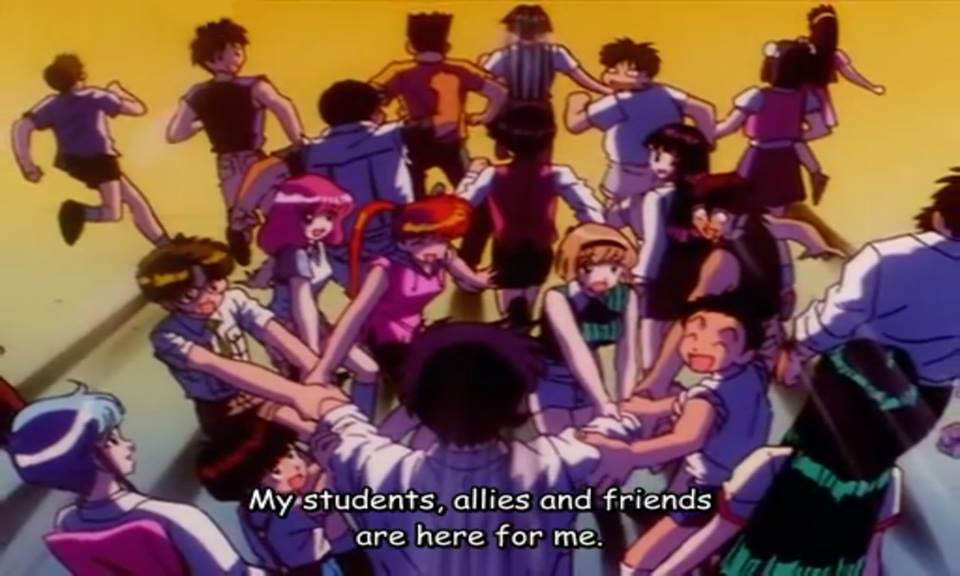
Super Boink was an English-dubbed anime which aired in the Intercontinental Broadcasting Company (IBC-13) primetime block during the late 90s in the Philippines. Super Boink was originally titled Tonde Burin that originally run from September 3, 1994 to August 26, 1995 on MBS by Nippon Animation studio with a total of 51 episodes. Tonde Burin was first a shojo manga written by Taeko Ikeda and published by Shogakukan in manga magazine Ciao that originally run from October 1994 to September 1995 with a total of 3 volumes. Let's go down memory lane and remember this magical girl parody simply titled super Boink.

Super Boink Tonde Burin 90s English-Dubbed Anime Retro Pilipinas Feature

Super Boink - The Story
About Tonde Burin

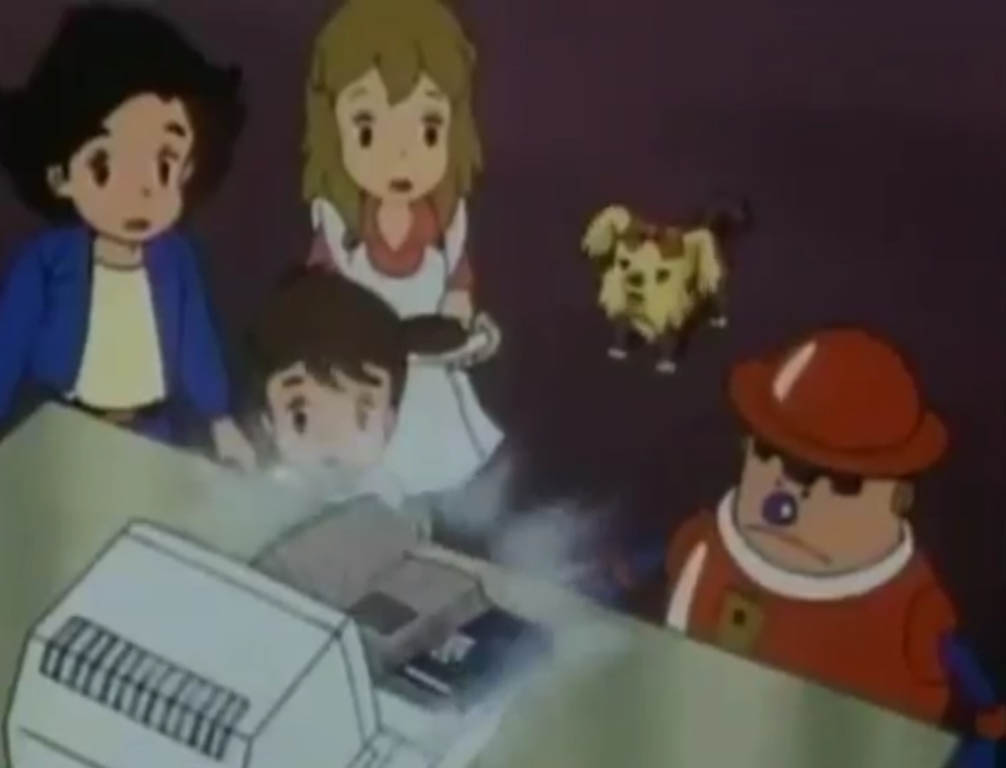
Karin Kokubu (Coleen in the Philippine-dubbed version) is late for school one day when she comes across an apparently injured yellow pig. It turns out the pig wasn't injured but just hungry, and he gets back his health when he eats Karin's apple. When Karin gets to her school called St. Ringo School, she discovers that the pig has stowed away in her backpack which causes her more trouble.

Super Boink 90s IBC 13 Anime Tonde Burin Karin Kokubu is Coleen in the Philippine version of Super Pig

Later, she meets the pig again and finds out he can talk and fly. The pig gives her a "Dream Tonpact" which she opens and a pig snout appears from it and attaches itself to her nose! She finds the pig again who explains that he is actually Prince Tonrariano the 3rd (Iggy Pig) of the apple-shaped planet Buringo (Oinko). He tells her how she can transform: by saying "Ba Bi Bu Be Burin!" she transforms into a superpowered pink piglet called Tonde Burin (Super Pig in the US, Super Boink in the Philippines). This is not something Karin is happy about at all as she'd rather transform into a magical girl heroine like her idol the henshin hero tokusatsu character "Cutey Chao" (who is possibly a reference to Cutie Honey). Tonrariāno (who she calls Ton-chan) tells her if she can collect 108 pearls by doing good deeds as Burin, she can do so. The pearl collection operates on karma meaning if Burin abuses her powers, she will lose pearls.

Whenever someone is in danger, Karin would become Tonde Burin to thwart the crisis and even use her new abilities to help other people in need.

Source: Wikipedia


Super Boink Opening Theme
Tonde Burin Series Intro

Super Boink Opening Theme

Super Boink IntroLove is Uncool (愛はカッコわるい Ai wa Kakko Warui)Lyricist: Manami Tōno Composer: Tsugumi Kataoka Arranger: Tsugumi Kataoka Singers: ParquetsCheck out our blog about Super Boink for more information and discussion:http://retropilipinas.blogspot.com/2015/11/super-boink-tonde-burin-ibc-13-90s.html- - - - -Retro Pilipinas does not claim any ownership of the classic television shows archived and featured in the blog. All the shows featured here are mostly copyrighted materials which all respectfully belonged to their rightful owners, personnel, company or organization. The blog is not affiliated with any of the company that rightfully owns the source material. The blog only aims to educate and feed the nostalgia of the Filipino netizens and those of other nationalities that are looking for the past shows that brings nostalgia.

Posted by Retro Pilipinas on Friday, November 20, 2015

Love is Uncool (愛はカッコわるい Ai wa Kakko Warui)
Lyricist: Manami Tōno
Composer: Tsugumi Kataoka
Arranger: Tsugumi Kataoka
Singers: Parquets

Super Boink Closing Theme
Tonde Burin Series Outro

Super Boink Closing Theme

Super Boink OutroBurin à la mode (ぶーりん あ·ら·もーど Būrin a ra mōdo)Lyricist: Manami Tōno Composer: Tsugumi Kataoka Arranger: Tsugumi Kataoka Singers: ParquetsCheck out our blog about Super Boink for more information and discussion:http://retropilipinas.blogspot.com/2015/11/super-boink-tonde-burin-ibc-13-90s.html- - - - -Retro Pilipinas does not claim any ownership of the classic television shows archived and featured in the blog. All the shows featured here are mostly copyrighted materials which all respectfully belonged to their rightful owners, personnel, company or organization. The blog is not affiliated with any of the company that rightfully owns the source material. The blog only aims to educate and feed the nostalgia of the Filipino netizens and those of other nationalities that are looking for the past shows that brings nostalgia.

Posted by Retro Pilipinas on Friday, November 20, 2015

Burin à la mode (ぶーりん あ·ら·もーど Būrin a ra mōdo)
Lyricist: Manami Tōno
Composer: Tsugumi Kataoka
Arranger: Tsugumi Kataoka
Singers: Parquets
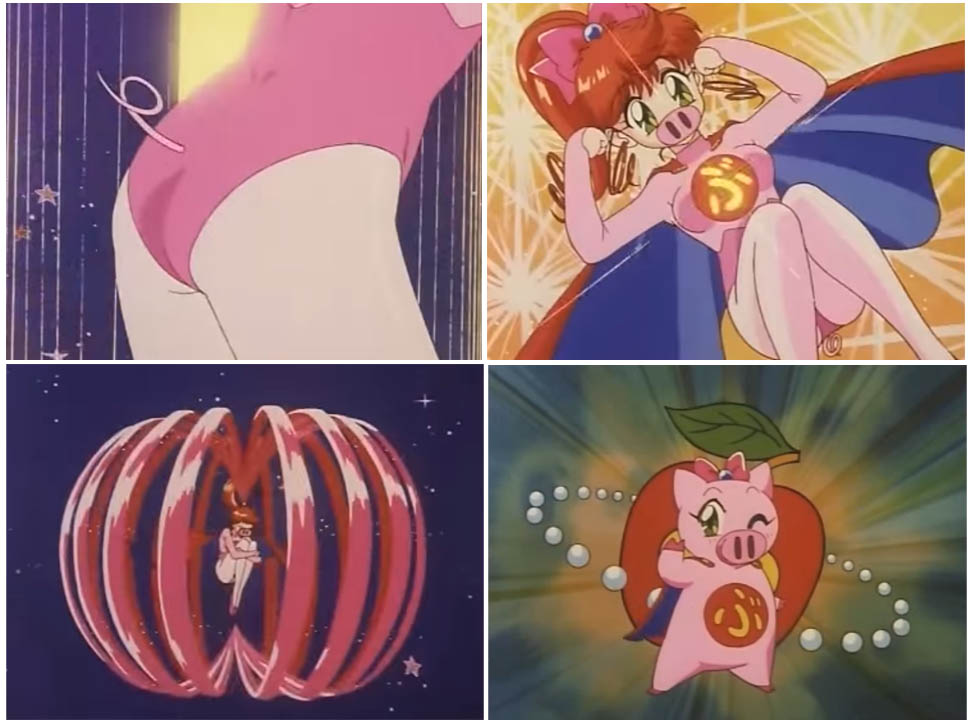


Super Boink Tonde Burin Magical Girl Transformation into a super Pig Japanese anime Magical Girl Parody 90s

What is there to say about Super Boink? Well, it sure was a fun series; that is for certain. This made me wonder and just humor me here. What if you are given the chance to be a powerful super hero but you are in a form that you least desired, like let's say a human fecal matter which doesn't only look bad, but smell bad as well; would you accept it? Well in Super Boink's case that is the case. If my memory serves me correct this was shown around the time that Yaiba was also being shown or maybe not; feel free to correct me in the comments section. What I do remember is Coleen's magical transformation as the beloved flabby heroine of justice Super Boink which you can see here:


I still remember the initially reluctant Coleen when she first became Super Boink and how she later learned to come to terms to it. Basically that she was given the incentive or a promise that she will become a beautiful Magical Girl (example Sailor Moon) once she have collected enough pearls as Super Boink or at least that is how I remembered it. I would probably revisit the series just like what I did with Hell Teacher Nube. Hopefully all episodes are available online for some nostalgic binge watching and anime marathon. I also remember doing sketches of Super Boink since it is not that challenging to do a sketch of heras a 90s kid; the same as what I did with Sunny Pig which we'll soon also revisit here at Retro Pilipinas.

Super Boink 90s IBC-13 English-Dubbed nostalgic Anime  title card

How about you guys? What are your fondest memories of this magical girl parody? Do you have any particular favorite like episode(s), characters, and merchandise related to the show? Share your thoughts and experiences about Super Boink in the comments section below:
Read More

Superbook in the Philippines | 90s English-Dubbed Children's Show

Superbook was an English-dubbed animated show for children which aired in the Philippines back in the late 90s about bible stories. Superbook, originally entitled "Animated Parent and Child Theatre" in Japan was initially produced by Tatsunoko Productions in Japan in conjunction with the Christian Broadcasting Network in the United States that originally run from October 1, 1981 to March 29, 1982 on TV Tokyo (in Japan) and on CBN (United States) with a total of 52 episodes; two seeming different season (or series) in terms of the iteration of the story. Let's go down memory lane and remember the original English-dubbed Superbook run in Philippine Television.

Superbook English-Dubbed Religious Children Show 90's  Retro Pilipinas Feature

Superbook - The Story
About Superbook

The first series (season) of Superbook began at the home of a young boy named Christopher Peeper (Sho Azuka in Japanese) who discovers the "Superbook" (Time/Space Travel Book) Bible that speaks and sends him, his friend Joy (Azusa Yamato), and his clockwork toy robot Gizmo (Zenmaijikake) back in time to the early events of the Old Testament. Gizmo can walk and talk, but only for the duration of the adventure and needs to be wound up regularly in order to function. This first series of Superbook featured stories mainly from the Old Testament of the Hebrew Scriptures, although a few episodes dealt with the life and ministry of Jesus Christ.

Superbook original 80's and 90's anime religious show featuring Christopher Chris Peeper, Joy, Uriah Peeper, Gizmo, and Ruffles Superbook classic

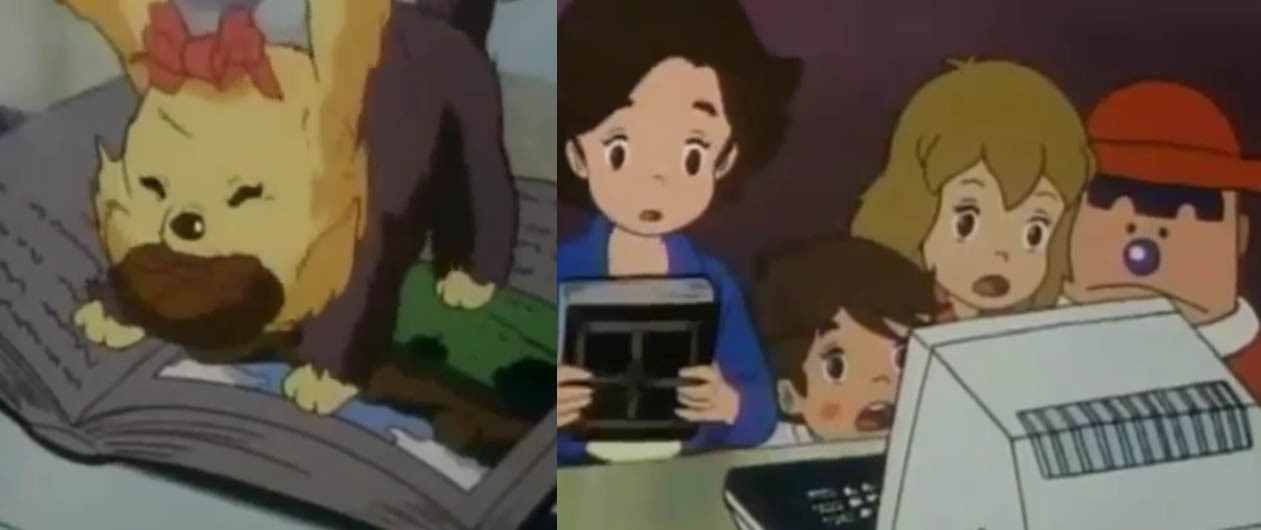
In the second series of Superbook II (episode 27 onwards), which took place two years after the first series, the book fell onto a computer keyboard, giving anybody the ability to see into the past from Christopher's home via the monitor. Ruffles, Chris' dog, managed to get lost in time, prompting Gizmo and Chris' cousin Uriah (or "Uri" for short; Hisashi in the original Japanese) to search for her. Chris and Joy kept watch and control of the computer from the present. The older children also had a hard time trying to keep what happened a secret from Chris's parents. Gizmo appeared as a functioning robot in the present day rather than as a toy (first series) in this (second) series, however Gizmo still needs to be wound up on a regular basis. Gizmo also had a built in computer keyboard and a monitor in his chest in order for Gizmo and Uri to stay in contact with Chris and Joy in the present day as well as transporting to other places in time or returning to the present. The Second Season of Superbook focused solely on Old Testament stories; covering some stories featured in Season One (for example, the stories of Abraham, Joseph and King David) in more detail, while also covering and featuring some stories not included in the first series (i.e. the Fall of Sodom and Gomorrah).

Superbook Series 2 US Opening Theme
Superbook Season 2 US Series Intro


Superbook Series 1 US Closing Theme
Superbook Season 1 US Series Outro


Superbook Series 2 US Opening Theme
Superbook Season 2 US Series Intro


What can be said about Superbook's run in Philippine television back in the late 90s? Well, looking back at it now it sure brings a lot of nostalgia specially that US opening and closing theme. They are those that will keep ringing in your head when you feel like being nostalgic about it. The concept of kids traveling through time to learn various life lessons and learning about "historical" characters seems to be a great formula; ABS-CBN's Bayani uses this same formula as well. If only there is a computer that allows one be "magically" transported to the world found in the book that falls on it and not be harmed by "some" violent tendencies also featured in that book. What if the characters of Superbook was in the actual Sodom and Gomorrah and while it was being "purged", Superbook would probably be not that too kid-friendly. Oh wait a minute, I remember the story of "Joshua and Walls of Jericho" (also "The Battle of Jericho") which was also featured in Superbook. So that probably answered my question, as long as violence is kept from the eyes of the main protagonists and the young audience, it is all good; but I digress.

Superbook original Japanese 80's anime and Christian Broadcasting Network's English-Dubbed Religious Show for Children in its original Philippine television run in the late 90's


In a majorly Christian (or Catholic) country like the Philippines, the English-dubbed Superbook animated series blends so perfectly well. Who knew that most of us kids growing up during the 90s were already being indoctrinated in teachings of Christianity specifically Old Testament Bible stories through this wonderful anime about "time travel". Now that we are all grown up and have wider views with the world now, we can all see what Superbook is really IS now.

Superbook title card english-dubbed religious show for kids Filipino tv philippine television run in the late 90's

How about you guys? What are your fondest memories with Superbook? Share your thoughts and opinion about the original English-dubbed Superbook Philippine television run in the comments section below.
Read More

Janperson | Tokusou Robo Janperson | ABC-5 90s Filipino-Dubbed Tokusatsu

Tokusou Robo Janperson or simply known as Janperson was a Filipino-dubbed super hero kids show that aired in ABC-5 (now known as TV5) around the late 90s (or early 2000). Janperson had an original title of Tokusou Robo Janperson (特捜ロボ ジャンパーソン Tokusō Robo Janpāson), was a tokusatsu series and 1993 installment in Toei Company Limited's Metal Hero Series; Tokusou Robo Janperson was the 12th in the Metal Hero series. Janperson, produced by Toei originally aired in TV Asahi from January 31, 1993 to January 23, 1994 with a total of 50 episodes with a 30-minute running time. The opening catchphrase of the series is "Janperson Fights For Justice" which has a similar tone and feel to Mobile Cop Jiban. Let's go down memory lane and remember Tokusou Robo Janperson.

Tokusou Robo Janperson Retro Pilipinas Feature ABC-5 90s Filipino-dubbed Tokusatsu

Janperson - The Story
About Tokusou Robo Janperson

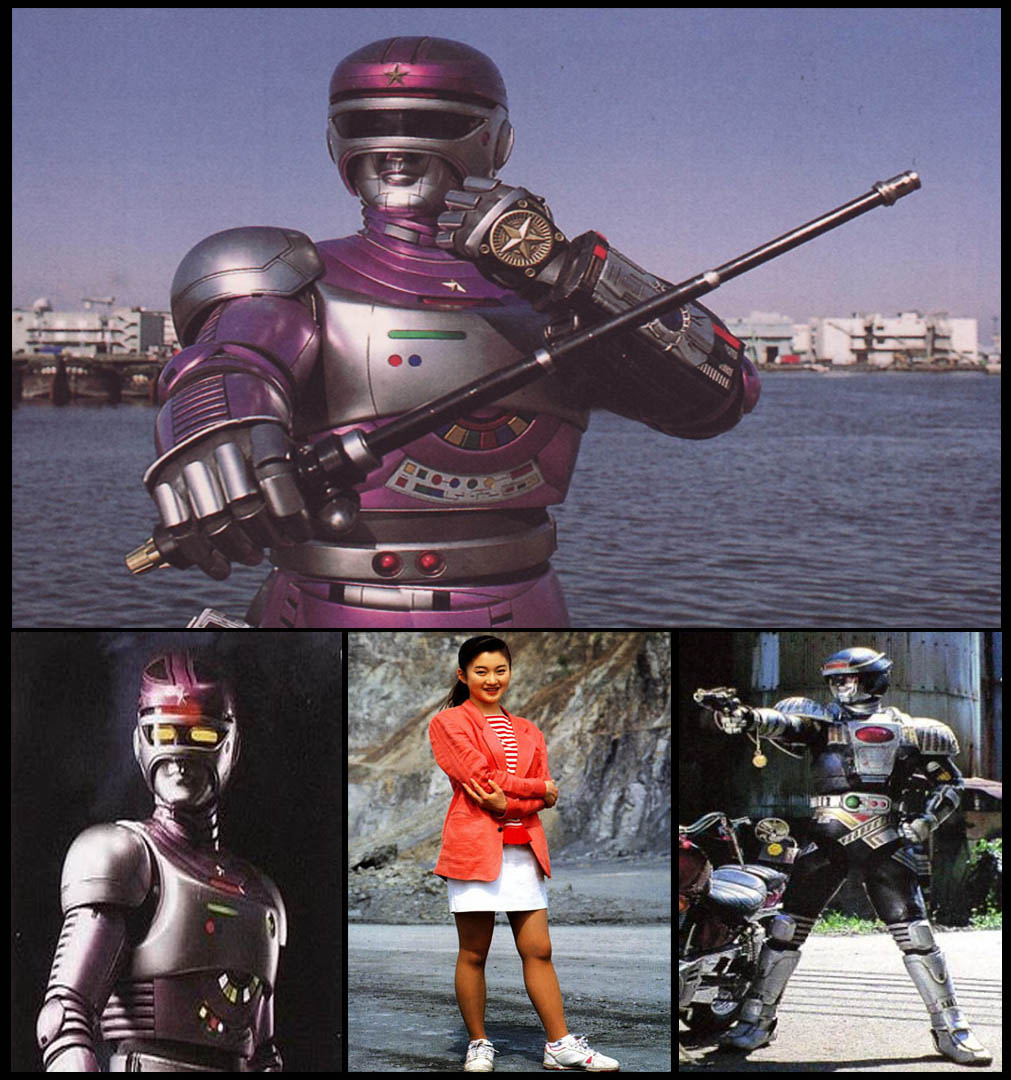
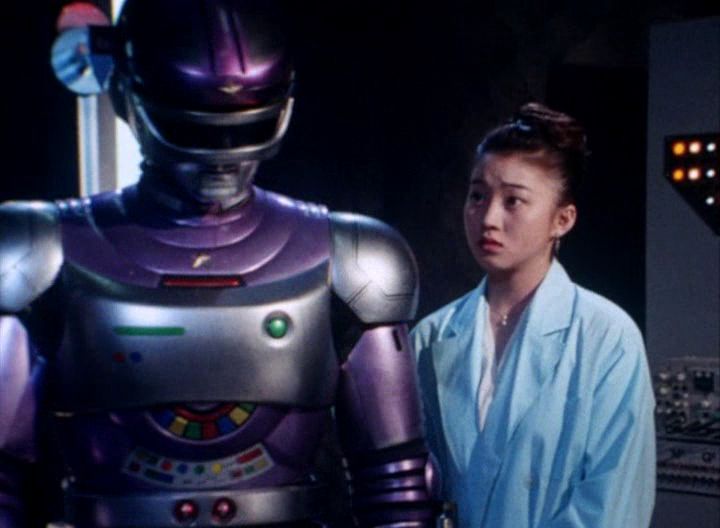
Tokusou Robo Janperson revolved around Janperson, a purple & silver android robot detective. He was once a prototype combat robot driven berserk by the command to "Destroy Evil," that led to his deactivation and was later stripped of most weaponry and reprogrammed with human emotions by the young female scientist Kaoru Saegusa.

Tokusou Robo Janperson Janperson and Kaoru Saegusa

Janperson patrols the streets of Tokyo and fights against three different underworld organizations who used super technology to subjugate the masses. Unlike most Metal Heroes with a monster-of-the-week format, monsters were rarely shown and most of the villains are criminals akin to more television police dramas than tokusatsu or metal hero.

Janperson Opening Theme
Tokusou Robo Janperson Series Intro


"Tokusō Robo Janperson"
Lyrics by Keisuke Yamakawa
Composition by Keisuke Hama
Arrangement by Kei Wakakusa
Artist: Susumu Ōya

Janperson Closing Theme
Tokusou Robo Janperson Series Outro


"Asayake no Lullaby"
Lyrics and composition by Keisuke Yamakawa
Composition by Keisuke Hama
Arrangement by Kei Wakakusa
Artist: Susumu Ōya

Tokusou Robo Janperson using Janperson Cards in Tagalized Metal Hero Series shown in the ABC-5 Philippines


What can be said about Janperson's run on ABC-5 back in the late 90s. Janperson was that cool robot detective series shown every Sunday afternoon that made Filipino kids love robotic or android heroes even more. I have to give it to Japan for making quality kids show with a more darker and serious tone. You know some boys don't want to be treated as a child, and Janperson was like that. Recalling it now, I remember it being serious but still retained that tokusatsu charm from prior series shown here. Although it didn't have that many kaijins or monsters for each episode, it made up for good character development and more sinister android villains. It was a Sunday afternoon (to evening) tokusatsu that treated kids with respect (as how I romanticized it).

Tokusou Robo Janperson Janperson and Guy Gibson

What other things can be remembered about the show? Well, Janperson has this signature gimmick of throwing these (business) cards which by the way is called "Janperson Cards". Janperson also has a wide array of weapons at his disposal. One can really notice that it draws inspiration from RoboCop from his movement and how he operated (where weapons are drew from) as both are robot police (in Janperson's case, a detective) implementing justice in service of mankind. Of course, it along the series, Janperson acquires various upgrade which is always a good way to make it appear to us that besides the drama, Janperson is also growing and improving into a more badass android. Later on, he acquires a new ally which evens up the playing field since enemies tend to gang up on him with overwhelming force. Maybe I can re-watch it one of these days if it still holds up to today's standards or this was all just nostalgia.

Tokusou Robo Janperson Title Card ABC-5 Filipino-dubbed metal hero tokusatsu series tagalized tv5 Janperson Philippines

How about you guys, do you have any memorable moments, episodes, experiences, or merchandise from this nostalgic Metal Hero show? Share your thoughts about Tokusou Robo Janperson in the comments section below:
Read More

Sineskwela | An ABS-CBN 90s Educational Show for Children Retrospective

Sineskwela was Filipino educational television show for children that aired in ABS-CBN during the 90s. Sineskwela which was alternatively known as "School on Air", was produced by ABS-CBN Foundation with the Science Education Institute of the Department of Science and Technology (DOST) and the Department of Education (DepEd). Let's go down memory lane with this iconic educational show for kids called Sineskwela. Tayo na sa Sineskwela...

Sineskwela 90s ABS-CBN Filipino Educational Show for Children Retro Pilipinas Feature

Sineskwela - The Show
About Sineskwela

Sineskwela presented and explained otherwise complicated principles and concepts of science and technology through dramatization and visual effects. It also demonstrated the practical application of science in familiar life situations, thereby allowing the information to be easily understood and appreciated by its young viewers.

Sineskwela was a curriculum-based show and catered to public elementary students from Grade 2 to 6. The DepEd mandated that it be shown in the science class of each grade level at least once a week. Five episodes--one for each of the five grade levels--were shown every week. Each episode presented different problems and situations in which the characters had a chance to explore the world of science. The characters would gather information not just through library research but also through laboratory experiments, field investigations, on-the-scene reporting, and use of visual effects. An example would be the show's characters, Anatom and Agatom, shrinking to the size of molecules and entering biological organisms such as a flower or a dog. In these mini-adventures, they would encounter several personifications of bacteria, pollen, and other possible objects who explain the related scientific theories and phenomena.

Sineskwela Cast Christine Bersola playing as the character Anatom, Brennan Espartinez as Agatom, Sheena Ramos as Palikpik, Maan Munsayac as Kulitsap, Roobak Valle as Ugatpuno, Frederico Gonzales as Bok, Giselle Sanchez as Ate Gisel

The Sineskwela cast included Christine Bersola playing as the character Anatom, Brennan Espartinez as Agatom, Sheena Ramos as Palikpik, Maan Munsayac as Kulitsap, Roobak Valle as Ugatpuno, Frederico Gonzales as Bok, Giselle Sanchez as Ate Giselle, and Winnie Cordero as Ate Winnie.

Source: Sineskwela on WikiPilipinas

Sineskwela Opening Theme
Sineskwela Series Intro


Sineskwela Theme Song
Composed by: Ryan Cayabyab

Bawat bata may tanong,
Ba't ganito, bat gano'n?
Hayaang buksan ang isipan
Sa science o agham...

Tayo na sa Sineskwela
Tuklasin natin ang siyensya
Buksan ang pag-iisip
Tayo'y likas na scientist!

Tayo na sa Sineskwela
Tuklasin natin ang siyensya
Kinabukasan ng ating bayan
Siguradong makakamtan!

Sa daigdig ng agham
Tuklasin ang kaalaman
Halina't lumipad
Sa daigdig ng isipan

Tayo na sa Sineskwela
Tuklasin natin ang siyensya
Kinabukasan ng ating bayan
Siguradong makakamtan

Kaya't habang maaga
Mag-aral ng siyensya
Sa teknolohiya,
Ang buhay ay gaganda... ahhhh...

Tayo na sa Sineskwela
Tuklasin natin ang siyensya
Buksan ang pag-iisip
Tayo'y likas na scientist

Tayo na sa Sineskwela
Tuklasin natin ang siyensya
Kinabukasan ng ating bayan
Si-gu-ra-dong maka-kamtaaaaaan...

Sineskwela 90s Nostalgic Tayo Na Sa Sineskwela Jingle 90s Nostalgic Edutainment Program for 90s Kids Retro Pilipinas


What is there to say about Sineskwela? Actually quite a lot. Well, that is for us who grew up watching Sineskwela back in the 90s. Sineskwela was a good educational show. It piqued the curiosity and interest of grade school students in Science and Technology. It re-define how Science should be taught. That Science can be learned and presented in a fun and entertaining way and not as a dull and boring cold textbook type of one. This is probably one of the factor, why I considered Science as one of my favorite subjects back in grade school, well except for the tedious memorization during recitations and exams hahaha. It featured a good format which seems to be lacking with most contemporary educational programming (2015 - as of the time of this writing) that major television networks are coming up with nowadays. Although Sineskwela did use various stock footage from other foreign Science shows way back in the days (maybe for the lack of other resource), the show was still able to properly explain science to kids.


Some episodes of Sineskwela have been uploaded on Youtube for you to have an idea of what the show looks and feels like. Simply search "sineskwela" on Youtube.

Some Sineskwela episodes that truly left a mark with me are the episode dedicated to photosynthesis with discussion of chlorophyll; and water treatment process before it becomes safe and drinkable with a jingle that describes the process of sedimentation, filtration, boiling, and distillation. Sineskwela, just like Beakman's World were a groundbreaking edutainment shows for children that will forever be in the hearts of those who grew up watching them and has a penchant for Science and learning.

Sineskwela 90s Educational Show for Children Title Card  that aired in ABS-CBN during the 90s

How about you guys? What are your fondest and favorite memories, episodes, characters, and topics covered in the phenomenal ABS-CBN 90s Science-theme edutainment kids show? Have you seen newer contemporary Science educational programs that has the same feel and vibe to Sineskwela? Do these new shows work or have done a better work that what most of us grew up with Sineskwela? Share your thoughts and opinion about Sineskwela in the comments section below:
Read More

Hell Teacher Nube | Jigoku Sensei Nube | A GMA 90s Filipino-Dubbed Anime Retrospective

Hell Teacher Nube was a Filipino-dubbed anime which aired in GMA network's prime time television block during the late 90s in the Philippines. Hell Teacher Nube was originally titled Jigoku Sensei Nube that originally run from April 13, 1996 to August 7, 1997 on TV Asahi with a total of 49 episodes. Jigoku Sensei nube was first a manga written by Makura Shō and illustrated by Takeshi Okano published by Shueisha for the Weekly Shōnen Jump Magazine that originally run from September 1993 – May 1999 with 31 volumes. Let's go down memory lane and remember Hell Teacher Nube.

Hell Teacher Nube GMA Network 90s Filipino-Dubbed Anime in Philippines Retro Pilipinas Feature

Hell Teacher Nube - The Story
Hell Teacher Nube Series Plot

Nueno Daisuke, a new teacher moving into Domori Elementary School. Nueno Daisuke, often simply called Nube is an both a warm and caring professor and a yokai "expert" and exorcist. Trouble seems to follow Nube as he must learn to contend with being a guiding and inspirational figure to his students and his colleagues and fend off any yokai that dare harms them.

Jigoku Sensei Nube Nueno Meisuke 5-3 class teacher and yokai exorcist

Nūbē is usually forced to action when various yokai threatens and endangers his beloved students. Nube often use the power of the Demon's Hand (Oni no Te) to assist in solving the problem for the particular episode. The series follows an episodic format featuring different monster or yokai each episode which helps flesh out each characters in the show.

Hell Teacher Nube Opening Theme
Jigoku Sensei Nube Series Intro


"Baribari Saikyou No. 1" (The No. 1 Greatest Hard-Worker)
Performed by Feel So Bad

Hell Teacher Nube Closing Theme
Jigoku Sensei Nube Series Outro


"Mienai Chikara ~Invisible One" (Unseen Power ~Invisible One)
Performed by B'z

Nueno Meisuke in Jigoku Sensei Nube of Domori Elementary School

What is there to say about Hell Teacher Nube? Well, Hell Teacher Nube was one of those nostalgic anime that indirectly educated 90s kids (like myself that time) life lessons. It highlighted and taught about the value of friendship, respect, competitiveness, and valuing what matters most in life. Looking at it now, I personally find anime (thru this series) very fascinating as how effective it is as a form of entertainment and instrumental to shaping the minds, values, and morals of the youth. It has the perfect mix of humor (sometimes "naughty" humor) and seriousness which gives respect to the intellectual capacity of kids. I believe that it is better to not dumb down various shows in order to educate the children and it is up to parents to help and guide them through it. Hell Teacher Nube was also awesome and action packed thanks to the monsters featured each week which are usually "subdued" by the demon (oni) sealed in his left hand.

Domori Elementary School of Class 5-3 Students Under Nueno Meisuke - Hiroshi Tateno, Kyoko Inaba, Miki Hosokawa, Katsuya Kimura, Makoto Kurita

As a kid growing up in the 90s, there wasn't a single episode that I dare miss in Hell Teacher Nube's GMA Network television ran back in the late 90s or early 2000. Feel free to correct me about this if you know exactly it's original run here in the Philippines. Hell Teacher Nube was one of the five anime which was put into the primetime block (Mondays to Fridays at 7:00 or 7:30 PM) back in the days. A very bold and admirable thing by a television network when you look at it now. Back then, I could say that it was better that GMA took its younger audience seriously and featured anime first before getting on with the usual adult stuff like soap operas or movies. Looking at how television now, I somewhat miss those days. Now all kids have are those cliche'd local telenovelas that dumbs them down forcing morality, subliminally teaching them promiscuity not backed up by good sex education, and be "drama" kinds and queens. But I am digressing, we'll leave the state of television and social commentary for another day.

Favorite Jigoku Sensei Nube is  episode 47 about Nueno Meisuke against the god  yokai of poverty and friendship

Hell Teacher Nube episode 47 about Teacher Nube versus the god of poverty  and having friends to be always there for him


I remember doing sketches featuring Hell Teacher Nube characters in my notebook. Just recently I was able to relive what made it click as I re-watch Hell Teacher Nube episodes online (you can check out the series on the link there). There is also a Hell Teacher Nube Live action series available online if you are also interested. After re-watching the anime series, one particular episode stood out to me. It was Jigoku Sensei Nube episode 47 which was entitled "Strongest! Greatest! The final enemy! And his name is...God of Poverty!!" I will not spoil it for you but I highly recommend that you see it.

Hell Teacher Nube Title Card Filipino Dubbed Japanese Anime Jigoku Sensei Nube Aired in the Philippines

How about you guys? Did you remember how Hell Teacher Nube was like back in the days? Did you like the series or have other anime's in that GMA Anime Primtime block that you prefer (Monster Ranger, Master of Mosquiton, Vission of Escaflowne, etc.)? do you have any particular favorite episode, characters, yokai, merchandise, experiences and memories related to the show? Share your thoughts and experiences about Hell Teacher Nube in the comments section below:
Read More

Gumby | An ABC-5 90s Claymation Kid Show Retrospective

Gumby was an American claymation (clay animation) show for kids which aired in ABC-5 (Now TV5) in the Philippines back in the 90s. Gumby centered on a green clay humanoid character created and modeled by Art Clokey. The first Gumby show initially ran from 1956 to 1968 and later making a comeback with Gumby Adventures back in 1988 introducing more characters (See opening themes below). Gumby became well known as an example of stop motion clay animation and an influential cultural icon, spawning many tributes, parodies, and merchandising. Philippine television company ABC-5 was first to brought this to Philippine television making 90s kid like myself enjoy the 1950's classic. Let's go down memory lane with Gumby.

Gumby aired in ABC-5 Philippines 90s Retro Pilipinas Feature

Gumby - The Show
About Gumby

Remembering Gumby with friends Pokey, Prickle, Goo, and Denali in Gumby Adventures in 1988

Gumby follows the adventures of titular character along with his sidekick is Pokey, a talking orange (clay) pony through different environments and at times even in history. Gumby's nemeses are the Blockheads who are a pair of humanoid red-colored figures with cube-shaped heads wreaking mischief and havoc. Other characters in the Gumby series includes Prickle, a yellow dinosaur who sometimes styles himself as a detective ala Sherlock Holmes; Goo, a flying blue mermaid; Gumby's dog Nopey, whose entire vocabulary is the word "nope"; a mastodon friend called Denali; Gumby's sister Minga; and lastly Gumby's parents, Gumbo and Gumba.

Gumby Opening Theme
Gumby Series Intro


Gumby!

He was once a little green slab of clay. Gumby!
You should see what Gumby can do today. Gumby!
He can walk into any book, with his pony pal Pokey, too.
If you've got a heart then Gumby's a part of you.

Gumby Adventures Opening Theme
Gumby Adventures Series Intro


What can we say about Gumby? Well, growing up in the 90s, I was able to somewhat "enjoy" the adventures of Gumby back when it aired on ABC-5. I didn't know how to exactly feel back then, I knew as a kid it was entertaining but there is somehow that strange feel to it. Probably because of the unique stop-motion clay animation that the show primarily used; a breathe of fresh air from the usual studio-drawn and animation of cartoons. In a way it was weird because you can very well be recreate Gumby and his friends in real life; in your own living room with toy-clay which was very popular back then both at home and in school.

The weirdness and the joy of the classic 1950's Gumby claymation Gumby stop-motion clay animation

Ah "clays" that easily maneuverable creative play thing. Brings out the creative side of you. I remember purchasing my first clay back in grade school from a merchant making his rounds in each class room. I remember the clay having a "detergent" bar presentation after it slid off that box. Sadly now we have mobile device as play things. Gone are the days where you can be creative with clays. Old man x 90s kid ranting over hahaha. It is quite odd to see Gumby, his friends, and even his rivals the Blockheads get squashed and still live through the next day. Why am I asking this. It is a kids show! Not that different on what most kids animated shows did (Looney Tunes, Popeye, Hanna Barbera Cartoons, etc).

Gumby Title Card An original claymation show by Art Clokey televised in the Philippines back in 90s  in ABC-5 now TV5

How about you guys? What are your fondest memories of the show? Any favorite Gumby characters, episodes, merchandise, or even experience that you relate to the show? Share your thoughts about the beloved Gumby in the comments section below:
Read More

Koseidon | Dinosaur Corps Koseidon | ABS-CBN 90s Filipino-Dubbed Tokusatsu Show

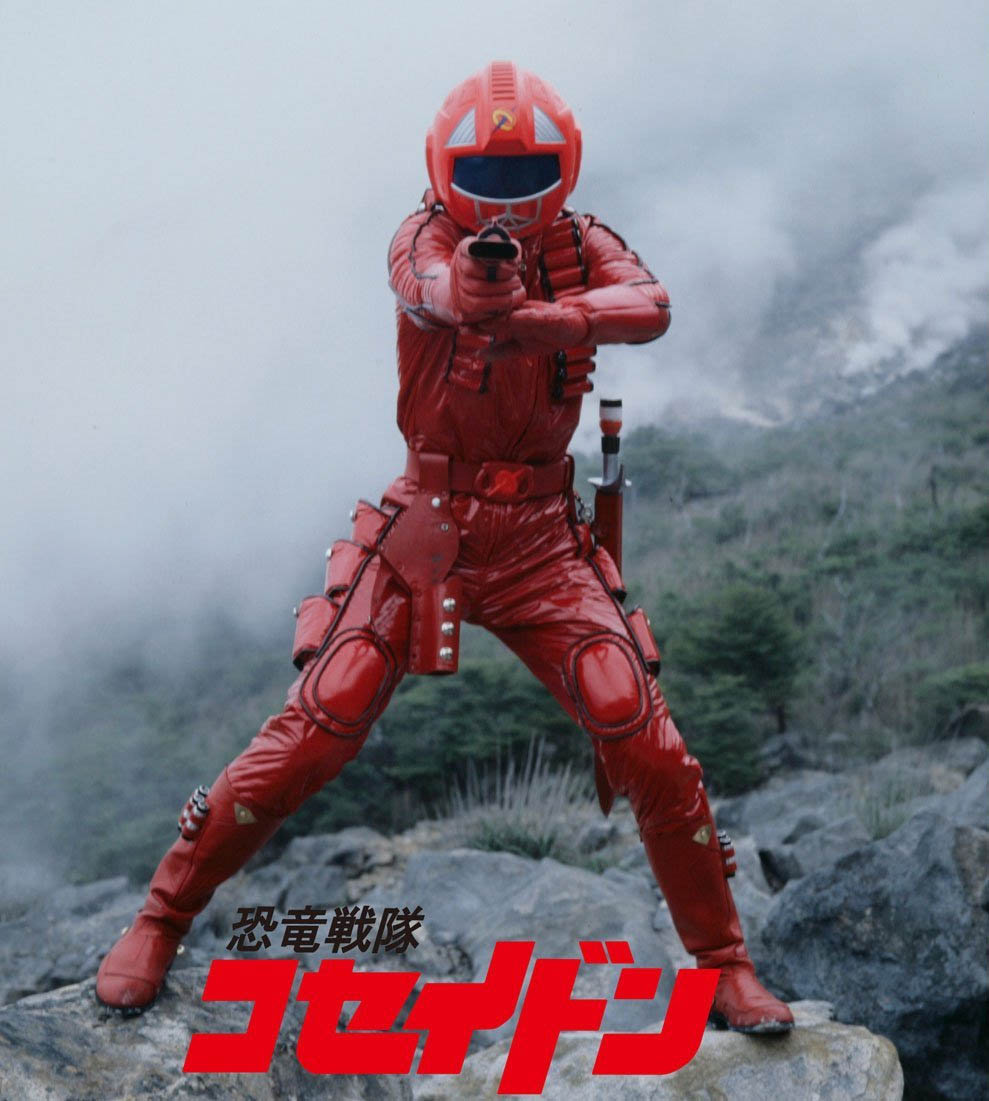
Koseidon was a Filipino-dubbed Japanese superhero tokusatsu show that aired every Sundays in ABS-CBN during the 90s (1991 and later 1995). Koseidon was originally Dinosaur Corps Koseidon (恐竜戦隊コセイドン Kyōryū Sentai Koseidon), a Japanese Tokusatsu TV series produced by Tsuburaya Productions in two seasons starting from 1978 with a total of 52 episodes. Let's take a look back with the time-traveling red superhero who is simply called as Koseidon and his team.

Dinosaur Corps Koseidon ABS-CBN 90s Filipino-dubbed Tokusatsu Retro Pilipinas Feature

Dinosaur Corps Koseidon - The Story
About Koseidon

Dinosaur Corps Koseidon tells the adventures of Go, a superhero leading a time-travelling patrol to defeat aliens who have altered the course of time after landing on a prehistoric Earth. Dinosor Corps Koseidon and the leader Go's enemies include dinosaurs which are telepathically controlled by the aliens. Koseidon has the ability to stop time for 30 seconds to finish off the enmies.

Koseidon Opening and Closing Theme
Dinosaur Corps Koseidon Series Intro and Outro


What is there to say about Dinosaur Corps Koseidon? Well first off, I'll drop the Dinosaur Corps and simply refer to the show as Koseidon. In my research, I stumbled upon the information that Koseidon aired twice in ABS-CBN; first being in 1991 and later in 1995. I actually misheard this series protagonist's name and called him "Poseidon", substituting "P" with "K". I later found out that Poseidon was the Olympian deity (the God of the Sea) and not the red sentai-like ranger, Koseidon. Little know fact, Koseidon in its original Japanese text translates to "Kyōryū Sentai Koseidon", but Koseidon is not a sentai; specifically not a part of the "Super Sentai" series. Well initially "sentai" means a military unit and may be literally translated as "squadron", "task force", "group" or "wing" (as defined by Wikipedia), so since Koseidon is more of the task force assigned to protect time from a malevolent alien race, then it really did deserve the "sentai" in its title. It is only later that the word "sentai" has been adapted into a group of (usually) five members along with their mecha(s); later adding the word "super" in the term "Super Sentai" to differentiate this kind of tokusatsu.

Go as Koseidon in Dinosaur Corps Koseidon aired in ABS CBN Philippines

High quality Dinosaur Corps Koseidon image can be seen circulating online since this nostalgic show was released on DVD. You can simply go check various online stores if you are interested in reliving this series.


Going back to reminiscing about Koseidon. I think, I was already was a big fan of various tokusatsu shows like Ultraman, MagmaMan, and MachineMan; which is why I always associate Koseidon as an individual and not as a military unit. Well, I was a 90s kid so I was excused to believe anything I want. My fondest recollection is Go being fired in this cannon where he eventually transforms (henshins) into the "time warrior" Koseidon (the individual). I've seen a few clips of Koseidon online and I can say it didn't really stood up well to the test of time (the irony), as I found myself laughing at the premise of time-travel and its possible (butterfly-effect) complications and how dark "old" Japanese kids show can get. I listened and watched the opening and closing theme for Koseidon again which brought some vague memories of it. Memories of Koseidon being launched off... "Fightus Bomber One, take off... Fightus Bomber Two, Take off..." I don't even know if "Fightus" is even what they were saying. This is coming from a 90s kid who though Koseidon's name was spelled and pronounced as Poseidon.

Dinosaur Corps Koseidon title card Filipino-dubbed Tokusatsu show that aired in ABS-CBN in the 90s

How about you guys? Do you still remember this Filipino-dubbed tokusatsu show that aired in ABS-CBN around the 90s? What is your fondest recollection about the show? Do you have any merchandise, favorite episode, or character in the show? Share us your thoughts and memories about Dinosaur Corps Koseidon in the comments section below:
Read More

Ang TV | An ABS-CBN 90s Youth-Oriented Variety Gag Show Retrospective

Ang TV was a Filipino youth-oriented (kids') gag variety show that aired in ABS-CBN during the 90s. Ang TV originally aired from October 19, 1992 to January 3, 1997 with a 30-minute show format airing on a daily afternoon 4:30 schedule. The show was notable for it's opening line "4:30 Na! Ang TV na!", and gags opening up with "Esmyuskee" (a play of the word "excuse me") and "Nge!" after the delivery of the punchline. Let's go down memory lane Ang TV, the iconic kids gag show that created most of the most notable ABS-CBN stars as of late.

Ang TV ABS-CBN Youth-Oriented Kids Gag Variety Show 90s Retro Pilipinas Feature

Ang TV - The Show
About Ang TV

Ang TV ("The TV") was a kids' "gag-variety" show in the Philippines from ABS-CBN. Prior to 1992, Director Johnny Manahan enlisted a group of multi-talented kids (& pre-teens) to create the first ever gag-variety show for youngsters in the Philippines.

4 30 na ang tv na a look back at ang tv iconic kids gag show retro pilipinas

Most of the country's (ABS-CBN) celebrities can point their humble beginnings to Ang TV. Claudine Barretto, Angelu de Leon, Jolina Magdangal, Rica Peralejo, Paula Peralejo, John Prats, Camille Prats, John Prats, Paolo Contis, Angelica Panganiban, Patrick Garcia, Christopher Roxas, Jan Marini, Victor Neri, Kaye Abad, Roselle Nava, Maybelyn dela Cruz, Katya Santos, Carol Banawa, Baron Geisler, Kristine Hermosa, Anna Larrucea, and Vandolph Quizon are some of the most notable stars that jump-started their careers as mainstays of the variety show. A few adults drops in from time to time to join in the craziness of the show which includes Winnie Cordero, Joji Isla, Giselle Sanchez, and Joy Viado.

Ang TV Opening Theme
Ang TV Series Intro


Ang TV's theme: "Do Wah Diddy Diddy"
Manfred Mann


Luckily there is a clip on Youtube that captures what Ang TV was like back in the days.
Check out this Ang TV show clip:


Ang TV Jolina Magdangal ABS-CBN 90s Look Back Ang TV Lindsay Custodio ABS-CBN 90s Look Back Ang TV Roselle Nava ABS-CBN 90s Look Back Ang TV Lailani Navarro ABS-CBN 90s Look Back


While most GMA Network talents and celebrities have That's Entertainment to thank for, ABS-CBN's have Ang TV. It features some of the most notable celebrities as of the featuring of this blog dedicated to the show (2015). Some of the names have been included on the "About" section of this look back. There are a personal few favorites like Lailani Navarro and Lidsay Custodio for their sheer majestic beauty; and Jolina Magdangal, Roselle Nava, and Carol Banawa for their singing prowess. It is quite entertaining to bee able to see how celebrities grow up and see how their career unfolds in front of the television (or film) screen. I am talking about how such innocent and adorable young looking kids as these kids are will eventually become the next iconic stars of tomorrow in various fields of entertainment (theater, singing, film, television) and outside of it (politics). Of course since I am not big into those kinds of stuf as a 90s Filipino kid back in the days, I remember Ang TV for its very short skits and gags. Well what do you expect for a 30 minute long show with many television commercials in between. Going Bulilit is probably one of its spiritual successor but to most growing up during the 90s this is the definitive kids' gag-variety show.

Ant TV ABS-CBN 90s Youth-Oriented Gag-Variety Show Philippines Title Card

How about you guys? What do you think about this iconic ABS-CBN youth-oriented gag variety show? Do you have any favorite moments on the shows run back in the 90s? Any favorite celebrities making an appearance or a mainstay? What's your fondest memory of the show? Share your thoughts about Ang TV in the comments section below:
Read More

Eto Rangers | Juuni Senshi Bakuretsu Eto Ranger | ABC-5's 90s Filipino Dubbed Anime Retrospective

Eto Rangers was a Filipino dubbed (Japanese) anime which aired in ABC-5 (now TV5) back in the 90s here in the Philippines about the adventure of 12 anthropomorphic Chinese Zodiac characters as they traveled various fairy tale worlds. Eto Rangers was originall titled Juuni Senshi Bakuretsu Eto Ranger (Twelve Warrior Explosive Eto Rangers) that originally run from April 7, 1995 to January 26, 1996 on NHK with a total of 39 episodes. Let's go down memory lane and remember Eto Rangers.

Eto Rangers 90s Anime on ABC-5 Chinese Zodiac Inspired Filipino dub Retro Pilipinas Feature

Eto Rangers - The Story
Juuni Senshi Bakuretsu Eto Ranger Premise

The Eto Rangers anthropomorphic animals representing each of the twelve Chinese Zodiac animals which in Japan is called "Eto" animals, thus the Eto in Eto Rangers. The Eto Rangers are sworn protectors of the Novel Worlds. These Novel Worlds are stories created by human imagination (folktales, legends, fables, and fairy tales) which plays out repeatedly for the goodness of humanity. The Novel worlds are eventually endangered by Nyanma by distorting each stories using the Jarei monsters. Nyanma (represents the forgotten spirit of cats) who was once Chocolat was excluded from being chosen as one of the 12 protectors by being disqualified in the race.

Eto Rangers on ABC-5 Powell, Bukuh, Delacao, Kelly, Paccalachi, Wannie-Wannie, Yabu, Cesley, Mencue, Chickee, Yalung, Vivi

The Eto Rangers which primary comprised of Bakumaru (rat) known as Powell in the Filipino dub version, Hols (Ox) as Bukuh, Gao (tiger) as Delacao, Cream (rabbit) as Kelly, Drago (dragon) as Paccalachi, Nyorori (snake) as Wannie-Wannie, Pakaracchi (horse) as Yabu, Souffle (sheep) as Cesley, Monk (monkey) as Mencue, Tart (rooster) as Chickee, Pochiro (dog) as Yalung, and Urii (pig) as Vivi. The Eto Rangers boards the Space-Time Transmitting Machine Kirinda to repair the Novel Worlds of Mugen which has been altered by a Jarei monster. Missions to each Novel world usually involves up to 5 Eto Rangers chosen by the Kirinda's roulette member selection system. Each Novel world story altered by a Jarei monster turnes it into a different version or sometimes a parody of itself. Since most of the stories in the novel world involves fables or features an animal, Eto Ranger members chosen for such mission usually takes on the role of one of the characters in the tale. Bakumaru (Powell) must use the Genmakyou mirror (shouting "lumabas ka halimaw!") to reveal the evil spirit once enough clues lead to its identity. Kirinda is usually summoned after defeating the Jarei monster to purify the evil spirit with a "laser beam" weapon finally restoring the Novel world story to its original form.

Eto Rangers Opening Theme
Juuni Senshi Bakuretsu Eto Ranger Series Intro


"Mada mada mada"
Sung by Shinmei Yumiko

Eto Rangers Closing Theme
Juuni Senshi Bakuretsu Eto Ranger Series Outro


"Aitakute"
Sung by Kiyomi Kobayashi

ABC-5 Eto Rangers Powell Lumabas Ka Halimaw Retro Pilipinas Filipino Dubbed Anime in the 90s


Eto Rangers one of the classics for a Filipino child growing up during the 90s. There was this certain fascination towards the Zodiac, astrology, or the Chinese influence back in the days and Eto Rangers seems to be the celebration of that. I vaguely recall if this came first before the Power Rangers (or sentai series) or later, but it probably added a charm to the series. Of course, this won't be a memorable anime series if not for the characters and the Novel world stories featured for the day (or week). I remember finding it very entertaining as to how the series put a twist to the usual stories (fairy tales, legends, and fables) we grew up hearing and reading into something new (Noir, old Western, space age, mafia, etc.). I recall it was being showed in ABC-5 alongside Sailor Moon every Saturdays and Dragon Ball on RPN-9 every Sundays. I remember my classmates back in grade school or at home playing Bakumaru holding up a circular object (usually a mirror) holding it up to each other shouting "Lumabas ka Halimaw!" ("Unveil yourself monster!") then act as if we were to fight. Eto Rangers' opening and closing theme also added to how memorable the series now to those of us who grew up watching it.

Juuni Senshi Bakuretsu Eto Ranger Eto Ranger Chinese Zodiac Antropomorphic Animals 90s anime on ABC-5 TV5 Title Card

How about you guys? What are your most memorable experience with the this Chinese Zodiac inspired Japanese animated series? Any particular episode, characters, or memory you have regarding the show? Share your thoughts and opinion about Juuni Senshi Bakuretsu Eto Ranger in the comments section below:
Read More

The Crystal Maze | A PTV 90s British Game Show Retrospective

The Crystal Maze was a British game show aired in PTV Channel 4 in the Philippines back in the 90s usually at around the evening 6-7 PM slot. The Crystal Mazewas produced by Chatsworth Television and shown on Channel 4 in the United Kingdom between 15 February 1990 and 10 August 1995. There was one series per year, with the first four series was hosted by Richard O'Brien and the final two by Ed Tudor-Pole. Let's go down memory lane and reminisce the phenomenal game show that was The Crystal Maze.

The Crystal Maze 90s British Game Show in PTV NBN Ch 4 Retro Pilipinas Feature

The Crystal Maze - The Show
About The Crystal Maze

The Crystal Maze Set Map 90s British Phenomenal Game Show

The objective of The Crystal Maze was to gather as many time crystals (golf ball-sized Swarovski glass crystals) as possible by playing different games in each zone. The multi-million game show set was divided into four zones set in different periods of time and space mainly the Aztec Zone (ancient village amidst ruins), Futuristic Zone (a space station environment), Medieval Zone (a castle set where the host purportedly lived), and Industrial Zone (a present day chemical plant) which was later replaced by the Ocean Zone (a sunken ship, the S.S. Atlantis) on later seasons. Before the team start with a game in each zone, the team captain will be first act on which contestant (team member) will be doing the challenge and which type of challenge the game would be chose (Skill, Physical, Mental, and Mystery). Contestant can be "locked in" if they fail to accomplish the challenged within the set time or have comiited a certain number of fouls (game mechanics violation). Winning each game secured a crystal worth five seconds of time for the team which will be used when they reach the final stage, inside the Crystal Dome. Inside the Crystal Dome, they had to collect as many gold tokens as possible in order to win a prize.

90s Game show in channel 4 Philippines The Crystal Maze Retro Show

The Crystal Maze Opening Theme
The Crystal Maze Series Intro


The Crystal Maze 90s British Gameshow with Intelligently Designe Puzzles and Challenges

Youtubers have uploaded a few episodes online for your reminiscing.
Check out the very first episode of The Crystal Maze Season 1 here:


Have you seen the episode I shared above? Better check it before it gets taken down like it always happen on Youtube (due to Copyright concerns). You can clearly see why was this show that popular. We could say that it was ahead of its time. Little known fact, did you know that The Crystal MAze game show set cost £250,000 to build and was the size of two football pitches? Going back as I said The Crystal Maze was ahead of its time. One testament is the intelligently designed challenges are; which are somehow borrowed and emulated in more contemporary reality shows (e.g. Survivor, Wipe Out, etc.). It was definitely a blast to watch as a 90s kid. We have yet to appreciate the scope (in terms of budget) of this show back then, but looking at it now, I have much more admiration for it now than ever. This is the first game show that I recall popularizing locking in (to a young kid, imprisoning) a contestant for failure to complete a puzzle challenge. The Crystal Maze will be forever be one of the more better quality game show from the past. Now if they can only remade it for the newer generation of game show audience.

The Crystal Maze Title Card British Game Show aired in PTV NBN Channel 4 Philippine Television in the 90s

How about you guys? Do you still remember the phenomenal The Crystal Maze? what is your fondest and most memorable experience with the 90s game show? Any favorite moment or episode? Share your thoughts and opinion about The Crystal Maze in the comments section below:
Read More

Turboranger | Kosoku Sentai Turboranger | IBC-13 90s Filipino Dubbed Super Sentai Series

Turboranger was a Filipino dubbed super hero kids show which first aired in IBC-13 every weekends around the late 90s. Turboranger is originally Kousoku Sentai Turboranger (高速戦隊ターボレンジャー Kōsoku Sentai Tāborenjā), the first super sentai of the Heisei period in Japan and was the 13th entry of Toei Company's Super Sentai series. Kousoku Sentai Turboranger originally aired on TV Asahi from February 25, 1989 to February 23, 1990 with a total of 51 episodes

Kousoku Sentai Turboranger Filipino Dubbed Super Sentai Show 90s Run in the Philippines Retro Pilipinas Feature

Kosoku Sentai Turboranger - The Story
Turboranger Premise

Twenty thousand years ago, a Fairy race assisted humans in a battle against the evil Bōma Tribe and was eventally sealed away by Sacred Beast Rakia - a white-maned, winged holy beast defender of Earth, and the keeper of peace and guardian of fairies who sacrificed himself to seal away the tribe with him ultimately transforming into a constellation to watch over the world along with the Turboranger. Unfortunately, due to modern day pollution brought by man's destruction of nature, the power of Fairy magic has weakened, allowing the seal to be broken allowing the once sealed tribe to escape. The last of the living fairies and with the help of Dr. Dazai, Seelon, five Japanese high school seniors were summoned. These chosen high school seniors were special as they were once showered with the "flames of spirit" of the fallen fairies in a forest back when they were still children. They are then able to hear Seelon's voice. Thanks to the collaboration between Seelon's magic and Dr. Dazai's science, these five become the Turborangers.

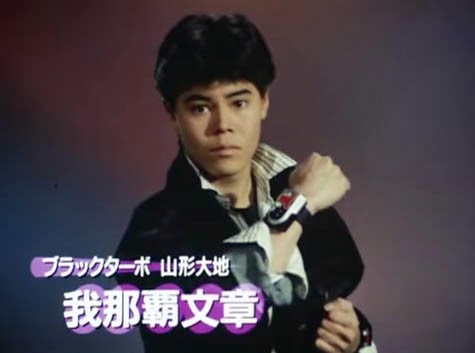
Riki Honoo as Red Turbo in Kousoku Sentai Turboranger Daichi Yamagata as Black Turbo in Kousoku Sentai Turboranger Yohei Hama as Blue Turbo in Kousoku Sentai Turboranger

Riki Honoo as Red Turbo in Kousoku Sentai Turboranger; Daichi Yamagata as Black Turbo in Kousoku Sentai Turboranger; Yohei Hama as Blue Turbo in Kousoku Sentai Turboranger

Kosoku Sentai Turboranger Opening Theme
Turboranger Series Intro


"Kousoku Sentai Turboranger" (高速戦隊ターボレンジャー Kōsoku Sentai Tāborenjā?)
Lyrics by Ikki Matsumoto
Composed by Yoshimasa Inoue
Arrangement by Ryō Yonemitsu
Artist: Kenta Satou

Kosoku Sentai Turboranger Closing Theme
Turboranger Series Outro


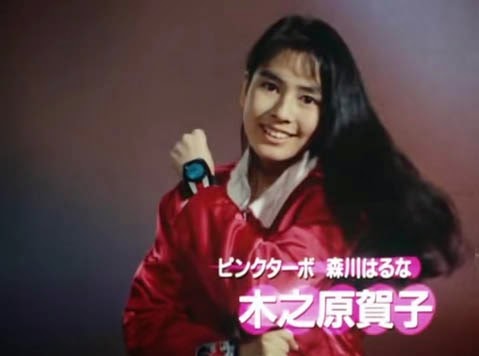
Shunsuke Hino as Yellow Turbo in Kousoku Sentai Turboranger Haruna Morikawa as Pink Turbo in Kousoku Sentai Turboranger

Shunsuke Hino as Yellow Turbo in Kousoku Sentai Turboranger; and Haruna Morikawa as Pink Turbo in Kousoku Sentai Turboranger

"Zigzag Seishun Road" (ジグザグ青春ロード Jiguzagu Seishun Rōdo?, "Zigzag Youth Road")
Lyrics by Ikki Matsumoto
Composed by Yoshimasa Inoue
Arrangement by Ryō Yonemitsu
Artist: Kenta Satou

Retro Super Sentai Turboranger After Finisher Pose Peace Sign


Turborangers was another memorable Filipino dubbed super sentai series of the past. I remember seeing it back-to-back with a rerun of Masked Rider Black on a Sunday afternoon or morning ( probably the prior but can't be sure, please correct me if I am wrong) in IBC-13. I have a few recollection of this sentai series since I believe it came later during the 90s or me growing out of my childhood. I mostly remember the highlights mainly that this sentai main's theme (for suits) which is automobiles, fairies, and the monster of the week being sealed first in an overgrown nail. If I am not mistaken this is one of those sentai series that was eventually cut from its Philippine television run ultimately frustrating and putting the kids (including myself) who watched it in a state of indefinite cliffhanger (good example being Masked Rider Black). Why is it those classic retro super sentai shows has such a memorable and catchy opening and closing themes? Is it merely nostalgia or do they simply have better music back then? In any case Turboranger has both of its opening and closing themes as catchy as any other.

Retro Pilipinas on Turboranger 90s Super Sentai Series on IBC 13 Philippines

How about you guys? What are your fondest memories of Turboranger? Any special merchandise; memories of episode, characters (protagonists or villains), experience you remember in connection with Turborangers? Share your thoughts about Kosoku Sentai Turboranger in our comments section below:
Read More