Ultraman Tiga was a Filipino-dubbed superhero kids show that aired in GMA Network every weekdays at 4:30 PM during the late 90's from January to July 1999. Ultraman Tiga Ultraman Tiga (ウルトラマンティガ Urutoraman Tiga) was a Japanese tokusatsu series and the 11th show in the Ultra Series. Ultraman Tiga was produced by Tsuburaya Productions originally ran from September 7, 1996 to August 30, 1997 with a total of 52 episodes and with 5 movies. Let's go down memory lane and remember Ultraman Tiga.
Ultraman Tiga - The Story About Ultraman Tiga
Ultraman Tiga is a show set in an alternate universe in the year 2007-2010 wherein giant monsters and conquering aliens started appearing as was foretold by an apocalyptic prophecy. The Terrestrial Peaceable Consortium (TPC) along with its branch, the Global Unlimited Task Squad (GUTS) was created in response to this threat.
With the help of a holographic message in a capsule found by researchers, the GUTS where able to come by the knowledge about a golden pyramid built by an ancient civilization. Three statues of a race of giants who defended early human civilization on Earth about 30,000,000 years ago was present in the site. GUTS discovered that two of these were destroyed with the third one gaining 'life' from the spiritual energy of officer Daigo who happens to be a descendant of the ancient race. Daigo and the remaining statue merge into a single being, made of light. Defeating the two monsters responsible for destroying the other two giant statues, Daigo is later revealed by the hologram of the prophecy that a great evil that not even the giants could stop destroyed the ancient civilization 30 million years ago.
Ultraman Tiga Opening Theme Ultraman Tiga Series Intro
"Take Me Higher"
Performed by V6
Japanese Lyrics: Kazumi Suzuki
Arrangement: Yasuhiko Hoshino
String Arrangement: Mitsuo Hagida
Choral Arrangement: Hiroaki Suzuki
Ultraman Tiga Closing Theme Ultraman Tiga Series Outro
What can be said about Ultraman Tiga's run on GMA Network back in the late 90s? Well, as a 90s kid I can only remember that it was one awesome UltraMan series that featured a multi-formed or multi-suit Ultraman which was not observed in other Ultraman that came before it; well at least that was shown televised here in the Philippines back then. Well, besides that, I have vivid recollection of the story itself. Although the ending theme 'Brave Love, TIGA' has always been stuck in my memory. When making this look back, I thought that it was the opening as to how cool it sounded back then and still is now. when this ended it was later followed up by Ultraman Dyna which was picked up by rival network ABS-CBN. I think I will re-watch this series along with dyna as back then, we haven't had the internet or local stations didn't picked up the five movies that according to information online came out from this series. Who wouldn't want to see Dyna and Tiga in one movie, right?
How about you guys, do you have any memorable moments, episodes, experiences, or merchandise from this nostalgic Ultraman series? Share your thoughts and opinion about Ultraman Tiga's run in Philippine television back in the late 90s in the comments section below and let's discuss:
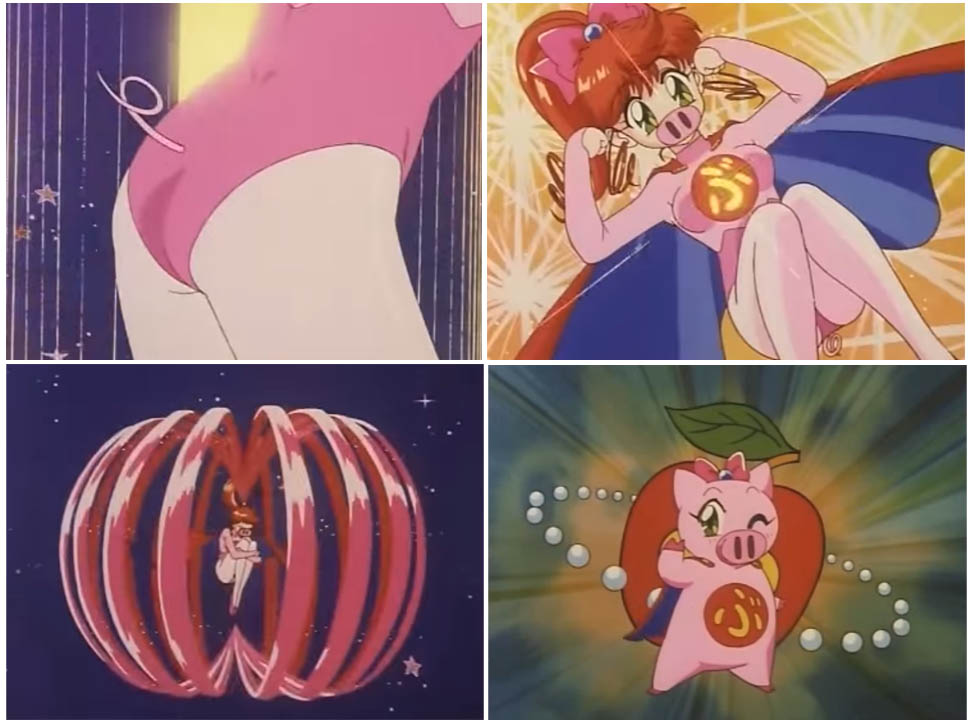
Super Boink was an English-dubbed anime which aired in the Intercontinental Broadcasting Company (IBC-13) primetime block during the late 90s in the Philippines. Super Boink was originally titled Tonde Burin that originally run from September 3, 1994 to August 26, 1995 on MBS by Nippon Animation studio with a total of 51 episodes. Tonde Burin was first a shojo manga written by Taeko Ikeda and published by Shogakukan in manga magazine Ciao that originally run from October 1994 to September 1995 with a total of 3 volumes. Let's go down memory lane and remember this magical girl parody simply titled super Boink.
Super Boink - The Story About Tonde Burin
Karin Kokubu (Coleen in the Philippine-dubbed version) is late for school one day when she comes across an apparently injured yellow pig. It turns out the pig wasn't injured but just hungry, and he gets back his health when he eats Karin's apple. When Karin gets to her school called St. Ringo School, she discovers that the pig has stowed away in her backpack which causes her more trouble.
Later, she meets the pig again and finds out he can talk and fly. The pig gives her a "Dream Tonpact" which she opens and a pig snout appears from it and attaches itself to her nose! She finds the pig again who explains that he is actually Prince Tonrariano the 3rd (Iggy Pig) of the apple-shaped planet Buringo (Oinko). He tells her how she can transform: by saying "Ba Bi Bu Be Burin!" she transforms into a superpowered pink piglet called Tonde Burin (Super Pig in the US, Super Boink in the Philippines). This is not something Karin is happy about at all as she'd rather transform into a magical girl heroine like her idol the henshin hero tokusatsu character "Cutey Chao" (who is possibly a reference to Cutie Honey). Tonrariāno (who she calls Ton-chan) tells her if she can collect 108 pearls by doing good deeds as Burin, she can do so. The pearl collection operates on karma meaning if Burin abuses her powers, she will lose pearls.
Whenever someone is in danger, Karin would become Tonde Burin to thwart the crisis and even use her new abilities to help other people in need.
Super Boink IntroLove is Uncool (愛はカッコわるい Ai wa Kakko Warui)Lyricist: Manami Tōno Composer: Tsugumi Kataoka Arranger: Tsugumi Kataoka Singers: ParquetsCheck out our blog about Super Boink for more information and discussion:http://retropilipinas.blogspot.com/2015/11/super-boink-tonde-burin-ibc-13-90s.html- - - - -Retro Pilipinas does not claim any ownership of the classic television shows archived and featured in the blog. All the shows featured here are mostly copyrighted materials which all respectfully belonged to their rightful owners, personnel, company or organization. The blog is not affiliated with any of the company that rightfully owns the source material. The blog only aims to educate and feed the nostalgia of the Filipino netizens and those of other nationalities that are looking for the past shows that brings nostalgia.
Super Boink OutroBurin à la mode (ぶーりん あ·ら·もーど Būrin a ra mōdo)Lyricist: Manami Tōno Composer: Tsugumi Kataoka Arranger: Tsugumi Kataoka Singers: ParquetsCheck out our blog about Super Boink for more information and discussion:http://retropilipinas.blogspot.com/2015/11/super-boink-tonde-burin-ibc-13-90s.html- - - - -Retro Pilipinas does not claim any ownership of the classic television shows archived and featured in the blog. All the shows featured here are mostly copyrighted materials which all respectfully belonged to their rightful owners, personnel, company or organization. The blog is not affiliated with any of the company that rightfully owns the source material. The blog only aims to educate and feed the nostalgia of the Filipino netizens and those of other nationalities that are looking for the past shows that brings nostalgia.
Burin à la mode (ぶーりん あ·ら·もーど Būrin a ra mōdo)
Lyricist: Manami Tōno
Composer: Tsugumi Kataoka
Arranger: Tsugumi Kataoka
Singers: Parquets
What is there to say about Super Boink? Well, it sure was a fun series; that is for certain. This made me wonder and just humor me here. What if you are given the chance to be a powerful super hero but you are in a form that you least desired, like let's say a human fecal matter which doesn't only look bad, but smell bad as well; would you accept it? Well in Super Boink's case that is the case. If my memory serves me correct this was shown around the time that Yaiba was also being shown or maybe not; feel free to correct me in the comments section. What I do remember is Coleen's magical transformation as the beloved flabby heroine of justice Super Boink which you can see here:
I still remember the initially reluctant Coleen when she first became Super Boink and how she later learned to come to terms to it. Basically that she was given the incentive or a promise that she will become a beautiful Magical Girl (example Sailor Moon) once she have collected enough pearls as Super Boink or at least that is how I remembered it. I would probably revisit the series just like what I did with Hell Teacher Nube. Hopefully all episodes are available online for some nostalgic binge watching and anime marathon. I also remember doing sketches of Super Boink since it is not that challenging to do a sketch of heras a 90s kid; the same as what I did with Sunny Pig which we'll soon also revisit here at Retro Pilipinas.
How about you guys? What are your fondest memories of this magical girl parody? Do you have any particular favorite like episode(s), characters, and merchandise related to the show? Share your thoughts and experiences about Super Boink in the comments section below:
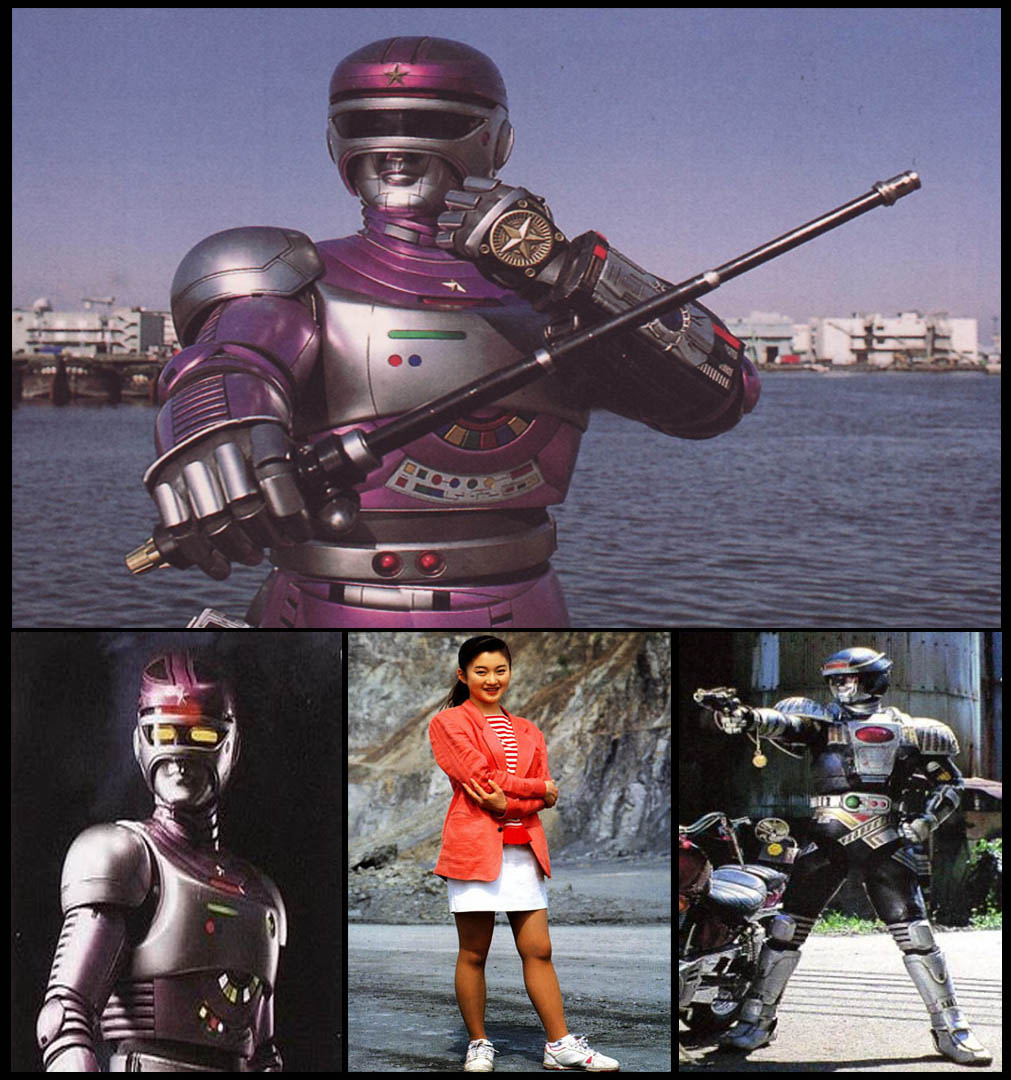
Tokusou Robo Janperson or simply known as Janperson was a Filipino-dubbed super hero kids show that aired in ABC-5 (now known as TV5) around the late 90s (or early 2000). Janperson had an original title of Tokusou Robo Janperson (特捜ロボ ジャンパーソン Tokusō Robo Janpāson), was a tokusatsu series and 1993 installment in Toei Company Limited's Metal Hero Series; Tokusou Robo Janperson was the 12th in the Metal Hero series. Janperson, produced by Toei originally aired in TV Asahi from January 31, 1993 to January 23, 1994 with a total of 50 episodes with a 30-minute running time. The opening catchphrase of the series is "Janperson Fights For Justice" which has a similar tone and feel to Mobile Cop Jiban. Let's go down memory lane and remember Tokusou Robo Janperson.
Janperson - The Story About Tokusou Robo Janperson
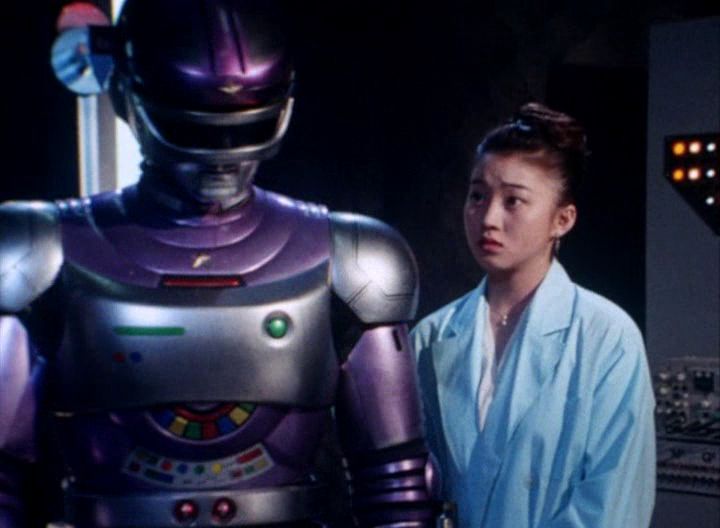
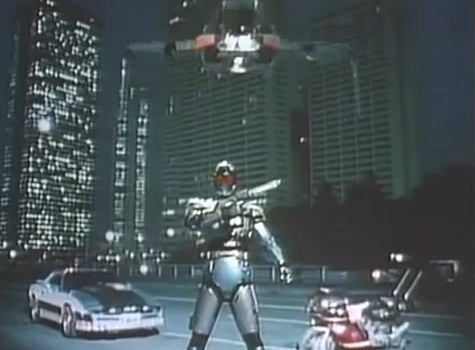
Tokusou Robo Janperson revolved around Janperson, a purple & silver android robot detective. He was once a prototype combat robot driven berserk by the command to "Destroy Evil," that led to his deactivation and was later stripped of most weaponry and reprogrammed with human emotions by the young female scientist Kaoru Saegusa.
Janperson patrols the streets of Tokyo and fights against three different underworld organizations who used super technology to subjugate the masses. Unlike most Metal Heroes with a monster-of-the-week format, monsters were rarely shown and most of the villains are criminals akin to more television police dramas than tokusatsu or metal hero.
Janperson Opening Theme Tokusou Robo Janperson Series Intro
"Tokusō Robo Janperson"
Lyrics by Keisuke Yamakawa
Composition by Keisuke Hama
Arrangement by Kei Wakakusa
Artist: Susumu Ōya
Janperson Closing Theme Tokusou Robo Janperson Series Outro
"Asayake no Lullaby"
Lyrics and composition by Keisuke Yamakawa
Composition by Keisuke Hama
Arrangement by Kei Wakakusa
Artist: Susumu Ōya
What can be said about Janperson's run on ABC-5 back in the late 90s. Janperson was that cool robot detective series shown every Sunday afternoon that made Filipino kids love robotic or android heroes even more. I have to give it to Japan for making quality kids show with a more darker and serious tone. You know some boys don't want to be treated as a child, and Janperson was like that. Recalling it now, I remember it being serious but still retained that tokusatsu charm from prior series shown here. Although it didn't have that many kaijins or monsters for each episode, it made up for good character development and more sinister android villains. It was a Sunday afternoon (to evening) tokusatsu that treated kids with respect (as how I romanticized it).
What other things can be remembered about the show? Well, Janperson has this signature gimmick of throwing these (business) cards which by the way is called "Janperson Cards". Janperson also has a wide array of weapons at his disposal. One can really notice that it draws inspiration from RoboCop from his movement and how he operated (where weapons are drew from) as both are robot police (in Janperson's case, a detective) implementing justice in service of mankind. Of course, it along the series, Janperson acquires various upgrade which is always a good way to make it appear to us that besides the drama, Janperson is also growing and improving into a more badass android. Later on, he acquires a new ally which evens up the playing field since enemies tend to gang up on him with overwhelming force. Maybe I can re-watch it one of these days if it still holds up to today's standards or this was all just nostalgia.
How about you guys, do you have any memorable moments, episodes, experiences, or merchandise from this nostalgic Metal Hero show? Share your thoughts about Tokusou Robo Janperson in the comments section below:
Turboranger was a Filipino dubbed super hero kids show which first aired in IBC-13 every weekends around the late 90s. Turboranger is originally Kousoku Sentai Turboranger (高速戦隊ターボレンジャー Kōsoku Sentai Tāborenjā), the first super sentai of the Heisei period in Japan and was the 13th entry of Toei Company's Super Sentai series. Kousoku Sentai Turboranger originally aired on TV Asahi from February 25, 1989 to February 23, 1990 with a total of 51 episodes
Kosoku Sentai Turboranger - The Story Turboranger Premise
Twenty thousand years ago, a Fairy race assisted humans in a battle against the evil Bōma Tribe and was eventally sealed away by Sacred Beast Rakia - a white-maned, winged holy beast defender of Earth, and the keeper of peace and guardian of fairies who sacrificed himself to seal away the tribe with him ultimately transforming into a constellation to watch over the world along with the Turboranger. Unfortunately, due to modern day pollution brought by man's destruction of nature, the power of Fairy magic has weakened, allowing the seal to be broken allowing the once sealed tribe to escape. The last of the living fairies and with the help of Dr. Dazai, Seelon, five Japanese high school seniors were summoned. These chosen high school seniors were special as they were once showered with the "flames of spirit" of the fallen fairies in a forest back when they were still children. They are then able to hear Seelon's voice. Thanks to the collaboration between Seelon's magic and Dr. Dazai's science, these five become the Turborangers.
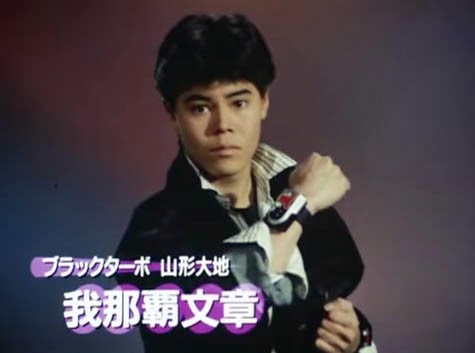
Riki Honoo as Red Turbo in Kousoku Sentai Turboranger; Daichi Yamagata as Black Turbo in Kousoku Sentai Turboranger; Yohei Hama as Blue Turbo in Kousoku Sentai Turboranger
Kosoku Sentai Turboranger Opening Theme Turboranger Series Intro
"Kousoku Sentai Turboranger" (高速戦隊ターボレンジャー Kōsoku Sentai Tāborenjā?)
Lyrics by Ikki Matsumoto
Composed by Yoshimasa Inoue
Arrangement by Ryō Yonemitsu
Artist: Kenta Satou
Kosoku Sentai Turboranger Closing Theme Turboranger Series Outro
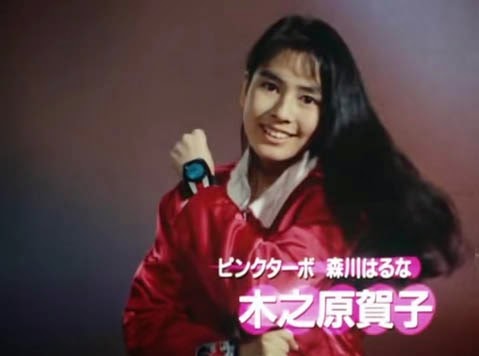
Shunsuke Hino as Yellow Turbo in Kousoku Sentai Turboranger; and Haruna Morikawa as Pink Turbo in Kousoku Sentai Turboranger
"Zigzag Seishun Road" (ジグザグ青春ロード Jiguzagu Seishun Rōdo?, "Zigzag Youth Road")
Lyrics by Ikki Matsumoto
Composed by Yoshimasa Inoue
Arrangement by Ryō Yonemitsu
Artist: Kenta Satou
Turborangers was another memorable Filipino dubbed super sentai series of the past. I remember seeing it back-to-back with a rerun of Masked Rider Black on a Sunday afternoon or morning ( probably the prior but can't be sure, please correct me if I am wrong) in IBC-13. I have a few recollection of this sentai series since I believe it came later during the 90s or me growing out of my childhood. I mostly remember the highlights mainly that this sentai main's theme (for suits) which is automobiles, fairies, and the monster of the week being sealed first in an overgrown nail. If I am not mistaken this is one of those sentai series that was eventually cut from its Philippine television run ultimately frustrating and putting the kids (including myself) who watched it in a state of indefinite cliffhanger (good example being Masked Rider Black). Why is it those classic retro super sentai shows has such a memorable and catchy opening and closing themes? Is it merely nostalgia or do they simply have better music back then? In any case Turboranger has both of its opening and closing themes as catchy as any other.
How about you guys? What are your fondest memories of Turboranger? Any special merchandise; memories of episode, characters (protagonists or villains), experience you remember in connection with Turborangers? Share your thoughts about Kosoku Sentai Turboranger in our comments section below:
Jetman was a Filipino dubbed super hero kids show which first aired in RPN-9 every Sunday evening at around 6PM or 7PM in 1997, and later every weeknights on ABC-5 (now TV5) in 1998. Jetman was originally Chojin Sentai Jetman (鳥人戦隊ジェットマン Chōjin Sentai Jettoman), a Japanese tokusatsu television series by Toie Company and Bandai which is the 15th super sentai series. Chojin Sentai Jetman which translates to Bird Task Force Jetman originally aired on TV Asahi from February 15, 1991 to February 14, 1992 with a total of 51 episodes. Jetman pays homage to the Science Ninja Team Gatchaman 1972 anime series using a bird as its motif and some setup with its characters. Like most old school heisei series, Jetman was way ahead of its time with its darker tone, tragedies, and its emphasis on romance (love triangles). Let's go down memory lane as we look back at Jetman.
Chojin Sentai Jetman - The Story Chojin Sentai Jetman Series Plot
The story starts in Sky Force, an Earth Ship command center where scientists have developed "Birdonic Waves" technology which gives its subject superhuman abilities. The experiments was called the "J-Project" was successful with Ryu Tendoh, one of the Sky Force officers successfully being exposed to the Birdonic Waves and making him the first Jetman - the Red Hawk. The J-Project was lead by Director Aya Odagiri who chosed five elite Sky Force officials from Earth to use this technology.
However, the Earth Ship gets suddenly attacked by Vyram, an evil outer-dimensional organization bent on inter-dimensional domination. Vyram successfully destroy the ship, apparently killing Ryu's lover and fellow candidate member Rie. In the process, the remaining Birdonic Waves for the other four official candidates were scattered on Earth, hitting four civilians. Odagiri and Tendoh successfully escape and begin searching on Earth for the four remaining Jetman, training them to aid them in stopping Vyram's plans of conquering Earth.
Kotaro Tanaka as Jetman Red Hawk Ryu Tendoh; Toshihide Wakamatsu as Jetman Black Condor Gai Yuki; and Rika Kishida as Jetman White Swan Kaori Rokumeikan.
Jetman Opening Theme Chojin Sentai Jetman Series Intro
Lyrics by Toyohisa Araki
Composition and Arrangement by Gōji Tsuno
Artist: Hironobu Kageyama
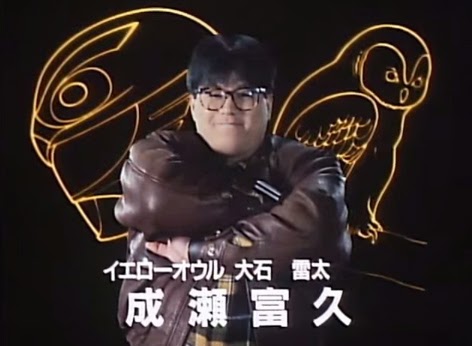
Ikko Tadano as Jetman Yellow Owl Raita Oishi and Sayuri Uchida as Jetman Blue Swallow Ako Hayasaka
Jetman Closing Theme Chojin Sentai Jetman Series Outtro
"Kokoro wa Tamago" (こころはタマゴ?, "The Heart is an Egg")
Lyrics by Toyohisa Araki
Composition by Kōji Tsuno
Arrangement by Kenji Yamamoto
Artist: Hironobu Kageyama
Jetman was one of those super sentai shows that treat kids with respect and the seriousness they deserve with its dark and serious tones. I was a 90s kid who grew up watching tokusatsu shows and Jetman combined all those elements and added darker elements setting up an 11-year old kid on what life would probably be like in the not so far off future. It was a different time back in the 90s... it was awesome! Kids show started waning when Philippine television companies started patronizing more US kids shows and local teledramas than borrowing from our neighbor Japan. I can even say we can even blame media for making kids such drama kings and queens nowadays, Hahahaha. Looking back at it now, it sure is one of those nostalgic super sentai series that has always painted a smile on my face.
My favorite Jetman is Jet Blue or Blue Swallow Ako. It has been somewhat ingrained in my head an episode focusing on her and this cup noodle (ramen) monster. I like blue and she was also very cute. My 11-year old television infatuation. I also clearly remember playing a Jetman game on a gaming rental shop back in the days for the Family Computer (known in the US as the Nintendo Entertainment System or NES). I remember it was tough as hell coz I suck a bit at platforming back in the days (never finished a megaman or rockman game EVAR! Hahahaha). I have dug some footage of Jetman the Game online and here is what the game was like.
What about you guys? What are your fondest memories, favorite episode, character or merchandise from Jetman? Share your thoughts and experiences about 90s Chojin Sentai Jetman in the comments section below:
Ultraman was a Filipino dubbed super hero kids show which aired in ABS-CBN around the early 90s. Ultraman (Urutoraman) was a Japanese tokusatsu television series following up to the television series Ultra Q. Ultraman was was produced by the Tokyo Broadcasting System and Tsuburaya Productions, and was broadcast on Tokyo Broadcasting System (TBS) from July 17, 1966 to April 9, 1967, with a total of 39 episodes. Let's go down memory lane and reminisce that original Super Hero Giant Alien, Ultraman.
Ultraman - The Story Ultraman Series Plot
Ultraman is set on the near future when sinister aliens and giant monsters constantly threaten civilization during the said period. The only Earth organization equipped to handle these disasters is the Science Special Search Party also known as S.S.S.P. (SSSP), a special worldwide police force equipped with high-tech weapons and vehicles, as well as extensive scientific and engineering facilities. The branch of the Science Patrol that is focused on in the series is located in Tokyo, Japan. Led by Captain "Cap" Toshio Muramatsu, the Science Patrol is always ready to protect the Earth from rampaging monsters, but sometimes it finds itself outclassed. When the situation becomes desperate, Shin Hayata, the Patrol's most capable member, holds the key to salvation in the form of a power-object and artifact called the "Beta Capsule," which, whenever activated, allows him to transform secretly into the super-humanoid-powered giant from space, who becomes known to the people of Earth as Ultraman.
Despite Ultraman's many amazing powers, Ultraman has one main weakness. Since Earth's atmosphere leeches away his solar energy, Ultraman can only physically exist on Earth for approximately three to five minutes of Earth time. To signal this, a warning light in Ultraman's chest (called the Color Timer) starts out at blue. At the 1 minute mark it starts to blink, and then turns red and blinks faster at the two minute mark. If the Color Timer/warning light stops, Ultraman will "never rise again." Obviously, at whatever point the blinking begins, Ultraman typically has only a short amount of time left to defeat his foe and return to his human host. However, Ultraman has occasionally been able to extend his operating time by flying towards the Sun and "recharging."
Ultraman remains until the threat is neutralized and then flies away to revert back to Hayata. Ultraman's victory is never assured, however, as Ultraman's powers and, indeed, his very life force, come from rapidly depleted, stored solar energy. At the beginning of each transformation from Hayata-to-Ultraman, the "warning light" on the giant's chest begins as a steady blue color. Yet as Ultraman exerts himself, the "Color Timer," as it is also called, turns red, then blinks--slowly at first, then with increasing rapidity--as his energy reserves get closer to exhaustion.
Ultraman Opening Theme Ultraman Series Intro
Check out additional footage and fan-made opening for Ultraman.
Ultraman holds a special place in my childhood memory. Before all my fascination with other tokusatsu and super sentai series of the 90s, there was first the Ultraman. Although I vaguely remember the schedule of the show, what I do remember is watching it together with father. I usually mimicked the Ultra moves and finishers ala Crayon Shinchan. I also vaguely remember getting creep out with certain scenes and monsters from the series as they are not the usual "child-friendly" images that you use to see here in the Philippines.
How about you guys, what was the Ultraman series to you? Any favorite episode, scene, merchandise, or monstres of Ultraman? Share them along with your thoughts about the Original Ultraman in the comments section below:
Big Bad Beetleborgs was a syndicated live action show produced by Saban Entertainment (the same creators of the Mighty Morphin Power Rangers series) and originally aired in Fox Kids block from September 7, 1996 and March 2, 1998. The Big Bad Beetleborg series adapted combat footage from the Metal Hero Japanese tokusatsu series Juukou B-Fighter on the first season and B-Fighter Kabuto on its second season. In the Philippines, the Associated Broadcasting Company (now known as TV5) aired Big Bad Beetleborgs on a weekend afternoon block.
Big Bad Beetleborgs - The Story Big Bad Beetleborgs Series Plot
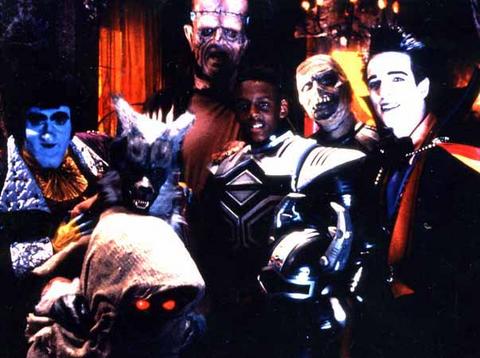
In a town called Charterville, three "typical average kids", Drew (played by Wesley Barker), Jo (Shannon Chandler/Brittany Konarzewski), and Roland (Herbie Baez), enter the supposedly haunted Hillhurst Mansion after accepting a dare from rich snob kids. The three later found out that the house is indead the home of real monsters. The kids accidentally bump a pipe organ, releasing a phasm named Flabber (Billy Forester) that granted them with one wish like a genie. Just like normal geeky children, the three wish to become their favorite comic book heroes, the Big Bad Beetleborgs. This however also brought the Beetleborgs sworn enemies to life: the Magnavores led by the evil Vexor with his three main henchmen Typhus, Noxic, and Jara. Vexor who summons monsters from the comic books to battle the Beetleborgs.
Andrew "Drew" McCormick is the Blue Stinger Beetleborg who stand as the leader of the Beetleborgs. He was granted with the ability of telekinesis by Flabber, that he activates by pointing at an object and nodding his head. Roland Williams is the Green Hunter Beetleborg. His family owns a local comic book shop named Zoom Comics, where he, Jo, and Drew usually hang out. He was granted with the ability of super speed by Flabber, which he activates by snapping his fingers. Josephine "Jo" McCormick is the Red Striker Beetleborg. She is Drew's little sister, and was granted with the ability of super strength by Flabber, which she simply activates by cracking her knuckles. The trio was later joined by Josh Baldwin, the White Blaster Beetleborg. He was granted the ability of invisibility by Flabber, which he activates by dusting his hands. He was on the team for a very short period of time.
Big Bad Beetleborgs Opening Theme Big Bad Beetleborgs Series Intro
If my memory serves me right, I believed that the Big Bad Beetleborg aired every Sunday nights at either on a 5:30 or 6:00 PM schedule which was followed up by Janperson on the Associated Broadcasting Company or ABC-5. The show also had a nice ring to its opening theme, but looking at it now I can surely say that the Power Rangers have a more serious tone to it which is probably why more kids prefer it, but the Big Bad Beetleborgs has more charming characters which sometimes can be the show's double edge sword. Sadly the Big Bad Beetleborg's Philippine television run ended with the Shadowborg and wasn't even resolved. The show was eventually cancelled here in the country and we were not able to watch the Beetleborgs Metallix, the show's second season. But hey it fun while it lasted. I am no purist then, and was not even aware that the show just utilized clips from a Japanese Metal Hero series. As what I have proven now as an adult, the original source material will always be better than the Americanized version, but since I was not able to see the original source material back then, then these American kids show still holds a much better place in my mind and heart. They may look ridiculous and corny now, but one time in my life I make sure to be home and tuned into ABC-5 just to watch the Bid Bad Beetleborgs.
How about you guys, have you watched the Big Bad Beetleborgs back in ABC back in the days? Any favorite episodes, memorabilias, characters, or merchandise that you have on the Americanized kids show? Share your thoughts in the comments section below:
Mobile Cop Jiban or simply Jiban was a Filipino dubbed super hero kids show that aired in Intercontinental Broadcasting Corporation or IBC around the 90s. Jiban had an original title of The Mobile Cop Jiban (機動刑事ジバン Kidō Keiji Jiban), a Japanese tokusatsu television series and the eighth entry in the Metal. Jiban was produced by Toei which originally aired on TV Asahi from January 29, 1989 to January 28, 1990 with 52 episodes and one feature movie. According to Jiban's creator Keita Amemiya, the premise for the series was almost entirely based on American character Robocop, as Jiban is often considered as RoboCop's Japanese counterpart. The opening catchphrase of the series is "This is the drama of a girl's and a young man's hearts which love people and protect justice." ("Kore wa Hito o Aishi, Seigi o Mamoru Wakamono to Shōjo no Kokoro no Dorama de aru."). Let's go down memory lane with The Mobile Cop Jiban.
Mobile Cop Jiban - The Story Mobile Cop Jiban Series Plot
Naoto Tamura, a new detective in Central City, was killed by a Bionoid Monster in the line of duty. Doctor Kenzou Igarashi, a man whose experiments had been responsible for the Biolon syndicate's existence, brought the man back to life as a cyborg detective, Jiban. Mayumi Igarashi is the only person who knows the identity of Jiban and calls Jiban/Naoto her "big brother". Harry Boy on the other hand is Jiban's
robotic assistant along with Mayumi in their Secret Base. Jiban communicated with them via the Jiban's Badge.
Jiban gos against the Criminal Syndicate Bioron lead by Doctor Giba. The Bioron intends to take over Japan by means of narrow and more specified attacks rather than a more large-scale destruction. The use biochemistry as a means of their diabolical goals.
Following the theme of a police theme, Jiban follows (or is programmed to abide) a certain set of rules. He literally cite out this code reminiscent of the Miranda Warning (Miranda Rights) when Jiban corners the villain of the episode.
Jiban is best remembered as that primetime metal hero series reminiscent of Robocop that aired after Ghost Fighter (Yu Yu Hakusho) back in IBC-13 during the 90s. If my memory served me right, Jiban was aired at a time when they stopped airing Masked Rider Black, so we 90s kid who grew fund watching the exploits of the "Black Son" were kept hanging. Jiban somehow addressed the longing... but not really quite to teh level of Masked Rider Black. I think the airing of Jiban was also cancelled in IBC-13. Correct me if I'm wrong fellow Filipinos, but I missed out the opportunity to watch this series up to the very end. It might be because of my poor memory or it was really cancelled. And during those times, when a show is cancelled, there is really no immediate way of us getting the whole series that time. Like any other tokusatsu series, Jiban had a very memorable opening and closing them which up to this day still keeps playing in my head from time to time. I remember back in grade school that we imitate Jiban by having our very own Jiban Badge and roleplaying that we are kicking each other butts just like in the show (Note: there were no physical harm applied to any of the parties involved :D)
How about you guys, do you have any memorable moments, experiences, or merchandise from the nostalgic show? Share your thoughts about Kidou Keiji Jiban - The Mobile Cop Jiban in the comments section below:
Tattooed Teenage Alien Fighters from Beverly Hills was a American television series which was released by DIC Entertainment and aired on the USA Network which originally ran from October 3, 1994 to December 8, 1994. In the Philippines, the Associated Broadcasting Company (now known as TV5) aired Tattooed Teenage Alien Fighters from Beverly Hills on a weekend afternoon block. Let's take a look back on this low-budget kids show that tried to emulate the success of Saban's Mighty Morphin Power Rangers.
Tattooed Teenage Alien Fighters from Beverly Hills - The Story Tattooed Teenage Alien Fighters from Beverly Hills Series Plot
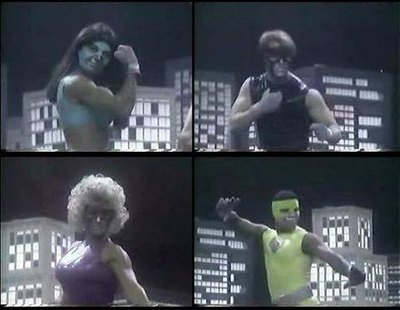
Tattooed Teenage Alien Fighters from Beverly Hills featured four central teenagers selected by a blob-like brain alien named Nimbar (Head Protector of the Power Portals) to fight off the monsters sent by an evil alien empire lead by Emperor Gorganus. Gorganus want to conquer Earth because it is the focal point for a network of "Power Portals" that would facilitate conquest of the galaxy. Nimbar recruits four high school students and with a touch by his "finger" gave them each a tattoo which is based on a constellation in the celestial sphere. When their tattoos flash, this means Nimbar needs them and a power portal appears that they can pass through to enter his chamber.
The teens could then stand atop platforms called "Transo Discs" and transform into "Galactic Sentinels" with super powers. These four teenagers are Laurie Foster as the Galactic Sentinel Scorpio; Gordon Henley as the Galactic Sentinel Scorpio; Drew Vincent as Galactic Sentinel Centaur; and Swinton Sawyer as the Galactic Sentinel Apollo. When they put their hands together in an interlocking square they form the ultimate Galactic Sentinel called Knightron.
Tattooed Teenage Alien Fighters from Beverly Hills Opening Theme Tattooed Teenage Alien Fighters from Beverly Hills Series Intro
What is there to say about Tattooed Teenage Alien Fighters from Beverly Hills? It is one of those US Shows that tried to emulate the success of the Power Rangers. Unlike other kids shows that can just "borrowed" stock footage from Japanese tokusatsu shows, the Tattooed Teenage tried a different approach. You can clearly see that it is pretty much American in its high school setting and its heroes reminiscent of fighters from the American Gladiators. Looking at it now I can't help but laugh a bit and made me ask myself "Did I really dug that show before?". Well it can't be help, I was but a child then. I probably got hooked in it because it resembled the Mighty Morphin Power Rangers with its teenage protagonists; reminds me of Ultraman and Magmaman when they transform into Galactic Sentinels, and vaguely resembles Voltes V in some way when they put form Knightron... not to mention father and I were into World Wrestling Federation back then, the Galactic sentinels somehow looked like wrestlers.
How about you guys, do you remember this US show? What do you remember most about it? any special memory, collectible, or experience you have related to the show? Share your thoughts about the Tattooed Teenage Alien Fighters from Beverly Hills in the comments section below:
MagmaMan was a Filipino dubbed super hero kids show that aired in ABS-CBN around the 90s. MagmaMan is originally Fireman (ファイヤーマン Faiyaman), a Japanese tokusatsu television series which originally aired Nippon Television from January 7 to July 31, 1973. Let's take a look at MagmaMan, a classic Japanese tokusatsu that has successfully merged the essence of the Ultraman and Kamen Rider series.
MagmaMan - The Story Fireman - Series Plot
A strange phenomenon happened throughout the world, causing giant, mutant dinosaurs to suddenly appear. Deep under the Earth's surface lives the Agan, a race of people who will die if exposed to light of the sun for more than three minutes sends a courageous young man named Misakey to live as in the world of humans donning the identity of an archaeologist and SAF agent Daisuke Misaki. Whenever monsters and space aliens attack the world, Misaki transforms into Fireman by using the fire-stick, and defends the human race against them.
MagmaMan Opening Themes FireMan Series Intros
"Fireman" (ファイヤーマン Faiya-man)
Lyrics by Yu Aku
Composition by Asei Kobayashi
Arrangement by Bob Sakuma
Artists: Masato Shimon
MagmaMan Opening Theme FireMan Series Outro
"Shutsugeki! SAF" (SAF Shutsugeki! Esu-e-efu, Go attack! SAF)
Lyrics by Hajime Tsuburaya
Composition and Arrangement by Toru Fuyuki
Artists: Columbia Yurikago-kai and The Photons
I have vivid recollections of this series but I can still remember me and my grade school classmates mimicking MagmaMan's finishers, the Magma Dash (Fire Dash). It was aired alongside the Ultrama on ABS-CBN back in the days so we have two super giants entertaining us every weekends. I also remember one particular scene when he sacrificed himself to save the planet, I believe it made me cry back then.
Doing the research of this classic retro tokusatsu that aired in ABS-CBN during the 90s, I can completely say that MagmaMan as I would like to call him, looks like the combination of Ultraman in terms of size but with the eyes of a Kamen Rider (Masked Rider). Looing at it now, it makes me want to get the DVD set just for the sheer nostalgic value of it. Maybe someday but for now, I will enjoy myself with these series of classic scene montage of MagmaMan:
How about you guys? Did you grew up watching this series? do you have a more clear idea or recollection of the monsters fought or episodes of MagmaMan? share your thoughts on the comments section below: