Showing posts with label 80s. Show all posts

Superbook in the Philippines | 90s English-Dubbed Children's Show

Superbook was an English-dubbed animated show for children which aired in the Philippines back in the late 90s about bible stories. Superbook, originally entitled "Animated Parent and Child Theatre" in Japan was initially produced by Tatsunoko Productions in Japan in conjunction with the Christian Broadcasting Network in the United States that originally run from October 1, 1981 to March 29, 1982 on TV Tokyo (in Japan) and on CBN (United States) with a total of 52 episodes; two seeming different season (or series) in terms of the iteration of the story. Let's go down memory lane and remember the original English-dubbed Superbook run in Philippine Television.
Superbook English-Dubbed Religious Children Show 90's  Retro Pilipinas Feature

Superbook - The Story
About Superbook

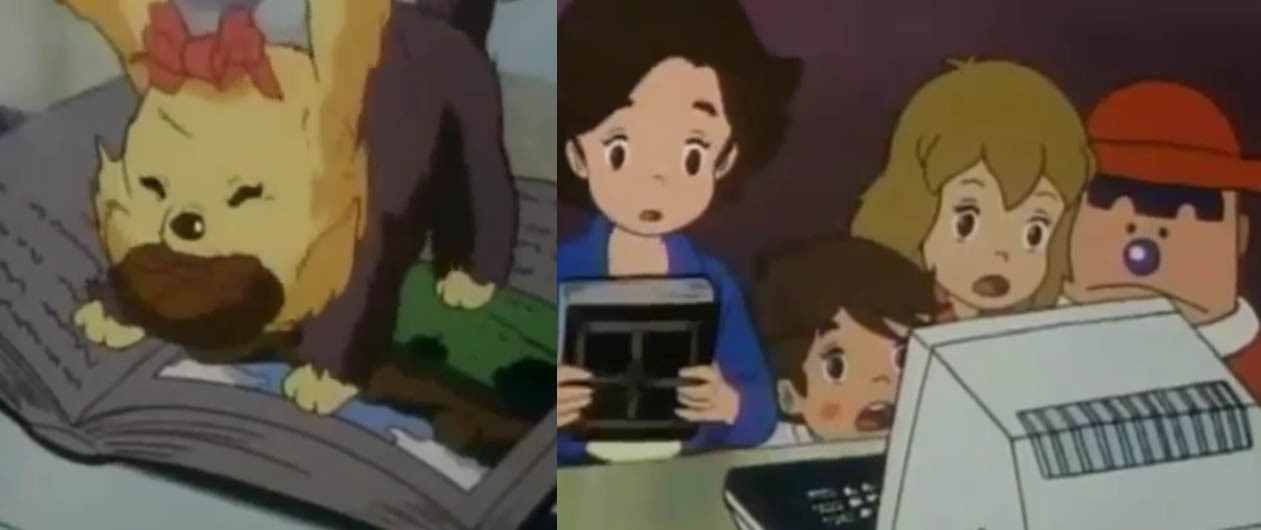
The first series (season) of Superbook began at the home of a young boy named Christopher Peeper (Sho Azuka in Japanese) who discovers the "Superbook" (Time/Space Travel Book) Bible that speaks and sends him, his friend Joy (Azusa Yamato), and his clockwork toy robot Gizmo (Zenmaijikake) back in time to the early events of the Old Testament. Gizmo can walk and talk, but only for the duration of the adventure and needs to be wound up regularly in order to function. This first series of Superbook featured stories mainly from the Old Testament of the Hebrew Scriptures, although a few episodes dealt with the life and ministry of Jesus Christ.

Superbook original 80's and 90's anime religious show featuring Christopher Chris Peeper, Joy, Uriah Peeper, Gizmo, and Ruffles Superbook classic

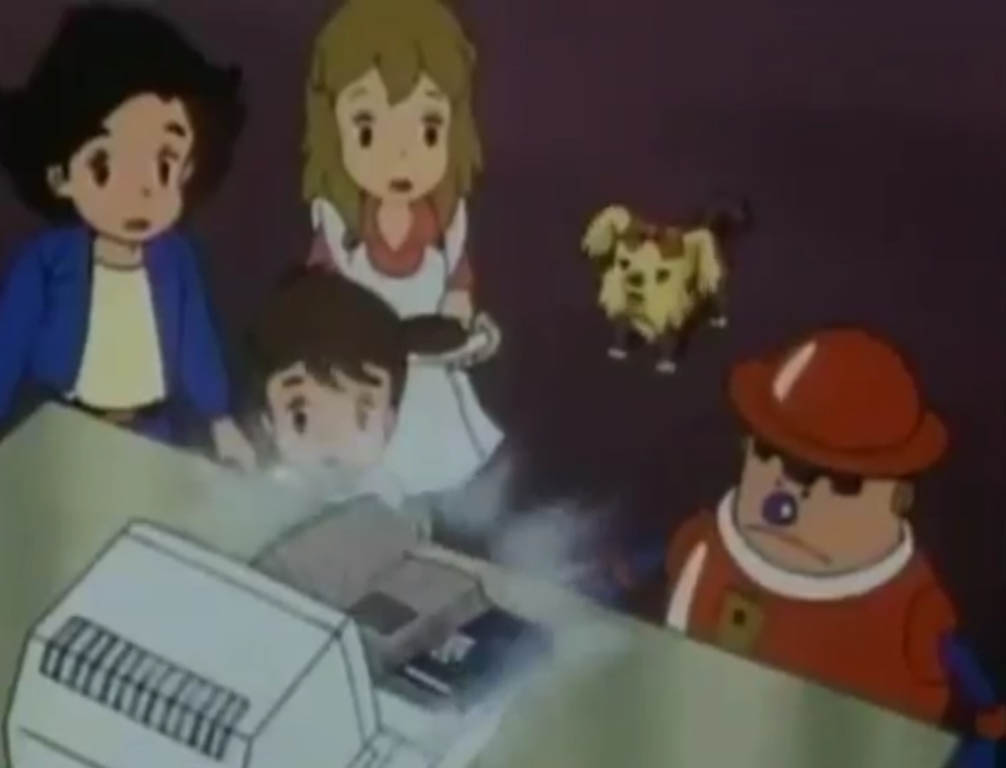
In the second series of Superbook II (episode 27 onwards), which took place two years after the first series, the book fell onto a computer keyboard, giving anybody the ability to see into the past from Christopher's home via the monitor. Ruffles, Chris' dog, managed to get lost in time, prompting Gizmo and Chris' cousin Uriah (or "Uri" for short; Hisashi in the original Japanese) to search for her. Chris and Joy kept watch and control of the computer from the present. The older children also had a hard time trying to keep what happened a secret from Chris's parents. Gizmo appeared as a functioning robot in the present day rather than as a toy (first series) in this (second) series, however Gizmo still needs to be wound up on a regular basis. Gizmo also had a built in computer keyboard and a monitor in his chest in order for Gizmo and Uri to stay in contact with Chris and Joy in the present day as well as transporting to other places in time or returning to the present. The Second Season of Superbook focused solely on Old Testament stories; covering some stories featured in Season One (for example, the stories of Abraham, Joseph and King David) in more detail, while also covering and featuring some stories not included in the first series (i.e. the Fall of Sodom and Gomorrah).

Superbook Series 2 US Opening Theme
Superbook Season 2 US Series Intro


Superbook Series 1 US Closing Theme
Superbook Season 1 US Series Outro


Superbook Series 2 US Opening Theme
Superbook Season 2 US Series Intro


What can be said about Superbook's run in Philippine television back in the late 90s? Well, looking back at it now it sure brings a lot of nostalgia specially that US opening and closing theme. They are those that will keep ringing in your head when you feel like being nostalgic about it. The concept of kids traveling through time to learn various life lessons and learning about "historical" characters seems to be a great formula; ABS-CBN's Bayani uses this same formula as well. If only there is a computer that allows one be "magically" transported to the world found in the book that falls on it and not be harmed by "some" violent tendencies also featured in that book. What if the characters of Superbook was in the actual Sodom and Gomorrah and while it was being "purged", Superbook would probably be not that too kid-friendly. Oh wait a minute, I remember the story of "Joshua and Walls of Jericho" (also "The Battle of Jericho") which was also featured in Superbook. So that probably answered my question, as long as violence is kept from the eyes of the main protagonists and the young audience, it is all good; but I digress.

Superbook original Japanese 80's anime and Christian Broadcasting Network's English-Dubbed Religious Show for Children in its original Philippine television run in the late 90's


In a majorly Christian (or Catholic) country like the Philippines, the English-dubbed Superbook animated series blends so perfectly well. Who knew that most of us kids growing up during the 90s were already being indoctrinated in teachings of Christianity specifically Old Testament Bible stories through this wonderful anime about "time travel". Now that we are all grown up and have wider views with the world now, we can all see what Superbook is really IS now.

Superbook title card english-dubbed religious show for kids Filipino tv philippine television run in the late 90's

How about you guys? What are your fondest memories with Superbook? Share your thoughts and opinion about the original English-dubbed Superbook Philippine television run in the comments section below.
Read More

Magandang Gabi, Bayan | An ABS-CBN 80s News Magazine Program Retrospective

Magandang Gabi, Bayan (also Magandang Gabi... Bayan) was one of the longest-running and top-rating ABS-CBN News & Current Affairs' news magazine program initially hosted by "Kabayan" Noli de Castro (hosted from 1988 to 2004) that originally an from August 21, 1988 to December 31, 2005. Magandang Gabi, Bayan (abbreviated as MGB) was an ABS-CBN consistent top-rating early fringe (late-afternoon)show initially aired every Saturdays at 6:00 PM that features various topics like contemporary national issues, poverty, crime, corruption, scandals, various inspirational and uplifting real life Filipino (sometimes international) stories. Let's go down memory lane as Retro Pilipinas takes a look back on Magandang Gabi, Bayan.

Magandang Gabi, Bayan ABS-CBN 80s 90s news magazine show Retro Pilipinas Feature

Magandang Gabi, Bayan - The Show
About Magandang Gabi... Bayan! (MGB)

Magandang Gabi, Bayan (directly translates to "Good Evening Nation!") started on August 21, 1988 with its first anchored by Manuel Leuterio de Castro, Jr., better known as "Kabayan" Noli de Castro (2004–2010 former Vice President of the Philippines). Magandang Gabi, Bayan or simply MGB aims to expose illegalities of some Philippine government officials as well as to render public service to the Filipino people. Initially intended to be a news magazine program it later evolved into a hardhitting investigative journalism program. The now defunct show continues to hold the title for the leading and longest public service program in the Philippines.
After De Castro's won the 2001 Philippine senatorial elections, the program brought in new hosts Katherine "Kat-Kat" de Castro (De Castro's daughter), Erwin Tulfo and Henry Omaga-Diaz. The show returned for one episode (hosted by De Castro) on October 2011 for a Halloween Special via ABS-CBN's Sunday's Best.

A look back at Magandang Gabi... Bayan ABS-CBN Horror Special Philippines Television

Memories of Magandang Gabi, Bayan!
Remembering Magandang Gabi... Bayan! (MGB)

The best memories I had (being a 90's kid) of Magandang Gabi Bayan or MGB was with their annual Halloween special episodes. If the coming Staurday is close to November 1, then the avid Filipino couch potatoes are in for a spooktacular treat by Magandang Gabi... Bayan's Halloween specials.

Magandang Gabi Bayan 2004 Halloween Special
Here is a sample of what we have experience back when MGB was still the king!


Don't get me wrong, MGB was a pioneer when it comes to investigative journalism in the Philippines with its interesting episodes each week, but the one that everyone will truly remember is the scary halloween specials. Thanks to Philippines rich culture and tradition, Filipinos will always have some spooky experience to share. Whether you believe it or not, MGB was there to make sure to re-tell and feature these real-life stories of supernatural horror. MGB used well-done re-enactments which can be compared to a good Filipino horror flick. Creepy atmosphere, terrifying scoring, believable make-up and practical effects is what Filipinos usually see on a MGB Halloween Special. Those who made MGB part of their Saturday television routine can probably say that the year won't be complete without a Magandang Gabi... Bayan Horror episode.

Magandang Gabi... Bayan ABS-CBN's longest running top-rating news magazine program hosted by Noli de Castro Retro Pilipinas

Magandang Gabi... Bayan's Halloween specials made me the horror genre fan that I am today. How about you guys? What is/are your most memorable episode or story remembered featured from this ABS-CBN long-running and top rating news magazine program? Share your thoughts about Magandang Gabi... Bayan in the comments section below:
Read More

Batibot | A PTV 80s Educational Show for Children Retrospective

Batibot was a popular Filipino children's television program based on Sesame Street. Batibot, a Filipino word which directly translates to "small, but strong and robust" premiered in May 14, 1984, with the name Sesame! which was eventually renamed to Batibot several years later. Batibot used both English and Filipino as the media of communication back when it was still Sesame! but became a completely Filipino language children's educational show once it transitioned to Batibot. Batibot broadcast nationwide from Monday to Friday on the Philippine television networks Radio Philippines Network (RPN) from 10:00 to 11:00 a.m. and on People's Television (PTV) (now National Broadcasting Network) from 3:00 to 4:00 p.m. In 1991, the show switched to ABS-CBN but switched back to RPN in 1994 after the former decided to produce its own set of children TV programs through the ABS-CBN Foundation. In 1995, PCTVF signed a contract with GMA Network and Batibot was shown at its original morning time slot. It ran from May 14, 1984 – June 30, 2002 and later came back on TV5. Let's go down memory lane as we remember Batibot.

 Retro Pilipinas Feature

Batibot - The Show
About Batibot

Batibot featured both humans, muppets, and mascots as its main cast of characters. batibot is one of the Philippines' longest running educational kids program. The original Batibot human cast included Kuya Bodjie, (played by Bodjie Pascua), Batibot's resident story-teller know for his opening line "Mga Bata..." when starting with his stories; Ate Sienna (Sienna Olaso) a college student; Kuya Mario (Junix Inocian); Ate Isay (Isay Alvarez-Seña) popular for her "Kapit-bahay" music; and Kuya Ching (Ching Arellano), Batibot's resident jeepney driver.

BATIBOT Television Special and Original Cast Reunion

In 2007, A Batibot Reunion and Tribute Special was featured in a segment in Kapuso Mo Jessica Soho. Check it out here fellow Batang Batibot(s).


Some of Batibot's most notable muppet/mascot cast included Pong Pagong, a clumsy, pink full-body turtle wearing a baseball cap from Jose Rizal's story of "Ang Pagong at ang Matsing"; Kiko Matsing, a brown monkey version of Sesame Street's Oscar which is also Ang Pagong at ang Matsing; Koko Kwik-Kwak, or Koko for short that wears an ethnic-inspired beanie cap with a propeller made of green leaves; Manang Bola, the forgetful fortuneteller who still relies too much on her crystal ball named "perlas na bilog,". She divines the future by chanting "Bolang bilog, huwag patulog-tulog; sabihin ang sagot" and "ba-be-bi-bo-bu", teaching vowels in the process; Sitsiritsit and Alibangbang, two inquisitive space aliens who take delight in discovering things, places and people around them. Inspired from the nursery rhyme "Sitsiritsit, Alibangbang"; Ningning and Gingging*, the sisters. Ningning is the eldest girl, the serious type, while Gingging is younger and the playful one between the two siblings; and Kapitan Basa*, a superhero that loves to read. He solves language-related problems caused by his arch-nemesis, Patlang-Palit.

Batibot Opening Theme
Batibot Show Intro


Batibot Theme Song Lyrics

Pagmulat ng mata,
Langit nakatawa
Sa batibot,
Sa batibot
Tayo nang magpunta
Tuklasin sa batibot
Ang tuwa, ang saya

Doon sa batibot
Tayo na, tayo na
Mga bata sa batibot
Maliksi, masigla. (2x)

Dali, sundan natin
Ang ngiti ng araw
Doon sa batibot (2x)

Tayo nang magpunta
Tuklasin sa batibot
Ang tuwa, ang saya

Doon sa batibot
Tayo na, tayo na
Mga bata sa batibot
Maliksi, masigla. (2x)

Iconic Batibot Philippine Educational Children's Television Show Cast

I am one of those Batang Batibot Kids who usually takes a break from the usual censored violence of US animated shows and Japanese anime(s). Everyday was Batibot Day with Kuya Bodgie reading us stories with matching illustrations, the angelic voice of Ate Isay, the gruff voice of Kiko, and the playful Pong. 90s kids connected and related to Batibot because that is one of the only educational shows presented in Filipino which make it stand out from Sesame Street and the countless of animations which are usually dubbed in English. Well, this is probably just me growing up fascinated with puppets but back then they were really a good source of rich colorful information and imagination. Well we now have the internet for that. For people who grew up with Batibot, they will forever be in our hearts and minds. How about a home video compilations to give our kids a chance?

Batibot Filipino Educational Children's Television Program GMA 90s Billboard Banner

How about you guys, were you a Batang Batibot? Any favorite muppet, mascot, human character, segment, music, story or mercandise you want to share? Let us here your thoughts about Batibot in the comments section below:
Read More

Teenage Mutant Ninja Turtles | 90s ABS-CBN American Animated Series

Teenage Mutant Ninja Turtles or TMNT was an American animated television series that began back in December 28, 1987 starting as a 5-part miniseries and later becoming a regular Saturday morning syndicated series on October 1, 1988 with 13 more episodes. TMNT the cartoon series originally ran from December 28, 1987 to November 2, 1996. Contrary to its original Mirage Studios comics source that was created by Kevin Eastman and Peter Laird, The Teenage Mutant Ninja Turtles animated series placed a much stronger emphasis on humor than the comics. The series was produced by Murakami-Wolf-Swenson Film Productions Inc (later Fred Wolf Films). Teenage Mutant Ninja Turtles cartoon series originally aired in various syndicated channels in the United States from Teenage Mutant Ninja Turtles. The cartoon series also fell victim to heavy censorship that time, In the UK, TMNT was released under the name Teenage Mutant Hero Turtles. Teenage Mutant Ninja Turtles aired in ABS-CBN around the 90s on a Saturday-Sunday morning block. Let's take a look back at the well loved turtles in a half shell, the Teenage Mutant Ninja Turtles.

Teenage Mutant Ninja Turtles Retro Pilipinas Feature 90s Animated Series ABS-CBN

Teenage Mutant Ninja Turtles - The Story
Teenage Mutant Ninja Turtles Series Plot

An honorable ninja master named Hamato Yoshi, banished from the Foot Clan in Japan was exiled and moved to New York where he was forced to live in the sewers. One day he found four turtles, recently bought from a pet store by an unnamed boy who accidentally dropped them in the sewer. After exploring the sewers along with his friend rats, Toshi found the turtles covered with a strange glowing ooze that caused the turtles (most recently exposed to Yoshi) to become humanoid, while Yoshi (most recently exposed to sewer rats) became a humanoid rat, and started going by the pseudonym "Splinter". Yoshi adopts the four turtles as his sons and trains them in the art of ninjitsu. He names them after his favorite Italian renaissance artists: Leonardo da Vinci (Leonardo), wears a blue mask and wields two Katana; Donato di Niccolò di Betto Bardi (Donatello), wears a purple mask and wields the bō staff; Raffaello Sanzio (Raphael), wears a red mask and wields a pair of sai; and Michelangelo Buonarroti (Michaelangelo), wears an orange mask and wields a pair of nunchaku.

Teenage Mutant Ninja Turtles First US Animated Television  Cartoon Series adaptation of Mirage Comics creation of Kevin Eastman and Peter Laird

Oroku Saki, the man who deceived and disgraced Yoshi's name left Japan and tracked Yoshi to New York City, where he intends to destroy him once and for all. He become associated with Krang, a disembodied alien brain who has been banished from his home, Dimension X. Saki then took a new persona, donning a suit covered with razor spikes, complemented by a long cape, and a metal mask over his mouth. He has also taken on the pseudonym "The Shredder". The two is later joined by Bebop and Rocksteady, two street thugs morphed into an animal humanoid form by exposure to the Shredder's mutagen; and a small army of robotic Foot Soldiers. Their aim is try to destroy the Turtles and take over the world. In their quest to restore their master's honor, Leonardo, Donatello, Raphael, and Michaelangelo begin to take on the role of vigilante crime-fighters against any criminals. The team is later joined by Channel 6 reporter April O'Neil who usually needs rescuing from Shredder and later with another vigilante Casey Jones.

Teenage Mutant Ninja Turtles 80's Cartoon Series featuring Channel 6 reporter April O'Neil with Leonardo, Donatello, Raphael, Michaelangelo

Teenage Mutant Ninja Turtles Opening Theme
Teenage Mutant Ninja Turtles Series Intro


The idea of anthromorphic group of teenage mutant ninja turtles protecting the world from evil was very entertaining to kids growing up in the 90s, myself included. It featured brothers bounded by a common cause who still have time to be jolly and happy. Looking back at it now, it sure has some phased out 90s funny moments but it doesn't hold well if you compare them with a much more serious tones of animated series nowadays. Well it was a different time back then and even if they followed the original serious tone of the comic source it was based from, it might eventually get censored out.

Teenage Mutant Ninja Turtles Leonardo wields two katanas, Michelangelo wields a pair of nunchaku, Donatello  wields a bo staff, Raphael wields a pair of sai

Teenage Mutant Ninja Turtles was purely for kids who won't dare to ask us what could have happened to the people living in that apartment that the Technodrome just destroyed. Well it was fun while it lasted. The show made me crave for pizzas back in the days. For a kid living in a small suburban provincial neighborhood, pizza became that dream snack. It made me ask who are those famous people behind the name of the four turtles making me know that besides being artists in their time, they were also scientists. There are also later incarnations of the Teenage Mutant ninja Turtles, but this one holds a special memory as this is the first TMNT animated series which the film also took inspiration from.

Teenage Mutant Ninja Turtles Retro US Cartoon Animated Television Series originally ran from December 28, 1987 to November 2, 1996

How about you guys, what's your fondest memory, episode, characters, or memorabilia of the 90s US cartoon show? Share your thoughts about the Teenage Mutant Ninja Turtles in the comment section below:
Read More

Dragon Ball | RPN English-Dubbed 80s - 90s Anime Retrospective

Dragon Ball was a popular English dubbed Japanese animated series which first aired in Radio Philippine Network (RPN) around the late 80s to early 90s. Dragon Ball, originally ドラゴンボール Doragon Bōru was based on the similarly popular manga illustrated by Akira Toriyama and originally serialized in Weekly Shōnen Jump from 1984 to 1995. Toie picked up the series and ran the original anime series from February 26, 1986 – April 12, 1989 back in FujiTV. Dragon Ball aired in the Philippines around the late 80s in RPN-9. The series was continually re-aired until it was finished at around 2000 in GMA Network with Dragon Ball GT. Before the world crushing powers of the Saiyan came to be, there was once the story of a young boy along with a girl in search of the mythical Dragon Balls. Let's remember the story of a monkey boy named Goku and his friends in search of the magical Dragon Balls.

Dragon Ball English Dubbed Japanese Anime Series Aired in the Philippines RPN Retro Pilipinas Feature

Dragon Ball - The Story
Dragon Ball - Series Plot

Dragon Ball begins and follows the story of a young monkey-tailed boy named Goku who befriends a teenage girl named Bulma. Together they go on a quest to find the seven Dragon Balls which grants any wish of the person who gets to complete all the Dragon Balls and summon a magical Dragon called Shenlong.

Collecting Seven Dragon Ball Summons Shenlong

Goku later undergoes rigorous training regimes under the martial artist Master Roshi in order to fight in the World Martial Arts Tournament, a competition that attracts the most powerful fighters in the world. During his training with Roshi, he meets a Shaolin monk named Krillin, who starts out as Goku's rival classmate who later becomes Goku's best friend. Outside the tournaments, Goku faces diverse villains such as Emperor Pilaf, the Red Ribbon Army, and King Piccolo. Several of the enemies and rivals Goku encounters eventually become his allies, including the desert bandit Yamcha, the assassin Tien Shinhan, the samurai Yajirobe, and King Piccolo's offspring/reincarnation Piccolo Jr.

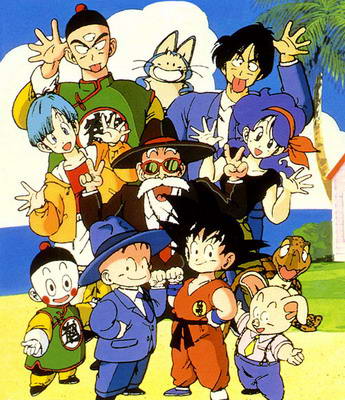
Original Dragon Ball Anime Series Characters Yamcha, Master Roshi, Bulma, Oolong, Goku, and Puar

Dragon Ball Original Japanese Opening Theme
Dragon Ball Series Intro


"Makafushigi Adventure!"
Artist: Hiroki Takahashi

Dragon Ball Opening Theme Makafushigi Adventure Dragon Ball

Dragon Ball Philippines Opening Theme
Dragon Ball Philippine English Series Intro


Dragon Ball Philippines Opening Theme Lyrics
"Dragon Ball"

Get that Dragon Balls
To face the greatest challenge in the world

Get that Dragon Balls
Seven Magic Balls

To make a wish you must possess them all
It's the greatest treasure you'll ever find
Go ahead enter the world of adventure

I see a vision through my colorful dreams
Pictures of places were I have never been
Something is out there waiting for you and me

Not far away is a beautiful sight
Magic ball shining with power so bright
Go ahead and take the chance
Follow your dreams

Let's try, try, try magical eyes
Show us the way as we go traveling high
Let's fly, fly, fly magical eyes
Feel the love within you burning like a flame

Get that Dragon Balls
To face the greatest challenge in the world

Get that Dragon Balls
Seven Magic Balls

To make a wish you must possess them all
It's the greatest treasure you'll ever find
Go ahead enter the world of adventure
Dragon Ball.


Dragon Ball Original Japanese Closing Theme
Dragon Ball Series Outro


Romantic Ageru Yo
Artist: Ushio Hashimoto

Dragon Ball Closing Theme Romantic Ageru Yo This World is Filled with Love

Dragon Ball Philippines Closing Theme
Dragon Ball Philippine English Dubbed Series Outro


Dragon Ball Philippines Opening Theme Lyrics
"This World is Filled with Love"

Life is so exciting and free
There are lots of good things to see
Fantasies, we can make them happen in this world

Let's not loose our precious time
They are really hard to find
Let's all go and find adventures in this life

Oh, we may see some mysteries that puzzle everyone
We must be strong to face them all
like battles to be won

Aim high reach for the sky now
Let love teach you the way how
This world can make dreams come true

This world is filled with love
So glad to know you do believe what love can do for you

Oh, this world is filled with love
Challenges make us strong
The power of love makes us win as it fills us with joy

Dragon Ball Anime in the Philippines Goku and his stretch stick

This is one of the first anime series that I followed back in the 90s. It was a lot simpler back then. This is where everything started, before Goku became the most powerful warrior in the face of the planet... even the universe and the life after. This is the original Dragon Ball series of the 80s where Goku was trained by a old perverted but still a master, Roshi (or Master Buten in its original run in Philippine television back in RPN-9). The retro anime series dubbed in English was pack with adventure and action. Whether it was in search of the dragon balls versus King Pillaf and the Red Ribbon army, or Goku joining the World's Martial Arts Tournament, we as kids raved and cheered for this monkey boy who at a strange weird way becomes an uncontrollable great giant uncontrollable powerful monkey at the mere sight of a full moon. Of course who could not remember those opening and closing music. I've heard USA's version of Dragon Ball's opening and closing theme, but I prefer Philippine's version of it. I still have my Dragon Ball teks collection as a physical reminder of how hooked I was with the Dragon Ball anime series.

original Dragon Ball 80's characters  Tien Shinhan, Puar, Yamcha, Bulma, Master Roshi, Launch, Tortoise Genie, Chiaotzu, Krillin, Goku, and Oolong

What about you guys, what's your fondest memory of the original Dragon ball series? Any memorable experience, toys, memorabilia or as Goku refer to it "memento" of the popular series? Share your thoughts in the comments section below:

Dragon Ball English Dubbed Anime Airied in the Philippines during the 80's and 90's RPN 9 and GMA Network
Read More

Voltron: Defender of the Universe | 80s - 90s IBC-13, RPN-9, SBN-21 Animated Series

Voltron: Defender of the Universe was an American animated television series adaptation of two different Japanese anime television series Beast King Golion and Armored Fleet Dairugger XV. Simply known as Voltron, the series originally aired in various syndicated channels in the United States from September 10, 1984 to November 18, 1985. Voltron: Defender of the Universe aired in the Intercontinental Broadcasting Network (IBC-13) and Radio Philippines Network (RPN-9) around the 80s until 90s. Let's take a look back at this beloved supre robot series of the 80's, Voltron.

Voltron Defender of the Universe Retro Pilipinas Feature 80s 90s  IBC RPN SBN Retro Animation


Voltron: Defenders of the Universe - The Story
Voltron: Defender of the Universe - Series Plot

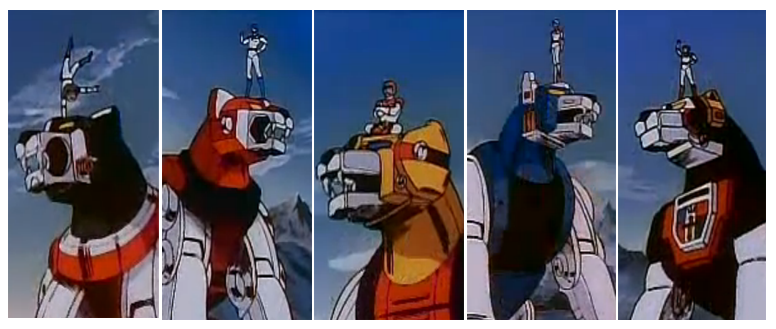
The first season of Voltron was based on Beast King Golion (Hykauu Juu Ou Golion). This series is also known as Lion Force Voltron (Voltron of the Far Universe) featured a team of five young pilots commanding five robot lions which could be combined to form Voltron. In this undefined future era, the Voltron Force was in charge of protecting the planet Arus which is ruled by Princess Allura from the evil forces of King Zarkon, his son Lotor, and the witch Haggar who would later create huge Robeasts to terrorize the people of Arus. This is the most popular iteration of Voltron, but was later called Voltron III.

Classic Voltron Human Pilots Lion Force Voltron (Voltron of the Far Universe)


The second season was based on Armored Fleet Dairugger XV (Kikou Kantai Dairugger XV), with the storyline considerably changed. In this iteration of Voltron, which was also known as Vehicle Voltron (Voltron of the Near Universe), the Galaxy Alliance's home planets have become overcrowded, and a fleet of explorers has been sent to search for new planets to colonize. Along the way, they attract the attention of the evil Drule Empire, long engaged in an ongoing war against the Alliance, and the Drules proceed to interfere in the mission of the explorers and the colonists. Since the Voltron of Planet Arus is too far away to help the explorers, a totally new Voltron is constructed to battle the Drule threat. This Voltron was called Voltron I since its setting was set closest to Earth.

Five Robo Lions to Form Voltron Defender of the Universe Retro Cartoons


This Voltron team consists of fifteen members, divided into three teams of five, known respectively as the Land, Sea, and Air Teams. Each team is specialized in gathering data or fighting in their area of expertise. Each team can combine their vehicles into a bigger machine, with each combined vehicle differing amongst the three teams: the Aqua Fighter (Sea Team), the Turbo Terrain Fighter (Land Team), and the Strato Fighter (Air Team). When necessary, all fifteen vehicles combine to form the mighty Voltron.

Iconic Lion Force Voltron Defender of the Universe super robot of the 80's


A proposed Voltron II, which was set to take the name of Gladiator Voltron (Voltron of the Middle Universe) was to have been based on Lightspeed Electroid Albegas (Kosoku Denjin Albegas) but was later cancelled in the United States because of the lack of popularity of Voltron II (second season).

Voltron: Defender of the Universe Opening Theme
Voltron: Defender of the Universe Series Intro


I was but achild when these series exploded in the Philippines. thanks to reruns of the show which have been very frequent in Philippine television, I was able to experience Voltron. I remember my father giving me a Voltron matchbox toy which was eventually lost. If only I or my father took care of that toy, I could have had a piece of my childhood up until now, but there is no real sense in crying over spilled milk. What matters is that I was able to enjoy my childhood thanks to these robo lions. I prefer and am more familiar with the Lion Force Voltron just like most Voltron fans.

Five Robot Lions of Lion Force Voltron Defender of the Universe 80's Retro Kids Show


Voltron was one of the most popular super robot series during its time. Both the Englsh dubbed animated series and its toyline became phenomenal. Whether it is on its catchy opening and closing themes, or the sheer awesomeness of a five giant robo lions forming into one robot battling giant monsters terrorizing the galaxy, Voltron has forever joined the ranks of the most popular kids show of the 80's. Just like any other 80's Americanized show, Voltron was heavily censored to cater for kids, but amidst its censorship World Events Productions and Toei Animation still managed to bring something special which up to this day are remembered by those who grew up humming its theme, shouting its formation sequence, and playing with its various toy lines.

The Legend of Voltron Defender of the Universe Retro Pilipinas Kids Show 80s 90s


How about you guys, what's your fondest memories of Voltron: Defenders of the Universe? Did you also liked the second season? What are your fondest memories of Voltron? Share everything on Voltron at the comments section below:
Read More

Visionaries: Knights of the Magical Light | ABS-CBN - 80s & PTV - 90s US Animated Show

Visionaries: Knights of the Magical Light was a 1987 short-lived Sunbow Productions animated series based from a Hasbro toyline. Vissionaries: Knights of the Magical Light or simply "Visionaries" has originally 13 episodes and ran from September 21, 1987 to December 14, 1987 on Claster Television, Inc. Visionaries got its Philippine television broadcast via ABS-CBN around the 80s and later on other Philippine Television channels like PTV (NBN Channel-4 for the Greater Manila Area) during the 90s. Let's take a look back on this short-lived kids show with an interesting concept.

Visionaries Knights of the Magical Light Philippine Television Broadcast ABS-CBN 80s Retro Pilipinas Feature


Visionaries: Knights of the Magical Light - The Story
Visionaries: Knights of the Magical Light Series Plot

The inhabitants of a distant planet called Prysmos enjoy the life of convenience brought by science and technology, but like everything else this eventually came to an abrupt end. When the three blazing suns of Prysmos re-aligned signaled the end of the age of Science and technology, and ushered in the power of mystics and magic.

Visionaries Knights of the Magical Light Spectral Knights and Darkling Lords Retro Animation Retro Pilipinas PTV Ch 4 90s


As the world collapsed, a new but primitive order began. A post apocalyptic medieval era began. An era known for its inquisition and wars. Leoric, leader of the Spectral Knights and prince of New Valarak leads and defends their fortress against the scheming Darkstorm of the Darkling Lords. They are both called to for a competition by the wizard Merklynn. After surviving traps, dangerous creatures, and each other, the survivors on both sides are rewarded. Everyone of them is given a different animal totem which appears on the front of their armor, which they can turn into. The animals are selected by Merklynn based on their personalities. Some knights have staffs with them, and these are told to dip them into an energy well. They become magical, each given a different power. They activate these by reciting a special verse. Any staff-wielding knight can activate any staff, as long as he casts the spell properly.

The war for power and supremacy on the two opposing faction heightens after obtaining their new found magical powers.

Visionaries: Knights of the Magical Light Opening Theme
Visionaries: Knights of the Magical Light Series Intro


It is a time when Magic is more powerful than Science,
and only those who control the magic, control destiny.
...They are the Visionaries.

Visionaries, knights of the magical light,
Visionaries, with magical powers they fight.
Powers of mind and strength, skill and speed,
Powers to accomplish the greatest of deeds.

Visionaries, knights of the magical light.


Visionaries Knights of the Magical Light Magical Holograms as Weapons and Summons


The Visionaries seems to have left an imprint in my mind. This is probably because the series has an impressive toyline courtesy of Hasbro. I remember having two visionary toys when I was still a kid. The Visionaries toys have those hologramic 3-D-esk stickers which gave kids like me the allusion that they can pop in any time just like the series. I have little memories about the conflict between Leoric and Darksorm and only recalls it after researching and making this post. But still a post-apocalyptic medieval magical era with magic and technology mix is an interesting concept. Too bad is was cancelled. As a kid, the Visionaries was pretty much all eye candy for me. I just watched it for the fight scenes and the cool summoning and transformation sequences.

Visionaries Knightsof the Magical Light 1987 short-lived Sunbow Productions kids show title visionaries logo


How about you guys? What are your fondest memories, cool merchandise, favorite character, summons or episode in the short-lived series? Share your thoughts about Visionaries: Knights of the Magical Light in the comments section below:
Read More

Bioman | Choudenshi Bioman | ABS-CBN 80s, IBC 13 - 90s English Dubbed Tokusatsu

Bioman was an English dubbed super hero kids show which first aired in ABS-CBN back in 1986 and later in Intercontinental Broadcasting Company (IBC) around the 90s. Bioman was originally Choudenshi Bioman (超電子バイオマン Chōdenshi Baioman), a Japanese tokusatsu television series by Toie Company and the 8th super sentai series title which originally aired on TV Asahi from February 4, 1984 to January 26, 1985. Bioman was the last super sentai series that got an English dubbed, the localized sentai series that followed are all dubbed in Filipino. Even in its 90s rerun, it was still dubbed in English. But it was the series that most 90s Filipino kids are familiar with and has the same charm as Maskman. Let's go down memory lane as we look back at Bioman.

Choudenshi Bioman English Dubbed Super Sentai Show Run in the Philippines Retro Pilipinas Feature


Choudenshi Bioman - The Story
Choudenshi Bioman Series Plot

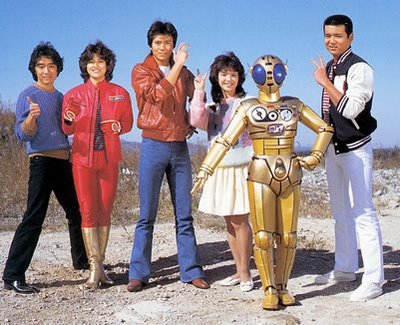
The once prosperous Bio Star is destroyed after a world war erupted over the use of a scientific discovery called "Bio Particles". The Bio Star Peacekeeping Alliance, which sought to use Bio Particles for peaceful purposes, sends the giant robot Bio Robo and an assistant robot named Peebo in order to prevent the same tragedy from happening to Earth. Bio Robo arrives on 15th century Japan, where it showers Bio Particles on five young individuals. Centuries later, the descendants of these individuals, infused with Bio Particles, are chosen by Peebo and Bio Robo to become the Bioman team: Shiro Go became Red One, Shingo Takasugi became Green Two, Ryuta Nanbara became Blue Three, Mika Koizumi, who was later replaced by Jun Yabuki became Yellow Four, and Hikaru Katsuragi became Pink Five.

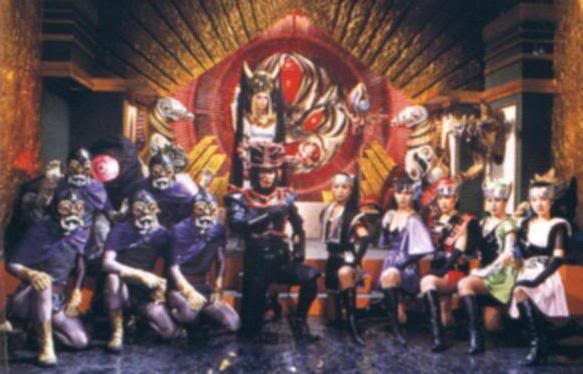
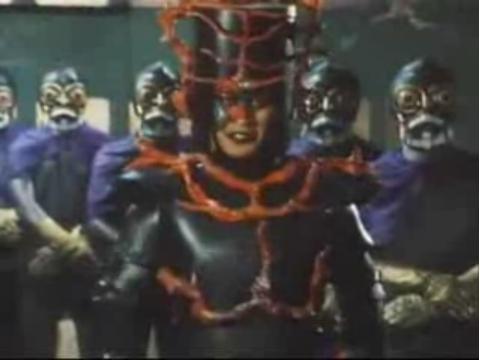
Doctor Man of Neo Gear Empire Bioman


The Bioman team are asked to protect the Earth from the Neo Gear Empire, an organization led by the cyborg mad scientist Doctor Man from his Neo Grad fortress at the South Pole. Doctor Man believe that Neo Gear Empire to be a technologically advanced society with the right to rule Earth. Big Three (Mason, Farrah, and Monster), Farrah Cat, Prince and Mecha Clones.

Bioman Team Mecha Bio Robo Biorobot


Bioman Opening Theme
Choudenshi Bioman Series Intro


Bioman Team in Bioman Suits together with Peebo Retro Super Sentai


"Choudenshi Bioman" (超電子バイオマン Chōdenshi Baioman)

Lyrics by Chinfa Kan.
Composition by Kunihiko Kase.
Arrangement by Tatsumi Yano.
Artist: Takayuki Miyauchi


Takayuki Miyauchi Live Perfomance of Bioman Opening Theme
Takayuki Miyauchi Sings Choudenshi Bioman - Series Intro


Bioman Team in Human Form Shiro Go - Red One, Shingo Takasugi - Green Two, Ryuta Nanbara - Blue Three, Mika Koizumi - Yellow Four, and Hikaru Katsuragi - Pink Five, and Peebo


Bioman Closing Theme
Choudenshi Bioman Series Outro


The only Bioman Closing Theme I found that showed the original TV Ending Theme Sequence. This Closing Theme is in French but stayed true to its original arrangement.

"Biomic Soldier" (バイオミック・ソルジャー Baiomikku Sorujā)

Lyrics by Chinfa Kan.
Composition by Kunihiko Kase.
Arrangement by Tatsumi Yano.
Artist: Takayuki Miyauchi.


Takayuki Miyauchi Live Perfomance of Bioman Closing Theme
Takayuki Miyauchi Sings Biomic Soldier - Series Intro


For a 90s kid, I have considered Bioman as the "bio brain" of all super sentai series during its run. Of course this was not true, but you really can't blame a kid who has just started to grow awareness about his surrounding during the 90s. We don't have Wikis or the internet to inform us that time, so this was really my first exposure to the super sentai (tokusatsu) series. Besides the usual storyline, monsters, mechas and story, Bioman's greatest and lasting influence was both its memorable catchy opening and closing themes. As a sign of its lasting influence, I still seldom randomly hear its theme everytime I'm out doing my regular stroll. Whether it is in a form of a ring tone or a music being played in a CD, Bioman truly has became a part of everyone (mostly its male audience) who grew up with the series. I am bit ashamed to say that I never really got into the series due to the fact that it was dubbed in English and it has erratic airing television schedule back in IBC-13. I believe I have never seen the show's finale. I preferred Maskman later, because of the obvious... being in Filipino. I somewhat understood Maskman "more" back then(?). I wasn't that fully into Star Wars back as well, so Peebo was my first lovable gold robot. CRPO was just a runner up. Bioman became memorable a series and probably a part of my childhood now. Thus it always brings me back to the worry-free moments of my life when I was just watching retro tokusatsu shows in our local Philippine television.

Choudenshi Bioman in the Philippines

What about you guys? What's your fondest memories, favorite episode, character or merchandise about the Bioman? Share your thoughts and experiences in the comments section below:
Read More

That's Entertainment | GMA 80s Filipino Teenage Variety Show

That's Entertainment or simply known as "That's" was a Filipino youth-oriented talent and variety show that aired in GMA Network from January 6, 1986 – March 23, 1996. That's was hosted by German Moreno together with Ike Lozada. Let's go down memory lane with That's Entertainment here at Retro Pilipinas.


That's Entertainment Filipino youth variety show Retro Pilipinas Feature


That's Entertainment - The Show
About That's Entertainment

That's Entertainment launched on January 6, 1986 by GMA Network and first aired from the old GMA building in EDSA, but later moved to the GMA Broadway Centrum in 1987 to accommodate it's increasing studio audience and fans. The Filipino youth variety show used song "That's Entertainment" as its main theme song. That's Entertainment was written by Arthur Schwartz with the lyrics of Howard Dietz which was written especially for the 1953 Metro-Goldwyn-Mayer musical film The Band Wagon. Hosted by German Moreno together with Ike Lozada, That's gained popularity almost overnight among young Filipino audiences.


That's Entertainment ushered in new stars whom most have become the Philippine industry's finest. The youth-oriented variety show grouped their talents into five: Monday, Tuesday, Wednesday, Thursday and Friday groups. Every Saturday, all of the said five groups were joined together to performed various production numbers. The show paired up various talents to serve as love teams that usually illicit feelings of "kilig" to most of the show's female audiences. The pairing eventually transcended the show and some eventually hooked up in real life. The show was a star maker, those who were exceptional and offered something fresh became the industry's finest celebrity idols. Nobody can be young forever. That's members eventually moved on with their lives. Some got their much needed industry break making them the industry's popular actors, comedian/comedienne, actors, singers, dancers, and performers. Some decided to pursue a much fulfilling and private lives completely vanishing from the radar of the ever scrutinizing eye of the public. The show also catapulted different dance group to popularity, The Maneouvres, Streetboys, Abztract Dancers, Kids at Work, UMD all became the Philippines' premiere dance group because of the show. German "Kuya Germs" Moreno was recognized as the Philippine's star maker because of the said show.

That's went off the air at the height of its popularity back in March 23, 1986. The last episode of "That's Entertainment" was shown on Saturday primetime (9:00 pm) with former members reunited in a TV special entitled "That's The Reunion".


A Fan Tribute Video to That's Entertainment:


I wasn't really that into That's Entertainment that time. I was but a kid back then and had really no interest in an afternoon variety show. But I have to give credit to the show for discovering and launching the career of their talents who most have become the popular celebrities, politicians and professionals in the Philippines and even abroad. I was really not a That's kid, but it will forever have a special place in the hearts of those who supported the show.


That's Entertainment Filipino youth variety hosted by German Moreno Kuya Germs and Ike Lozada


What about you guys? Were you a fan of That's Entertainment? If you were, then what's your fondest memory, favorite love teams, favorite talent and general thoughts on the iconic star maker of a variety show from GMA Network back in its 80s-90s run? Share your thoughts on That's Entertainment on the comments section below:
Read More

Shaider | Space Sheriff Shaider | ABS-CBN 80s, IBC 90s

Shaider was a Filipino dubbed super hero kids show that first aired in ABS-CBN from 1988 to 1991 and later at Intercontinental Broadcasting Corporation or IBC from 1992 to 1994 which was the very first Japanese Tokusatsu series dubbed in Tagalog (Filipino). Shaider had an original title of Space Sheriff Shaider (宇宙刑事シャイダー Uchū Keiji Shaidā), a Japanese tokusatsu television series and the third part of the Metal Hero Series (the last of the Space Sheriff Trilogy) which originally aired on TV Asahi from March 2, 1984 to March 1, 1985. Being the first ever Taalized tokusatsu series, Shaider holds a very special place in Philippine television. There had been reruns of the show but the series was never finished due to its contsant cancellation by the television stations that hosted it. It suffered the same fate as the Masked Rider Black series run.

Space Sheriff Shaider 80's Tagalized Tokusatsu Metal Hero Series in the Philippines Retro Pilipinas Feature


Space Sheriff Shaider - The Story
Shaider Plot

In college studying archaeology, Dai Sawamura, known in the Philippines as Alexis deciphered the figures on the Nazca Plains in Peru. Impressed by this feat, the Galactic Union Police recruited him and trained him to be Earth's third Space Sheriff, after which he was given the code name 'Shaider' in memory of an ancient warrior who defeated the villain Emperor Kubilai and brought down the Fuuma 12,000 years ago. When the Fuuma returns, Alexis is deputized as he returns to Earth to battle the Fuuma with the help of Annie, Alexis' classmate, whose homeworld of Mount was annihilated by Fuuma.

Space Sheriff Shaider Villains  Fushigi World Fuuma


Commander Hessler aka Drigo in Shaider


Girl's Army aka Amasona in Shaider


The Fuuma aspires to ultimately conquer the universe through psychological attacks on many planets using fushigi beasts hatched from pearls which are given birth to by the Great Emperor Kubilai (Fuuma-Lear) ultimately destroying worlds. Together with other followers of Fushigi World Fuuma religion followers like Priest Poe (Babaylang Ida), Kubilai's 15,000 year old transvestite grandson who serves as advisor, high priest and strategist known for his "Phantom Showtime" or most popularly known as the Time-Space Warp... the "Time Space Warp Ngayon Din!" become an iconic pop culture line; Commander Hessler (Drigo), and the Girls' Army (Amasona).

Priest Poe aka Babaylang Ida in Shaider


Space Sheriff Shaider Opening Theme
Shaider Intro


"Uchū Keiji Shaider"
Lyrics by Keisuke Yamakawa.
Composition and Arrangement by Michiaki Watanabe.
Artist: Akira Kushida


Space Sheriff Shaider and Vavilos (Babilos)


Space Sheriff Shaider Closing Theme
Shaider Outro


"Hello! Shaider"
Lyrics by Keisuke Yamakawa.
Composition and Arrangement by Michiaki Watanabe.
Artist: Akira Kushida


I watched the first rerun of Shaider around the 90s and like everyone else I was hooked with this weekly superhero show just like Masked Rider Black. It featured interesting characters especially Annie and her yellow and white attire (winks), Ida known for her time- space warps and odd monotone voice, catchy opening and closing theme songs (seen above), and who can not forget that psychedelic, mysterious, creepy and kick-ass all at the same time theme of the "Fushigi Song" that plays everytime Lear/Kubilai gives birth to a Fushigi Monster:


Looking back at Shaider, the show might look silly. Imagine an ancient alien religious sect who wants to conquer the universe through psychological attacks? But Shaider will forever be part of Filipino geek pop culture history.

Shaider in the Philippines Annie and Alexis


What about you guys? Share your fondest memories of the Filipinized Metal Hero series? Do you have any favorite fushigi monsters, episodes, or memorabilias? Share your thoughts and experiences on Space Sheriff Shaider on the comments section below:
Read More

Teks - The Iconic Filipino Card Game for Children

Teks was a coined term for a trading card game and the actual cards themselves popular amongst children that probably has started around the late 50s. The cards used in the game which was also called teks are very small, about a quarter of the size of regular playing cards first featured cartoon storyboard clips of local films complete with characters' dialogues and action sequences. Each teks are numbered which serves as indication to know what part the printed scene is on the series of scenes taken from an actual Filipino film titles or more popular television shows. It can be said that teks (cards) are the direct and unintended commercial byproduct of Filipino comics. More of a game for children, the teks was the very first form of trading card game for the Filipino mass.

Teks - Filipino Trading Card Game Retro Pilipinas Feature


Teks Game Mechanics
Teks Trading Card Game

The game relies heavily on betting which side will come up, and is decided by flicking the teks in the air. Some players slap the cards against each other in a high five for added effect. Players usually favor a specific card to use as the card they'll flip while all the other cards are basically act as betting currency.

Teks players use a method of counting the cards unique to the game: they count two cards for each numerical number said aloud, in a cadance that splits the spoken number's syllables in two. The odd card will be counted by a 'cha', meaning 'and a half', at the end of the counting.


Philippine Teks of the 90s


As a kid growing in the 90s I have been introduced to the first version of teks from the kids in our neighborhood. I usually watch them playing this obscure game, flicking the cards in the air then later looking at the results, the winners will receive a new set of cards to add to their already worn out (from being regularly flicked and handled) and almost ruined collection of teks.

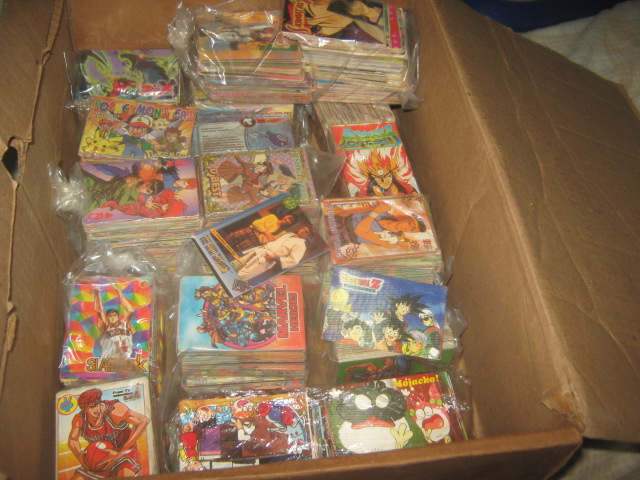
I was not able to enjoy the teks like how most children in the neighborhood do. I can remember buying a text and just admiring the wonderful artworks featured in both sides of a single piece. Later in elementary school, the popularity of Japanese animation (anime) and other US cartoons have changed the contents of most teks offered at that time. The once was comics like panels taken from actual Filipino films and were reminiscent of traditional Filipino Comics were then (and up to now) replaced by colorful scenes or special images of the characters from the popular animated series at that time. The teks as a game has still the same mechanics. the only changed noticed in the 90s were the siz of each teks. I can still remember that each card pack cost one peso with three to six individual pieces available in each cards. Thinking that it would be a complete waste to just use the cards in a regular game of teks, I decided to just keep it in good condition inside a super elastic ice bag which then is placed in a shoe box. I started collecting teks from grade school all the way up to my high school days. Up to this day, I still have my collection of anime themed teks: Dragon Ball series (original Dragon Balls, Z, GT,), Ghost Fighter (Yu Yu Hakusho), Marvel Series, Zenki, Pokemon, Mojacko, Fushigi Yuugi, Slam Dunk, Sailor Moon, etc.

What about you guys? What's your fondest memory of playing teks? What Filipino or foreign titled teks have you played with? Share your thoughts and experience with teks on the comments section below:
Read More