Showing posts with label English Dubbed. Show all posts

Super Boink | Tonde Burin | IBC-13 90s English-Dubbed Anime

Super Boink was an English-dubbed anime which aired in the Intercontinental Broadcasting Company (IBC-13) primetime block during the late 90s in the Philippines. Super Boink was originally titled Tonde Burin that originally run from September 3, 1994 to August 26, 1995 on MBS by Nippon Animation studio with a total of 51 episodes. Tonde Burin was first a shojo manga written by Taeko Ikeda and published by Shogakukan in manga magazine Ciao that originally run from October 1994 to September 1995 with a total of 3 volumes. Let's go down memory lane and remember this magical girl parody simply titled super Boink.

Super Boink Tonde Burin 90s English-Dubbed Anime Retro Pilipinas Feature

Super Boink - The Story
About Tonde Burin

Karin Kokubu (Coleen in the Philippine-dubbed version) is late for school one day when she comes across an apparently injured yellow pig. It turns out the pig wasn't injured but just hungry, and he gets back his health when he eats Karin's apple. When Karin gets to her school called St. Ringo School, she discovers that the pig has stowed away in her backpack which causes her more trouble.

Super Boink 90s IBC 13 Anime Tonde Burin Karin Kokubu is Coleen in the Philippine version of Super Pig

Later, she meets the pig again and finds out he can talk and fly. The pig gives her a "Dream Tonpact" which she opens and a pig snout appears from it and attaches itself to her nose! She finds the pig again who explains that he is actually Prince Tonrariano the 3rd (Iggy Pig) of the apple-shaped planet Buringo (Oinko). He tells her how she can transform: by saying "Ba Bi Bu Be Burin!" she transforms into a superpowered pink piglet called Tonde Burin (Super Pig in the US, Super Boink in the Philippines). This is not something Karin is happy about at all as she'd rather transform into a magical girl heroine like her idol the henshin hero tokusatsu character "Cutey Chao" (who is possibly a reference to Cutie Honey). Tonrariāno (who she calls Ton-chan) tells her if she can collect 108 pearls by doing good deeds as Burin, she can do so. The pearl collection operates on karma meaning if Burin abuses her powers, she will lose pearls.

Whenever someone is in danger, Karin would become Tonde Burin to thwart the crisis and even use her new abilities to help other people in need.

Source: Wikipedia


Super Boink Opening Theme
Tonde Burin Series Intro

Super Boink Opening Theme

Super Boink IntroLove is Uncool (愛はカッコわるい Ai wa Kakko Warui)Lyricist: Manami Tōno Composer: Tsugumi Kataoka Arranger: Tsugumi Kataoka Singers: ParquetsCheck out our blog about Super Boink for more information and discussion:http://retropilipinas.blogspot.com/2015/11/super-boink-tonde-burin-ibc-13-90s.html- - - - -Retro Pilipinas does not claim any ownership of the classic television shows archived and featured in the blog. All the shows featured here are mostly copyrighted materials which all respectfully belonged to their rightful owners, personnel, company or organization. The blog is not affiliated with any of the company that rightfully owns the source material. The blog only aims to educate and feed the nostalgia of the Filipino netizens and those of other nationalities that are looking for the past shows that brings nostalgia.

Posted by Retro Pilipinas on Friday, November 20, 2015

Love is Uncool (愛はカッコわるい Ai wa Kakko Warui)
Lyricist: Manami Tōno
Composer: Tsugumi Kataoka
Arranger: Tsugumi Kataoka
Singers: Parquets

Super Boink Closing Theme
Tonde Burin Series Outro

Super Boink Closing Theme

Super Boink OutroBurin à la mode (ぶーりん あ·ら·もーど Būrin a ra mōdo)Lyricist: Manami Tōno Composer: Tsugumi Kataoka Arranger: Tsugumi Kataoka Singers: ParquetsCheck out our blog about Super Boink for more information and discussion:http://retropilipinas.blogspot.com/2015/11/super-boink-tonde-burin-ibc-13-90s.html- - - - -Retro Pilipinas does not claim any ownership of the classic television shows archived and featured in the blog. All the shows featured here are mostly copyrighted materials which all respectfully belonged to their rightful owners, personnel, company or organization. The blog is not affiliated with any of the company that rightfully owns the source material. The blog only aims to educate and feed the nostalgia of the Filipino netizens and those of other nationalities that are looking for the past shows that brings nostalgia.

Posted by Retro Pilipinas on Friday, November 20, 2015

Burin à la mode (ぶーりん あ·ら·もーど Būrin a ra mōdo)
Lyricist: Manami Tōno
Composer: Tsugumi Kataoka
Arranger: Tsugumi Kataoka
Singers: Parquets
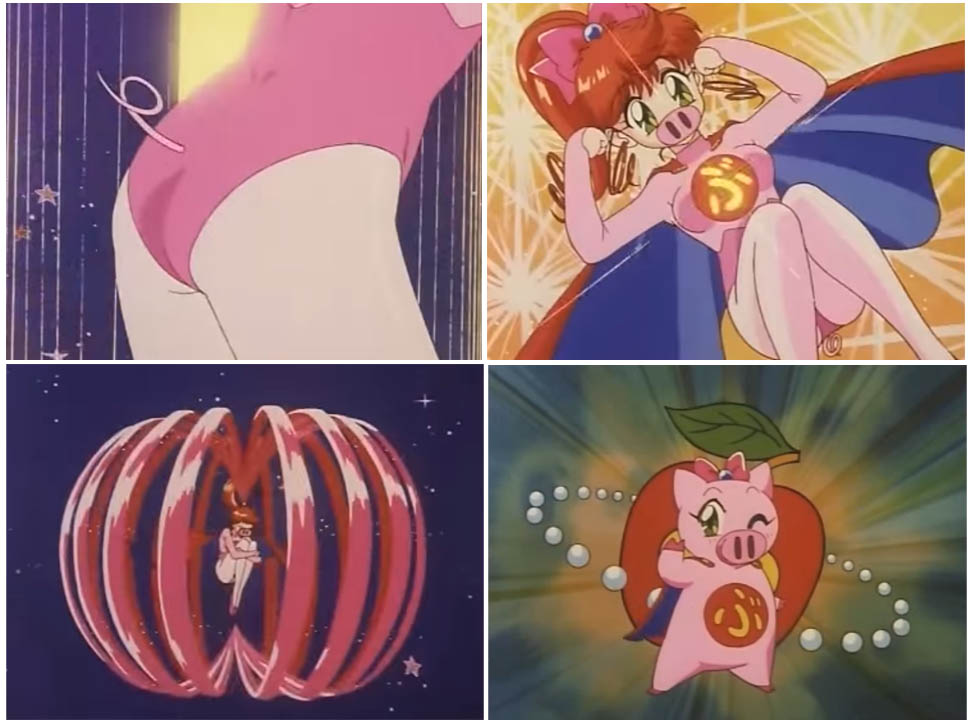


Super Boink Tonde Burin Magical Girl Transformation into a super Pig Japanese anime Magical Girl Parody 90s

What is there to say about Super Boink? Well, it sure was a fun series; that is for certain. This made me wonder and just humor me here. What if you are given the chance to be a powerful super hero but you are in a form that you least desired, like let's say a human fecal matter which doesn't only look bad, but smell bad as well; would you accept it? Well in Super Boink's case that is the case. If my memory serves me correct this was shown around the time that Yaiba was also being shown or maybe not; feel free to correct me in the comments section. What I do remember is Coleen's magical transformation as the beloved flabby heroine of justice Super Boink which you can see here:


I still remember the initially reluctant Coleen when she first became Super Boink and how she later learned to come to terms to it. Basically that she was given the incentive or a promise that she will become a beautiful Magical Girl (example Sailor Moon) once she have collected enough pearls as Super Boink or at least that is how I remembered it. I would probably revisit the series just like what I did with Hell Teacher Nube. Hopefully all episodes are available online for some nostalgic binge watching and anime marathon. I also remember doing sketches of Super Boink since it is not that challenging to do a sketch of heras a 90s kid; the same as what I did with Sunny Pig which we'll soon also revisit here at Retro Pilipinas.

Super Boink 90s IBC-13 English-Dubbed nostalgic Anime  title card

How about you guys? What are your fondest memories of this magical girl parody? Do you have any particular favorite like episode(s), characters, and merchandise related to the show? Share your thoughts and experiences about Super Boink in the comments section below:
Read More

Superbook in the Philippines | 90s English-Dubbed Children's Show

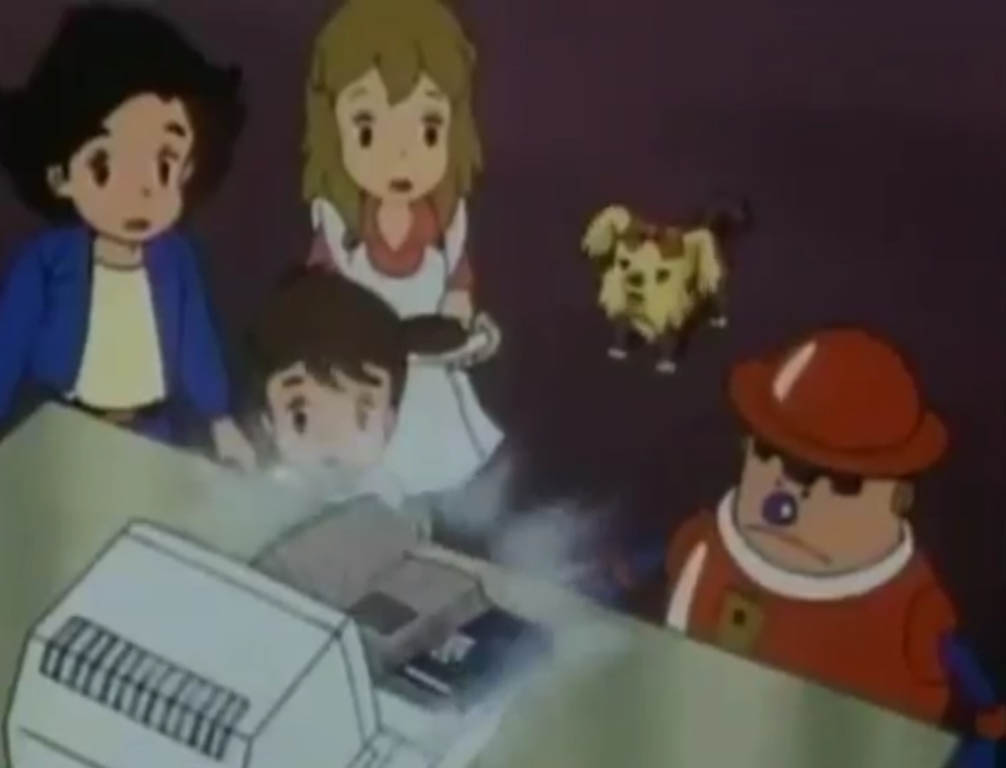
Superbook was an English-dubbed animated show for children which aired in the Philippines back in the late 90s about bible stories. Superbook, originally entitled "Animated Parent and Child Theatre" in Japan was initially produced by Tatsunoko Productions in Japan in conjunction with the Christian Broadcasting Network in the United States that originally run from October 1, 1981 to March 29, 1982 on TV Tokyo (in Japan) and on CBN (United States) with a total of 52 episodes; two seeming different season (or series) in terms of the iteration of the story. Let's go down memory lane and remember the original English-dubbed Superbook run in Philippine Television.

Superbook English-Dubbed Religious Children Show 90's  Retro Pilipinas Feature

Superbook - The Story
About Superbook

The first series (season) of Superbook began at the home of a young boy named Christopher Peeper (Sho Azuka in Japanese) who discovers the "Superbook" (Time/Space Travel Book) Bible that speaks and sends him, his friend Joy (Azusa Yamato), and his clockwork toy robot Gizmo (Zenmaijikake) back in time to the early events of the Old Testament. Gizmo can walk and talk, but only for the duration of the adventure and needs to be wound up regularly in order to function. This first series of Superbook featured stories mainly from the Old Testament of the Hebrew Scriptures, although a few episodes dealt with the life and ministry of Jesus Christ.

Superbook original 80's and 90's anime religious show featuring Christopher Chris Peeper, Joy, Uriah Peeper, Gizmo, and Ruffles Superbook classic

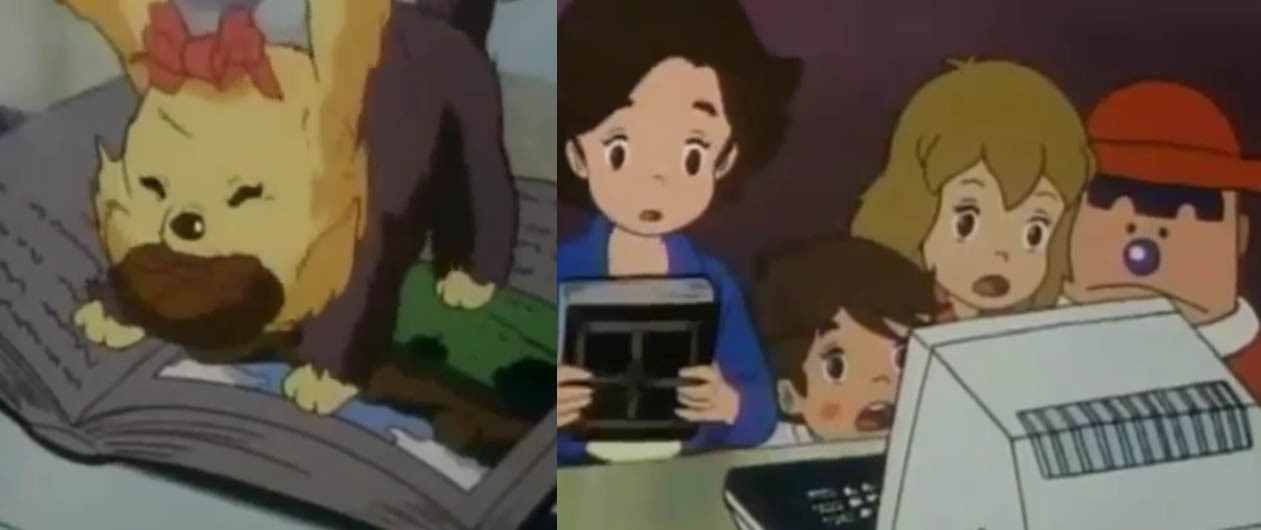
In the second series of Superbook II (episode 27 onwards), which took place two years after the first series, the book fell onto a computer keyboard, giving anybody the ability to see into the past from Christopher's home via the monitor. Ruffles, Chris' dog, managed to get lost in time, prompting Gizmo and Chris' cousin Uriah (or "Uri" for short; Hisashi in the original Japanese) to search for her. Chris and Joy kept watch and control of the computer from the present. The older children also had a hard time trying to keep what happened a secret from Chris's parents. Gizmo appeared as a functioning robot in the present day rather than as a toy (first series) in this (second) series, however Gizmo still needs to be wound up on a regular basis. Gizmo also had a built in computer keyboard and a monitor in his chest in order for Gizmo and Uri to stay in contact with Chris and Joy in the present day as well as transporting to other places in time or returning to the present. The Second Season of Superbook focused solely on Old Testament stories; covering some stories featured in Season One (for example, the stories of Abraham, Joseph and King David) in more detail, while also covering and featuring some stories not included in the first series (i.e. the Fall of Sodom and Gomorrah).

Superbook Series 2 US Opening Theme
Superbook Season 2 US Series Intro


Superbook Series 1 US Closing Theme
Superbook Season 1 US Series Outro


Superbook Series 2 US Opening Theme
Superbook Season 2 US Series Intro


What can be said about Superbook's run in Philippine television back in the late 90s? Well, looking back at it now it sure brings a lot of nostalgia specially that US opening and closing theme. They are those that will keep ringing in your head when you feel like being nostalgic about it. The concept of kids traveling through time to learn various life lessons and learning about "historical" characters seems to be a great formula; ABS-CBN's Bayani uses this same formula as well. If only there is a computer that allows one be "magically" transported to the world found in the book that falls on it and not be harmed by "some" violent tendencies also featured in that book. What if the characters of Superbook was in the actual Sodom and Gomorrah and while it was being "purged", Superbook would probably be not that too kid-friendly. Oh wait a minute, I remember the story of "Joshua and Walls of Jericho" (also "The Battle of Jericho") which was also featured in Superbook. So that probably answered my question, as long as violence is kept from the eyes of the main protagonists and the young audience, it is all good; but I digress.

Superbook original Japanese 80's anime and Christian Broadcasting Network's English-Dubbed Religious Show for Children in its original Philippine television run in the late 90's


In a majorly Christian (or Catholic) country like the Philippines, the English-dubbed Superbook animated series blends so perfectly well. Who knew that most of us kids growing up during the 90s were already being indoctrinated in teachings of Christianity specifically Old Testament Bible stories through this wonderful anime about "time travel". Now that we are all grown up and have wider views with the world now, we can all see what Superbook is really IS now.

Superbook title card english-dubbed religious show for kids Filipino tv philippine television run in the late 90's

How about you guys? What are your fondest memories with Superbook? Share your thoughts and opinion about the original English-dubbed Superbook Philippine television run in the comments section below.
Read More

Yaiba | Kenyuu Densetsu Yaiba | ABC 90s English Dubbed Anime Retrospective

Legend of the Swordmaster Yaiba or commonly known here in the Philippines as Yaiba was an English dubbed Japanese animated series (anime) that aired in ABC-5 (now known as TV5) during the 90s. Yaiba (Ken'yū Densetsu Yaiba) was first a manga created by Gosho Aoyama the same creator and artist who brought us two other popular manga/ anime with Kaito Kid and Detective Conan. The Yaiba anime aired simultaneously on TV Tokyo (where it was titled as Kenyuu Densetsu YAIBA), TV Hokkaido, and TV Aichi from April 9, 1993~April 1, 1994 with 52 episodes. Let's take a look back at the adventure of the legendary swordsman, Yaiba Kurogane here at Retro Pilipinas.

Yaiba Kenyuu Densetsu Yaiba Retro Pilipinas Feature

Yaiba - The Story
Yaiba - Series Plot

Yaiba Kurogane is a samurai-in-training living together with his father (Kenjurou) and his two animal friends (Kagetora and Shonosuke). One day they were attack by gorillas where they barely escape and eventually found themselves in the big city where Yaiba found out that he is a legendary warrior's incarnation able to wield the Raijin-ken or commonly known in the English dubbed series as "Sword of Thunder God" and has to be Onimaru. He is then set on a quest to become the Samurai that he has always dreamt of through the power of the legendary sword and its powers.

Yaiba Opening Theme
Yaiba Series Intro


"Yuuki ga Areba" (If You Have Courage)
Performed by Kabuki Rocks

tatakau kotoba ikiru sadame dato iu naru
kachi tsuzukeru koto dake tada hitotsu no nozomi

kami ga ataeta shiden o koete
henka no PAWAA furishi boru sa

* yuuki ga areba dekiru hazu
yume to iu na no katana o nuite
tatakae! subete no chikara de kimi o mamotte miseru

kaze kiru kata ni tooku tobi satta ano koro
tsuyoku naritai dake tabidatta kokyou

furi kaeritai toki mo aru kedo
henka no PAWAA yomi ga eru sa

* repeat

kami ga ataeta shiden o koete
henka no PAWAA furishi boru sa

tatakae! subete no namida to kaeranu toki o sutete
yuuki ga areba dekiru hazu
yume to iu na no katana o nuite
yuuki ga areba wakaru hazu
ai o shinjiru koto o

Yaiba Closing Theme
Yaiba Series Outro


"Shinjigakunaki Tatakai" (Battle Without Theosophy)
Performed by Kabuki Rocks

Nna yatsu inai yo doko datte
MAKUNBA kamashita onna no ko
TAFUna yarou ga daisuki na no
Hanfuku yokotobi kimeteru ze!

Aaa nan darou kono yume dou yuu kokoro
Aaa senazaiishiki no araware nanda na
JUNG fuu ni kaishaku suru naraba

TORA TORA UMA TORA TORA UMA
RIBI-LIBIDOU (RIBI-LIBIDO)
KOGI KOGI KOGI KOGI KOGI KOGI
KOGI KOGI COGITO (ERGO SUM)
Nna koto bakkari no tamau hima nado
Samurai nya nai no da!

Nna yatsa inai yo doko datte
KOKKURI uto-uto onna no ko
CARISMA yarou ga daisuki na no
Fumitai shoukou kimeteru ze!

Aaa nan darou kono yume wo dou yuu kokoro
Aaa shinsou shinri no araware nanda na
KAFKA fuu ni byousha wo suru naraba

TORA TORA UMA TORA TORA UMA
RIBI-LIBIDO (RIBI-LIBIDO)
KOGI KOGI KOGI KOGI KOGI KOGI
KOGI KOGI COGITO (ERGO SUM)
Nna koto bakkari no tamau yatsu nado
Samurai nya narenai!

TORA TORA UMA TORA TORA UMA
RIBI-LIBIDOU (RIBI-LIBIDO)
KOGI KOGI KOGI KOGI KOGI KOGI
KOGI KOGI COGITO (ERGO SUM)
Nna koto bakkari no tamau hima nado
Samurai nya nai no da!

Kaito Kid, Conan Edogawa (Shinichi Kudo), and Yaiba Kurogane Detective Conan (Maitantei Conan) Special OVA Episode


Yaiba is one of the many masterpiece which came from the brilliant mind of Gosho Aoyama who is also the creator of Kaito Kid, and one of the longest running anime Detective Conan (Maitantei Conan). There is a special anime episode in Detective Conan where Yaiba, Conan, and Kid were featured. You can check it out here:


What is there to NOT say about The Legendary Brave Swordsman Yaiba? It is only just one of the most kick ass anime series of the 90s!!! Okay, I've calmed down. I plan to re-watch the series online again to see as how well it lives up up to this day. I am also thinking of getting this on DVD or Bluray as part of a collection. So what made Yaiba so great? It is probably the Dragon Ball-esque like elements where Yaiba and the crew starts hunting magical spheres or orbs to power up the "Sword of the Thunder God" (Raijin-ken) to defeat the forces of Onimaru and Princess Kaguya (last arc). It started light-hearted and later became more action-packed which is perfect for a growing 90s boy like myself at that time. I also remember doing the "whirlwind sword technique" a.k.a. Senpūken, in which Yaiba spins the sword like a lawnmower blade by inserting his fingers in the hole where the orbs would usually go then twirls it, using everyday household materials just to emulate Yaiba's technique. I usually use a clothes hanger for this deed. I like at how some villains eventually became Yaiba's most trusted friends like Spiderman, Frogman, Slugman, Starman, and Grasshopperman (Wew! and I haven't rewatched it and I still remember them). I also love the twist in the Princess Kaguya story in the end. If ever there is something that local television station like GMA, ABS-CBN, and TV5 should pick up again, it is Yaiba.

Densetsu Kenyuu Yaiba 90s ABC English Dubbed Anime featuring Yaiba Kurogane, Onimaru, and Sayaka

How about you guys, what are your fondest memory of Yaiba? Do you have any favorite episode(s), memorabilia, and experiences with the Gosho Aoyama masterpiece? Share your thoughts about the phenomenal 90s English-dubbed anime Yaiba in the comments section below:
Read More

Raijin-Oh | Zettai Muteki Raijin-Oh | Absolutely Invincible Raijin-Oh | RPN 9's 90s English Dubbed Japanese Anime

Zettai Muteki Raijin-Oh or simply Raijin-Oh was a popular English-dubbed Japanese animated series that aired in RPN around the 90s. Zettai Muteki Raijin-Oh or Absolutely Invincible Raijin-Oh was produced by Sunrise and originally aired in TV Tokyo from April 3, 1991 to March 25, 1992. Raijin-Oh's story revolves around a group of elementary school children who are given command of a mecha named Raijin-Oh and their efforts to defend the Earth from the evil Jaaku (evil) Empire. Filipinos would best remember this series for the elementary school students piloting the various mecha that forms into Raijin-Oh. The elementary school children can also transform their school into a mecha base using coins/medals. Let's go down memory lane with Raijin-Oh.

Zettai Muteki Raijin-Oh Retro Pilipinas Feature RPN 90s English Dubbed Japanese Anime

Zettai Muteki Raijin-Oh - The Story
Raijin-Oh Series Plot

Raijin-Oh starts with the Jaaku Empire (which literally translates to "Evil Empire") comes to Earth to conquer it. From their fortress they launch a missile that will flood the world with Akudamas, eggs of darkness which hatch into monsters called Evil (Jaaku) Beasts based on things that negatively affects (annoy or frustrate) humans.

Jin, Asuka and Koujii Japanese elementary school students who pilots mecha called the raijin-oh

The "guardian of light" Eldran appears. Eldran is an Ultraman-like entity who's sworn duty is to protect the universe, particularly the Earth using the heroic robot Raijin-Oh. Eldran attempted to stop the Evil Empire by using Raijin-Oh to prevent the missile from striking the Earth. Raijin-Oh got thrown down to Earth as the missile detonated against Eldran. The mecha crashed into a Japanese elementary school.

Ken-Oh, Hou-Oh, and Juu-Oh mecha combines into Raijin-Oh

Eldran must leave to continue protecting the Earth and entrusted the duty of defeating the Evil Beasts to a classroom full of children in the school where he crashed. Eldran entrusts the children with Raijin-Oh, granting each child a different role to perform in either operating or supporting Raijin-Oh. Eldran also transforms their school itself so it can transform into a command center when Raijin-Oh is needed. Jin, Asuka and Koujii are chosen to lead Raijin-oh. Jin is the leader of the trio who pilots Ken-Oh (literally "Sword King") which forms the torso of the Raijin-Oh. Asuka pilots Hou-Oh ("Phoenix King") which forms the arms and wings of Raijin-Oh. Koujii pilots the Juu-Oh's ("Beast King") with the appearance is that of a lion which forms the legs of the Raijin-Oh. The trio combines all their three robots (Ken-Oh, Hou-Oh, and Juu-Oh) to form the Raijin-Oh when individual robots can't handle the Jaaku Beast. Raijin-Oh is a large humanoid robot (mecha) with wings that trap its opponent with a beam from the Raijin Shield and finish it off with the Raijin Sword.

Zettai Muteki Raijin-Oh 90s Anime with elementary school students transforming their school into a command center controlling a gundam like mecha called raijin oh

Later in the series, the Bakuryu-Dragon got discovered by the other students. The Bakuryu-Dragon transforms into Bakuryu-Oh which has the same power as the Raijin-Oh. The Raijin-Oh and Bakuryu-Oh can further combine to form the ultimate robot, the God Raijin-Oh.

Raijin-Oh Opening Theme
Zettai Muteki Raijin-Oh Series Intro


"Dream Shift"
Performed by by Kinuko Oomori

Daiji na koto nante jibun de mitsukeru yo
kyooshitsu no mado kara miteru aozora no shita.
Yaritai koto bakari takusan ari sugite
tsukue no mae ni nante jitto shite irarenai.

Hijoo door o akeru tabi ni
mune ga naze ka dokidoki suru.
Atarashii sekai e tobidasu thrill
kimi ni mo oshietai yo.

Hitori ja nai sa*
kujikesoo na toki wa
tatakau yuuki o sasaete ageru yo.
Mirai wa itsumo
bokura ga hero
yume miru chikara wa zettai muteki Raijin Oh.

Ashita no chizu nante jibun de egakeru sa
kakedasu biru no machi kaze ga odotteiru yo.

Sabita fence tobikoereba
hazumu iki ga kirakira suru.
Hajimete no jibun ni deaeru shunkan
kimi ni mo tsutaetai yo.

Fushigi ja nai sa
mune ga atsui no wa
kokoro o tsunai da dareka ga iru kara.
Chikyuu ni ikiru
bokura ga kiseki sa
aisuru chikara wa zettai muteki Raijin Oh.

* Repeat

There have been various anime series that aired here in the Philippines, but this is probably the first one that featured elementary school students as pilots of a mecha. That along with a whole school that transforms into a command center that deploys the (Ken, Hou, Juu) -Oh mechs to form Raijin-Oh are the most memorable parts in this series. I remember rushing home from school every afternoon (being an elementary school student that time) just to catch an episode of Raijin-Oh in RPN-9.

Zettai Muteki Raijin-Oh English Dubbed Japanese Anime Series Aired in the Philippines during the 90s Radio Philippines Network


I have vivid memories of each of its episode, but luckily we have home videos and the internet to stream those episodes now. Don't you just love the internet! Besides Voltes V, this is probably one of the most nostalgic mecha anime series that I grew up with. Well, there are other nice mecha series later shown in Philippine television, but a series that has kids piloting a mech is something that Raijin-Oh has been highly noted for not just here in the Philippines but in the whole world.

Zettai Muteki Raijin-Oh 90s Japanese Mecha Title

How about you guys, what are your fondest memories, episodes, mechs, villains, or memorabilias of Raijin-Oh? Share your thoughts about Zettai Muteki Raijin-Oh on the comments section below:
Read More

Ultraman | An ABS-CBN 90s Dubbed Japanese Tokusatsu Series Retrospective

Ultraman was a Filipino dubbed super hero kids show which aired in ABS-CBN around the early 90s. Ultraman (Urutoraman) was a Japanese tokusatsu television series following up to the television series Ultra Q. Ultraman was was produced by the Tokyo Broadcasting System and Tsuburaya Productions, and was broadcast on Tokyo Broadcasting System (TBS) from July 17, 1966 to April 9, 1967, with a total of 39 episodes. Let's go down memory lane and reminisce that original Super Hero Giant Alien, Ultraman.

Ultraman Retro Pilipinas Feature 90s Filipino Dubbed Japanese Tokusatsu aired in ABS-CBN 90s Ultraman Original 1966

Ultraman - The Story
Ultraman Series Plot

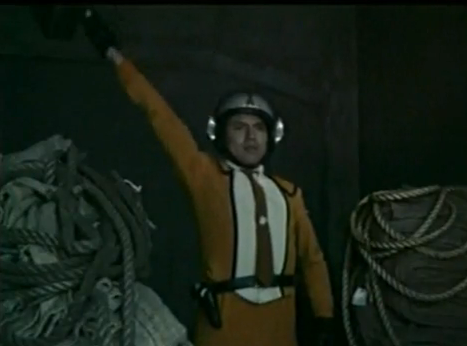
Ultraman is set on the near future when sinister aliens and giant monsters constantly threaten civilization during the said period. The only Earth organization equipped to handle these disasters is the Science Special Search Party also known as S.S.S.P. (SSSP), a special worldwide police force equipped with high-tech weapons and vehicles, as well as extensive scientific and engineering facilities. The branch of the Science Patrol that is focused on in the series is located in Tokyo, Japan. Led by Captain "Cap" Toshio Muramatsu, the Science Patrol is always ready to protect the Earth from rampaging monsters, but sometimes it finds itself outclassed. When the situation becomes desperate, Shin Hayata, the Patrol's most capable member, holds the key to salvation in the form of a power-object and artifact called the "Beta Capsule," which, whenever activated, allows him to transform secretly into the super-humanoid-powered giant from space, who becomes known to the people of Earth as Ultraman.

1966 Ultraman Original Shin Hayata Henshin Ultraman

Despite Ultraman's many amazing powers, Ultraman has one main weakness. Since Earth's atmosphere leeches away his solar energy, Ultraman can only physically exist on Earth for approximately three to five minutes of Earth time. To signal this, a warning light in Ultraman's chest (called the Color Timer) starts out at blue. At the 1 minute mark it starts to blink, and then turns red and blinks faster at the two minute mark. If the Color Timer/warning light stops, Ultraman will "never rise again." Obviously, at whatever point the blinking begins, Ultraman typically has only a short amount of time left to defeat his foe and return to his human host. However, Ultraman has occasionally been able to extend his operating time by flying towards the Sun and "recharging."

1966 Ultraman Original Shin Hayata Transforms to Giant Ultraman

Ultraman remains until the threat is neutralized and then flies away to revert back to Hayata. Ultraman's victory is never assured, however, as Ultraman's powers and, indeed, his very life force, come from rapidly depleted, stored solar energy. At the beginning of each transformation from Hayata-to-Ultraman, the "warning light" on the giant's chest begins as a steady blue color. Yet as Ultraman exerts himself, the "Color Timer," as it is also called, turns red, then blinks--slowly at first, then with increasing rapidity--as his energy reserves get closer to exhaustion.

Ultraman Opening Theme
Ultraman Series Intro


Check out additional footage and fan-made opening for Ultraman.


Original Ultraman Fighting a Giant Alien Monster Retro Ultraman


Ultraman holds a special place in my childhood memory. Before all my fascination with other tokusatsu and super sentai series of the 90s, there was first the Ultraman. Although I vaguely remember the schedule of the show, what I do remember is watching it together with father. I usually mimicked the Ultra moves and finishers ala Crayon Shinchan. I also vaguely remember getting creep out with certain scenes and monsters from the series as they are not the usual "child-friendly" images that you use to see here in the Philippines.

Ultraman Original 1966 Japanese Tokusatsu Title Syndicated and Dubbed in Filipino in ABS-CBN in the 90s

How about you guys, what was the Ultraman series to you? Any favorite episode, scene, merchandise, or monstres of Ultraman? Share them along with your thoughts about the Original Ultraman in the comments section below:
Read More

Samurai X | Rurouni Kenshin | 90s Studio 23 Anime

Rurouni_Kenshin or more popularly known here in the Philippines as Samurai X was first an English dubbed Japanese animated series that first aired in Studio 23 at around the late 90s (October 18, 1998). Samurai X a.k.a. Rurouni Kenshin originally Rurouni Kenshin: Meiji Swordsman Romantic Story (Ruroni Kenshin Meiji Kenkaku Romantan) like many other anime series was first a popular manga series before its animated television series adaptation. Rurouni Kenshin was written by Kikuhide Tani and illustrated by Yoshihiro Kuroiwa released by Shueisha publication and Monthly Shōnen Jump from April 11, 1994 – November 4, 1999. The manga was later adapted into a ninety five episode anime television series that ran from January 10, 1996 – September 8, 1998 in Studio Gallop for episodes 1-66 and in Studio Deen for episodes 66 onwards in Japan. Let's take the road down memory lane and remember at this once brutal Battousai: The Slasher (Hitokiri Battōsai) who later became the beloved warrior of peace Kenshin Himura.

Samurai X Rurouni Kenshin Retro Pilipinas Feature 90s Anime Series in Studio 23 and ABS-CBN

Samurai X - The Story
Rurouni Kenshin Series Plot

Samurai X (Rurouni Kenshin) tells the story of a wanderer named Himura Kenshin, formerly known as the assassin "Hitokiri Battosai" who after participating in the Bakumatsu war walked away. Kenshin later wanders the countryside of Japan offering protection and aid to those in need as atonement for the murders he once committed as an assassin. His travels lead him to Tokyo in the 11th year of the Meiji era, where he befriends Kamiya Kaoru, a female Kendo master; Sagara Sanosuke, a brawler and a former Sekihō Army member; Takani Megumi, a doctor; and Yahiko Myojin (Yoshi Myojin in English dubbed Samurai X). Together they fight off various enemies surfacing from their inescapable dark past.

Samurai X Rurouni Kenshin Kenshin Himura, Kamiya Kaoru, Sagara Sanosuke, Yoshi Myojin 90s Japanese Anime Series in Studio 23 and ABS-CBN

Some of the Rurouni Kenshin's (Samurai X) most notable villains include the group of Oniwanbanshou Shinobi(s), Shinomori Aoshi, Saito Hajime, and Shishio Makoto.

Samurai X Opening Theme
Rurouni Kenshin Series Intro


"Sobakasu" (Freckles)
Music by Judy & Mary

Rurouni Kenshin's Hitokiri Battosai The Slasher Kenshin Himura

Daikirai datta sobakasu wo chotto
Hitonade shite tame iki wo hitotsu
Hebii kyuu no koi wa migoto ni
Kakuzatou to issho ni toketa
Mae yori mo motto yaseta mune ni chotto
"Chiku" tto sasaru toge ga itai
Hoshiuranai mo ate ni naranai wa
Motto tooku made
Issho ni yuketara nee
Ureshikute sore dake de

Omoide wa itsumo kirei dakedo
Sore dake ja onaka ga suku wa
Hontou wa setsunai yoru na no ni
Doushite kashira?
Ano hito no egao mo omoidasenai no

Kowashite naoshite
Wakatteru no ni
Sore ga atashi no seikaku dakara
Modokashii kimochi de
Ayafuya na mama de
Soredemo ii koi wo shite kita
Omoikiri aketa
Hidari mimi no piasu ni wa nee
Waraenai episoodo

Sobakasu no kazu wo kazoete miru
Yogoreta nuigurumi daite
Mune wo sasu toge wa kienai kedo
Kaeruchan mo usagichan mo
Waratte kureru no


Omoide wa itsumo kirei dakedo
Sore dake ja onaka ga suku no
Hontou wa setsunai yoru na no ni
Doushite kashira?
Ano hito no namida mo omoidasenai no
Omoidasenai no
Dou... La La La La La La
Doushite na no?

Samurai X Closing Theme (English)
Rurouni Kenshin Series Outro


"Tactics"
Music by The Yellow Monkey

Well, what to say about Samurai X? As a kid, I was one of those kids who were kinda left off with the discussion of this series. Our television back then was that classic TV with a tuner knob which has limited television reception. Ibelieved that it was only up to TV station IBC-13 that our tv set can receive, so that was a bummer. Later in the early 2000, we upgraded our television set where I finally saw the re-run of the Samurai X in Studio 23 which was still dubbed in English.

Samurai X Rurouni Kenshin in the Philippines 90s animated series in Studio 23 and ABS-CBN

Samurai X had a rocking and memorable opening and closing themes. Besides Sobakasu, a personal favorite of mine is Rurouni Kenshin's sixth closing theme entitled "1/3 no Junjo na Kanjou" (1/3 True Feelings) by Siam Shade. Want to know why? I'll let you hear it for yourself and you be the judge:


Let's throw n the full song for Siam's 1/3 no Junjou na Kanjou in the process:


Samurai X Rurouni Kenshin Notable Villains Shinomori Aoshi, Saito Hajime, and Shishio Makoto


Besides the rocking theme, Rurouni Kenshin is considered to be one of our generation's greatest anime series for of how it build on its characters and great storyline. For me The most notable and diabolical villain of the Japanese samurai series was Shishio Makoto who stood by his twisted philosophy that only the strong will live and the weak shall die. Well, the series would not be that successful if we do not have a rocking protagonist. A seemingly happy nomad with a dark and brutal past. Well, it can be considered pretty generic when compared to today's standards, but hey it works!

Samurai X Rurouni Kenshin Anime Series that Aired in the Philippines in 90s in Studio 23 and ABS-CBN Retro Anime

How about you guys, what's your fondest memory, merchandise, character, episode, OVA, or movie of Rurouni Kenshin a.k.a Samurai X. Share your thoughts about Rurouni Kenshin in the comments section below:
Read More

Big Bad Beetleborgs | ABC-5 90s American Super Hero Kids Show

Big Bad Beetleborgs was a syndicated live action show produced by Saban Entertainment (the same creators of the Mighty Morphin Power Rangers series) and originally aired in Fox Kids block from September 7, 1996 and March 2, 1998. The Big Bad Beetleborg series adapted combat footage from the Metal Hero Japanese tokusatsu series Juukou B-Fighter on the first season and B-Fighter Kabuto on its second season. In the Philippines, the Associated Broadcasting Company (now known as TV5) aired Big Bad Beetleborgs on a weekend afternoon block.

Big Bad Beetleborgs Americanized Kids Show ABC-5 Retro Pilipinas Feature

Big Bad Beetleborgs - The Story
Big Bad Beetleborgs Series Plot

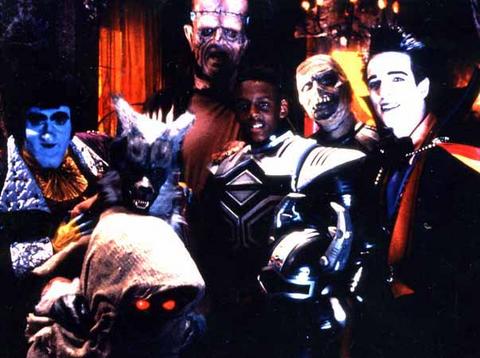
In a town called Charterville, three "typical average kids", Drew (played by Wesley Barker), Jo (Shannon Chandler/Brittany Konarzewski), and Roland (Herbie Baez), enter the supposedly haunted Hillhurst Mansion after accepting a dare from rich snob kids. The three later found out that the house is indead the home of real monsters. The kids accidentally bump a pipe organ, releasing a phasm named Flabber (Billy Forester) that granted them with one wish like a genie. Just like normal geeky children, the three wish to become their favorite comic book heroes, the Big Bad Beetleborgs. This however also brought the Beetleborgs sworn enemies to life: the Magnavores led by the evil Vexor with his three main henchmen Typhus, Noxic, and Jara. Vexor who summons monsters from the comic books to battle the Beetleborgs.

Big Bad Beetleborgs Haunted Hillhurst Mansion Inhabitants Flabber, Mums, Frankenbeans, Count Fangula, Wolfie

Original Source


Andrew "Drew" McCormick is the Blue Stinger Beetleborg who stand as the leader of the Beetleborgs. He was granted with the ability of telekinesis by Flabber, that he activates by pointing at an object and nodding his head. Roland Williams is the Green Hunter Beetleborg. His family owns a local comic book shop named Zoom Comics, where he, Jo, and Drew usually hang out. He was granted with the ability of super speed by Flabber, which he activates by snapping his fingers. Josephine "Jo" McCormick is the Red Striker Beetleborg. She is Drew's little sister, and was granted with the ability of super strength by Flabber, which she simply activates by cracking her knuckles. The trio was later joined by Josh Baldwin, the White Blaster Beetleborg. He was granted the ability of invisibility by Flabber, which he activates by dusting his hands. He was on the team for a very short period of time.

Saban's Big Bad Beetleborgs 90s Cast Drew, Jo, Roland, and Flabber

Big Bad Beetleborgs Opening Theme
Big Bad Beetleborgs Series Intro


Big Bad Beetleborgs Three Typical Average Kids Become their favorite comic books superhero by a wish from a genie


If my memory serves me right, I believed that the Big Bad Beetleborg aired every Sunday nights at either on a 5:30 or 6:00 PM schedule which was followed up by Janperson on the Associated Broadcasting Company or ABC-5. The show also had a nice ring to its opening theme, but looking at it now I can surely say that the Power Rangers have a more serious tone to it which is probably why more kids prefer it, but the Big Bad Beetleborgs has more charming characters which sometimes can be the show's double edge sword. Sadly the Big Bad Beetleborg's Philippine television run ended with the Shadowborg and wasn't even resolved. The show was eventually cancelled here in the country and we were not able to watch the Beetleborgs Metallix, the show's second season. But hey it fun while it lasted. I am no purist then, and was not even aware that the show just utilized clips from a Japanese Metal Hero series. As what I have proven now as an adult, the original source material will always be better than the Americanized version, but since I was not able to see the original source material back then, then these American kids show still holds a much better place in my mind and heart. They may look ridiculous and corny now, but one time in my life I make sure to be home and tuned into ABC-5 just to watch the Bid Bad Beetleborgs.

Saban's Big Bad Beetleborgs 90s American Kids Show Title Broadcasted in ABC-5

How about you guys, have you watched the Big Bad Beetleborgs back in ABC back in the days? Any favorite episodes, memorabilias, characters, or merchandise that you have on the Americanized kids show? Share your thoughts in the comments section below:
Read More

Dragon Ball | RPN English-Dubbed 80s - 90s Anime Retrospective

Dragon Ball was a popular English dubbed Japanese animated series which first aired in Radio Philippine Network (RPN) around the late 80s to early 90s. Dragon Ball, originally ドラゴンボール Doragon Bōru was based on the similarly popular manga illustrated by Akira Toriyama and originally serialized in Weekly Shōnen Jump from 1984 to 1995. Toie picked up the series and ran the original anime series from February 26, 1986 – April 12, 1989 back in FujiTV. Dragon Ball aired in the Philippines around the late 80s in RPN-9. The series was continually re-aired until it was finished at around 2000 in GMA Network with Dragon Ball GT. Before the world crushing powers of the Saiyan came to be, there was once the story of a young boy along with a girl in search of the mythical Dragon Balls. Let's remember the story of a monkey boy named Goku and his friends in search of the magical Dragon Balls.

Dragon Ball English Dubbed Japanese Anime Series Aired in the Philippines RPN Retro Pilipinas Feature

Dragon Ball - The Story
Dragon Ball - Series Plot

Dragon Ball begins and follows the story of a young monkey-tailed boy named Goku who befriends a teenage girl named Bulma. Together they go on a quest to find the seven Dragon Balls which grants any wish of the person who gets to complete all the Dragon Balls and summon a magical Dragon called Shenlong.

Collecting Seven Dragon Ball Summons Shenlong

Goku later undergoes rigorous training regimes under the martial artist Master Roshi in order to fight in the World Martial Arts Tournament, a competition that attracts the most powerful fighters in the world. During his training with Roshi, he meets a Shaolin monk named Krillin, who starts out as Goku's rival classmate who later becomes Goku's best friend. Outside the tournaments, Goku faces diverse villains such as Emperor Pilaf, the Red Ribbon Army, and King Piccolo. Several of the enemies and rivals Goku encounters eventually become his allies, including the desert bandit Yamcha, the assassin Tien Shinhan, the samurai Yajirobe, and King Piccolo's offspring/reincarnation Piccolo Jr.

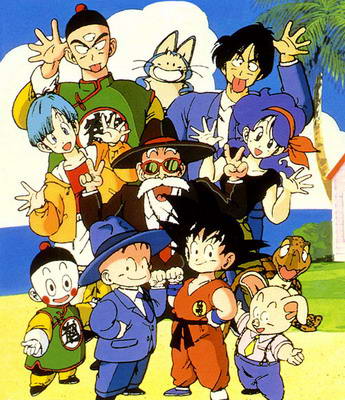
Original Dragon Ball Anime Series Characters Yamcha, Master Roshi, Bulma, Oolong, Goku, and Puar

Dragon Ball Original Japanese Opening Theme
Dragon Ball Series Intro


"Makafushigi Adventure!"
Artist: Hiroki Takahashi

Dragon Ball Opening Theme Makafushigi Adventure Dragon Ball

Dragon Ball Philippines Opening Theme
Dragon Ball Philippine English Series Intro


Dragon Ball Philippines Opening Theme Lyrics
"Dragon Ball"

Get that Dragon Balls
To face the greatest challenge in the world

Get that Dragon Balls
Seven Magic Balls

To make a wish you must possess them all
It's the greatest treasure you'll ever find
Go ahead enter the world of adventure

I see a vision through my colorful dreams
Pictures of places were I have never been
Something is out there waiting for you and me

Not far away is a beautiful sight
Magic ball shining with power so bright
Go ahead and take the chance
Follow your dreams

Let's try, try, try magical eyes
Show us the way as we go traveling high
Let's fly, fly, fly magical eyes
Feel the love within you burning like a flame

Get that Dragon Balls
To face the greatest challenge in the world

Get that Dragon Balls
Seven Magic Balls

To make a wish you must possess them all
It's the greatest treasure you'll ever find
Go ahead enter the world of adventure
Dragon Ball.


Dragon Ball Original Japanese Closing Theme
Dragon Ball Series Outro


Romantic Ageru Yo
Artist: Ushio Hashimoto

Dragon Ball Closing Theme Romantic Ageru Yo This World is Filled with Love

Dragon Ball Philippines Closing Theme
Dragon Ball Philippine English Dubbed Series Outro


Dragon Ball Philippines Opening Theme Lyrics
"This World is Filled with Love"

Life is so exciting and free
There are lots of good things to see
Fantasies, we can make them happen in this world

Let's not loose our precious time
They are really hard to find
Let's all go and find adventures in this life

Oh, we may see some mysteries that puzzle everyone
We must be strong to face them all
like battles to be won

Aim high reach for the sky now
Let love teach you the way how
This world can make dreams come true

This world is filled with love
So glad to know you do believe what love can do for you

Oh, this world is filled with love
Challenges make us strong
The power of love makes us win as it fills us with joy

Dragon Ball Anime in the Philippines Goku and his stretch stick

This is one of the first anime series that I followed back in the 90s. It was a lot simpler back then. This is where everything started, before Goku became the most powerful warrior in the face of the planet... even the universe and the life after. This is the original Dragon Ball series of the 80s where Goku was trained by a old perverted but still a master, Roshi (or Master Buten in its original run in Philippine television back in RPN-9). The retro anime series dubbed in English was pack with adventure and action. Whether it was in search of the dragon balls versus King Pillaf and the Red Ribbon army, or Goku joining the World's Martial Arts Tournament, we as kids raved and cheered for this monkey boy who at a strange weird way becomes an uncontrollable great giant uncontrollable powerful monkey at the mere sight of a full moon. Of course who could not remember those opening and closing music. I've heard USA's version of Dragon Ball's opening and closing theme, but I prefer Philippine's version of it. I still have my Dragon Ball teks collection as a physical reminder of how hooked I was with the Dragon Ball anime series.

original Dragon Ball 80's characters  Tien Shinhan, Puar, Yamcha, Bulma, Master Roshi, Launch, Tortoise Genie, Chiaotzu, Krillin, Goku, and Oolong

What about you guys, what's your fondest memory of the original Dragon ball series? Any memorable experience, toys, memorabilia or as Goku refer to it "memento" of the popular series? Share your thoughts in the comments section below:

Dragon Ball English Dubbed Anime Airied in the Philippines during the 80's and 90's RPN 9 and GMA Network
Read More

Voltron: Defender of the Universe | 80s - 90s IBC-13, RPN-9, SBN-21 Animated Series

Voltron: Defender of the Universe was an American animated television series adaptation of two different Japanese anime television series Beast King Golion and Armored Fleet Dairugger XV. Simply known as Voltron, the series originally aired in various syndicated channels in the United States from September 10, 1984 to November 18, 1985. Voltron: Defender of the Universe aired in the Intercontinental Broadcasting Network (IBC-13) and Radio Philippines Network (RPN-9) around the 80s until 90s. Let's take a look back at this beloved supre robot series of the 80's, Voltron.

Voltron Defender of the Universe Retro Pilipinas Feature 80s 90s  IBC RPN SBN Retro Animation


Voltron: Defenders of the Universe - The Story
Voltron: Defender of the Universe - Series Plot

The first season of Voltron was based on Beast King Golion (Hykauu Juu Ou Golion). This series is also known as Lion Force Voltron (Voltron of the Far Universe) featured a team of five young pilots commanding five robot lions which could be combined to form Voltron. In this undefined future era, the Voltron Force was in charge of protecting the planet Arus which is ruled by Princess Allura from the evil forces of King Zarkon, his son Lotor, and the witch Haggar who would later create huge Robeasts to terrorize the people of Arus. This is the most popular iteration of Voltron, but was later called Voltron III.

Classic Voltron Human Pilots Lion Force Voltron (Voltron of the Far Universe)


The second season was based on Armored Fleet Dairugger XV (Kikou Kantai Dairugger XV), with the storyline considerably changed. In this iteration of Voltron, which was also known as Vehicle Voltron (Voltron of the Near Universe), the Galaxy Alliance's home planets have become overcrowded, and a fleet of explorers has been sent to search for new planets to colonize. Along the way, they attract the attention of the evil Drule Empire, long engaged in an ongoing war against the Alliance, and the Drules proceed to interfere in the mission of the explorers and the colonists. Since the Voltron of Planet Arus is too far away to help the explorers, a totally new Voltron is constructed to battle the Drule threat. This Voltron was called Voltron I since its setting was set closest to Earth.

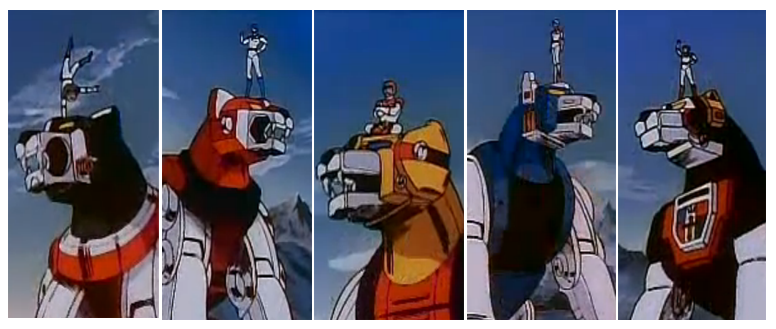
Five Robo Lions to Form Voltron Defender of the Universe Retro Cartoons


This Voltron team consists of fifteen members, divided into three teams of five, known respectively as the Land, Sea, and Air Teams. Each team is specialized in gathering data or fighting in their area of expertise. Each team can combine their vehicles into a bigger machine, with each combined vehicle differing amongst the three teams: the Aqua Fighter (Sea Team), the Turbo Terrain Fighter (Land Team), and the Strato Fighter (Air Team). When necessary, all fifteen vehicles combine to form the mighty Voltron.

Iconic Lion Force Voltron Defender of the Universe super robot of the 80's


A proposed Voltron II, which was set to take the name of Gladiator Voltron (Voltron of the Middle Universe) was to have been based on Lightspeed Electroid Albegas (Kosoku Denjin Albegas) but was later cancelled in the United States because of the lack of popularity of Voltron II (second season).

Voltron: Defender of the Universe Opening Theme
Voltron: Defender of the Universe Series Intro


I was but achild when these series exploded in the Philippines. thanks to reruns of the show which have been very frequent in Philippine television, I was able to experience Voltron. I remember my father giving me a Voltron matchbox toy which was eventually lost. If only I or my father took care of that toy, I could have had a piece of my childhood up until now, but there is no real sense in crying over spilled milk. What matters is that I was able to enjoy my childhood thanks to these robo lions. I prefer and am more familiar with the Lion Force Voltron just like most Voltron fans.

Five Robot Lions of Lion Force Voltron Defender of the Universe 80's Retro Kids Show


Voltron was one of the most popular super robot series during its time. Both the Englsh dubbed animated series and its toyline became phenomenal. Whether it is on its catchy opening and closing themes, or the sheer awesomeness of a five giant robo lions forming into one robot battling giant monsters terrorizing the galaxy, Voltron has forever joined the ranks of the most popular kids show of the 80's. Just like any other 80's Americanized show, Voltron was heavily censored to cater for kids, but amidst its censorship World Events Productions and Toei Animation still managed to bring something special which up to this day are remembered by those who grew up humming its theme, shouting its formation sequence, and playing with its various toy lines.

The Legend of Voltron Defender of the Universe Retro Pilipinas Kids Show 80s 90s


How about you guys, what's your fondest memories of Voltron: Defenders of the Universe? Did you also liked the second season? What are your fondest memories of Voltron? Share everything on Voltron at the comments section below:
Read More

Bioman | Choudenshi Bioman | ABS-CBN 80s, IBC 13 - 90s English Dubbed Tokusatsu

Bioman was an English dubbed super hero kids show which first aired in ABS-CBN back in 1986 and later in Intercontinental Broadcasting Company (IBC) around the 90s. Bioman was originally Choudenshi Bioman (超電子バイオマン Chōdenshi Baioman), a Japanese tokusatsu television series by Toie Company and the 8th super sentai series title which originally aired on TV Asahi from February 4, 1984 to January 26, 1985. Bioman was the last super sentai series that got an English dubbed, the localized sentai series that followed are all dubbed in Filipino. Even in its 90s rerun, it was still dubbed in English. But it was the series that most 90s Filipino kids are familiar with and has the same charm as Maskman. Let's go down memory lane as we look back at Bioman.

Choudenshi Bioman English Dubbed Super Sentai Show Run in the Philippines Retro Pilipinas Feature


Choudenshi Bioman - The Story
Choudenshi Bioman Series Plot

The once prosperous Bio Star is destroyed after a world war erupted over the use of a scientific discovery called "Bio Particles". The Bio Star Peacekeeping Alliance, which sought to use Bio Particles for peaceful purposes, sends the giant robot Bio Robo and an assistant robot named Peebo in order to prevent the same tragedy from happening to Earth. Bio Robo arrives on 15th century Japan, where it showers Bio Particles on five young individuals. Centuries later, the descendants of these individuals, infused with Bio Particles, are chosen by Peebo and Bio Robo to become the Bioman team: Shiro Go became Red One, Shingo Takasugi became Green Two, Ryuta Nanbara became Blue Three, Mika Koizumi, who was later replaced by Jun Yabuki became Yellow Four, and Hikaru Katsuragi became Pink Five.

Doctor Man of Neo Gear Empire Bioman


The Bioman team are asked to protect the Earth from the Neo Gear Empire, an organization led by the cyborg mad scientist Doctor Man from his Neo Grad fortress at the South Pole. Doctor Man believe that Neo Gear Empire to be a technologically advanced society with the right to rule Earth. Big Three (Mason, Farrah, and Monster), Farrah Cat, Prince and Mecha Clones.

Bioman Team Mecha Bio Robo Biorobot


Bioman Opening Theme
Choudenshi Bioman Series Intro


Bioman Team in Bioman Suits together with Peebo Retro Super Sentai


"Choudenshi Bioman" (超電子バイオマン Chōdenshi Baioman)

Lyrics by Chinfa Kan.
Composition by Kunihiko Kase.
Arrangement by Tatsumi Yano.
Artist: Takayuki Miyauchi


Takayuki Miyauchi Live Perfomance of Bioman Opening Theme
Takayuki Miyauchi Sings Choudenshi Bioman - Series Intro


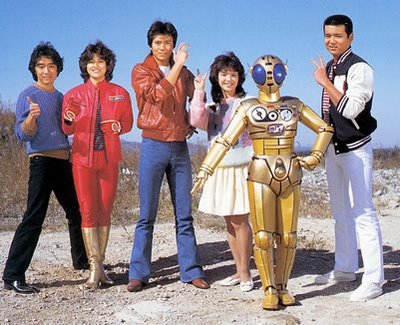
Bioman Team in Human Form Shiro Go - Red One, Shingo Takasugi - Green Two, Ryuta Nanbara - Blue Three, Mika Koizumi - Yellow Four, and Hikaru Katsuragi - Pink Five, and Peebo


Bioman Closing Theme
Choudenshi Bioman Series Outro


The only Bioman Closing Theme I found that showed the original TV Ending Theme Sequence. This Closing Theme is in French but stayed true to its original arrangement.

"Biomic Soldier" (バイオミック・ソルジャー Baiomikku Sorujā)

Lyrics by Chinfa Kan.
Composition by Kunihiko Kase.
Arrangement by Tatsumi Yano.
Artist: Takayuki Miyauchi.


Takayuki Miyauchi Live Perfomance of Bioman Closing Theme
Takayuki Miyauchi Sings Biomic Soldier - Series Intro


For a 90s kid, I have considered Bioman as the "bio brain" of all super sentai series during its run. Of course this was not true, but you really can't blame a kid who has just started to grow awareness about his surrounding during the 90s. We don't have Wikis or the internet to inform us that time, so this was really my first exposure to the super sentai (tokusatsu) series. Besides the usual storyline, monsters, mechas and story, Bioman's greatest and lasting influence was both its memorable catchy opening and closing themes. As a sign of its lasting influence, I still seldom randomly hear its theme everytime I'm out doing my regular stroll. Whether it is in a form of a ring tone or a music being played in a CD, Bioman truly has became a part of everyone (mostly its male audience) who grew up with the series. I am bit ashamed to say that I never really got into the series due to the fact that it was dubbed in English and it has erratic airing television schedule back in IBC-13. I believe I have never seen the show's finale. I preferred Maskman later, because of the obvious... being in Filipino. I somewhat understood Maskman "more" back then(?). I wasn't that fully into Star Wars back as well, so Peebo was my first lovable gold robot. CRPO was just a runner up. Bioman became memorable a series and probably a part of my childhood now. Thus it always brings me back to the worry-free moments of my life when I was just watching retro tokusatsu shows in our local Philippine television.

Choudenshi Bioman in the Philippines

What about you guys? What's your fondest memories, favorite episode, character or merchandise about the Bioman? Share your thoughts and experiences in the comments section below:
Read More