Showing posts with label T. Show all posts

Tumbang Preso - An Iconic and Beloved Filipino Children's Game | A Look Back at a "Laro ng Lahi"

Tumbang preso which directly translates to "knock down the prisoner" is a traditional Filipino children's game or a "laro ng lahi". Tumbang preso is also known as "Presohan" ("prison") or "tumba lata" ("knock down the can") in Luzon, and Tumba-Patis or "Tumba-Lata" ("Hit The Can") in most Visayan regions. Tumbang preso is a game enjoyed in groups and in the streets. A game truly for the Filipino mass before modern technology has glued the eyes of the Filipino youth on their mobbile devices. Let us take a look back at this beloved iconic traditional Filipino children's game called "Tumbang preso" here at Retro Pilipinas.

maestroabayan.com tumbang preso artwork - Retro Pilipinas Feature

Original Source: Tumbang Preso by Maestro Abayan


Tumbang Preso Game Mechanics
Tumbang Preso Traditional Filipino Children's Game

Tumbang preso is usually played in the streets, parks, or backyards (preferably in a cemented grounds) consisting of many children (some articles said that it should not exceed more than nine but who are we to tell how many should play it). An empty can (or bottle if not available) is required to play tumbang preso as this is an integral part of the game as the kids main goal is to hit this can with their slippers which is also known as a "pamato".


Original Source: Tropang Bagong Sibol: Tumbang Preso Mechanics

The set up is at the start of the game, kids will throw their pamatos and the one whose pamato is the farthest from either the toe-line or the empty can will be the "it". On one end, there are kids with their "pamato" on the "toe-line" where they are given the chance to knock the can from its safe zone or "prison", and on the opposite end, there is that one "unfortunate" kid who is "it" guarding the empty can inside its prison (usually a circle protecting the can). Once the game starts, everyone can take a shot (one at a time or altogether) to knock off the can from its prison at the back of the toe-line. The other kids must immediately retrieve their "pamato" to return to the toe-line to be "safe" as soon as tthe can gets knock off from the prison. The "it" will then return the can and ran after anyone not inside the toe-line or safe zone (usually those retrieving their "pamato") to tag them to be the next "it".

Resource: Wikipedia


A Look Back at Tumbang Preso
Tumbang Preso Memories

Tumbang Preso Art by Cabby - Retro Pilipinas Feature

Original Source: Tumbang Preso - Art of Cabby


While I don't have any particular memory of playing tumbang preso as a child as I was more into a "Patintero", "Langit Lupa", Sawsaw-Suka, and "Siato" other Laro ng Lahi, which I will also cover soon here at Retro Pilipinas (watch out for them); I still find it pretty fun seeing those who play it then and now here at our barangay.

Galeria Bañez Tumbang Preso - A Retro Pilipinas Feature

Original Source: Tumbang Preso by Galeria Bañez


Many kids still are playing this laro ng lahi, well at least those who don't have those fancy mobile device which is consuming kids more nowadays. It is cheap and all you need is an empty can, one slipper, and fun friends to play with. Even back in my grade school days we haven't fully played this game which is a bit shameful, but hey I did manage to try out other traditional Filipino children's game ("laro ng lahi") so can't really complain much. I simply look fondly at how some kids are enjoying it now that I am an adult, or be irritated as the kids are a noisy bunch along with the empty can being knocked off everywhere.

What about you guys? What's your fondest memory of tumbang preso? What variation or special mechanics did you remember playing with tumbang preso? If you didn't played it back then, what do you think about it back then and now? Share your thoughts and experience with tumbang preso on the comments section below:

===
Disclaimer: Images are a property of their respective copyright owners and this blog is simply a look back at the iconic traditional Filipino game. I've included the links and cited the original resources so the audience here at Retro Pilipinas can check them out to either appreciate them more or collect/avail/purchase them when needed be. Feel free to contact us if you don't want us featuring your related artwork and articles and we'll be removing them immediately.
===
Read More

The Crystal Maze | A PTV 90s British Game Show Retrospective

The Crystal Maze was a British game show aired in PTV Channel 4 in the Philippines back in the 90s usually at around the evening 6-7 PM slot. The Crystal Mazewas produced by Chatsworth Television and shown on Channel 4 in the United Kingdom between 15 February 1990 and 10 August 1995. There was one series per year, with the first four series was hosted by Richard O'Brien and the final two by Ed Tudor-Pole. Let's go down memory lane and reminisce the phenomenal game show that was The Crystal Maze.

The Crystal Maze 90s British Game Show in PTV NBN Ch 4 Retro Pilipinas Feature

The Crystal Maze - The Show
About The Crystal Maze

The Crystal Maze Set Map 90s British Phenomenal Game Show

The objective of The Crystal Maze was to gather as many time crystals (golf ball-sized Swarovski glass crystals) as possible by playing different games in each zone. The multi-million game show set was divided into four zones set in different periods of time and space mainly the Aztec Zone (ancient village amidst ruins), Futuristic Zone (a space station environment), Medieval Zone (a castle set where the host purportedly lived), and Industrial Zone (a present day chemical plant) which was later replaced by the Ocean Zone (a sunken ship, the S.S. Atlantis) on later seasons. Before the team start with a game in each zone, the team captain will be first act on which contestant (team member) will be doing the challenge and which type of challenge the game would be chose (Skill, Physical, Mental, and Mystery). Contestant can be "locked in" if they fail to accomplish the challenged within the set time or have comiited a certain number of fouls (game mechanics violation). Winning each game secured a crystal worth five seconds of time for the team which will be used when they reach the final stage, inside the Crystal Dome. Inside the Crystal Dome, they had to collect as many gold tokens as possible in order to win a prize.

90s Game show in channel 4 Philippines The Crystal Maze Retro Show

The Crystal Maze Opening Theme
The Crystal Maze Series Intro


The Crystal Maze 90s British Gameshow with Intelligently Designe Puzzles and Challenges

Youtubers have uploaded a few episodes online for your reminiscing.
Check out the very first episode of The Crystal Maze Season 1 here:


Have you seen the episode I shared above? Better check it before it gets taken down like it always happen on Youtube (due to Copyright concerns). You can clearly see why was this show that popular. We could say that it was ahead of its time. Little known fact, did you know that The Crystal MAze game show set cost £250,000 to build and was the size of two football pitches? Going back as I said The Crystal Maze was ahead of its time. One testament is the intelligently designed challenges are; which are somehow borrowed and emulated in more contemporary reality shows (e.g. Survivor, Wipe Out, etc.). It was definitely a blast to watch as a 90s kid. We have yet to appreciate the scope (in terms of budget) of this show back then, but looking at it now, I have much more admiration for it now than ever. This is the first game show that I recall popularizing locking in (to a young kid, imprisoning) a contestant for failure to complete a puzzle challenge. The Crystal Maze will be forever be one of the more better quality game show from the past. Now if they can only remade it for the newer generation of game show audience.

The Crystal Maze Title Card British Game Show aired in PTV NBN Channel 4 Philippine Television in the 90s

How about you guys? Do you still remember the phenomenal The Crystal Maze? what is your fondest and most memorable experience with the 90s game show? Any favorite moment or episode? Share your thoughts and opinion about The Crystal Maze in the comments section below:
Read More

Turboranger | Kosoku Sentai Turboranger | IBC-13 90s Filipino Dubbed Super Sentai Series

Turboranger was a Filipino dubbed super hero kids show which first aired in IBC-13 every weekends around the late 90s. Turboranger is originally Kousoku Sentai Turboranger (高速戦隊ターボレンジャー Kōsoku Sentai Tāborenjā), the first super sentai of the Heisei period in Japan and was the 13th entry of Toei Company's Super Sentai series. Kousoku Sentai Turboranger originally aired on TV Asahi from February 25, 1989 to February 23, 1990 with a total of 51 episodes

Kousoku Sentai Turboranger Filipino Dubbed Super Sentai Show 90s Run in the Philippines Retro Pilipinas Feature

Kosoku Sentai Turboranger - The Story
Turboranger Premise

Twenty thousand years ago, a Fairy race assisted humans in a battle against the evil Bōma Tribe and was eventally sealed away by Sacred Beast Rakia - a white-maned, winged holy beast defender of Earth, and the keeper of peace and guardian of fairies who sacrificed himself to seal away the tribe with him ultimately transforming into a constellation to watch over the world along with the Turboranger. Unfortunately, due to modern day pollution brought by man's destruction of nature, the power of Fairy magic has weakened, allowing the seal to be broken allowing the once sealed tribe to escape. The last of the living fairies and with the help of Dr. Dazai, Seelon, five Japanese high school seniors were summoned. These chosen high school seniors were special as they were once showered with the "flames of spirit" of the fallen fairies in a forest back when they were still children. They are then able to hear Seelon's voice. Thanks to the collaboration between Seelon's magic and Dr. Dazai's science, these five become the Turborangers.

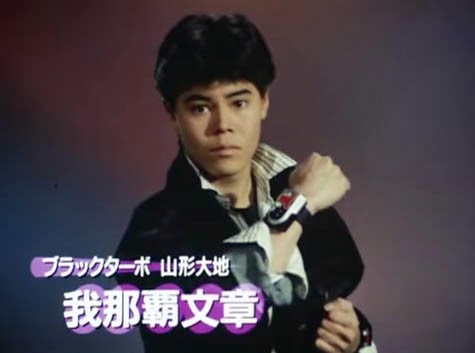
Riki Honoo as Red Turbo in Kousoku Sentai Turboranger Daichi Yamagata as Black Turbo in Kousoku Sentai Turboranger Yohei Hama as Blue Turbo in Kousoku Sentai Turboranger

Riki Honoo as Red Turbo in Kousoku Sentai Turboranger; Daichi Yamagata as Black Turbo in Kousoku Sentai Turboranger; Yohei Hama as Blue Turbo in Kousoku Sentai Turboranger

Kosoku Sentai Turboranger Opening Theme
Turboranger Series Intro


"Kousoku Sentai Turboranger" (高速戦隊ターボレンジャー Kōsoku Sentai Tāborenjā?)
Lyrics by Ikki Matsumoto
Composed by Yoshimasa Inoue
Arrangement by Ryō Yonemitsu
Artist: Kenta Satou

Kosoku Sentai Turboranger Closing Theme
Turboranger Series Outro


Shunsuke Hino as Yellow Turbo in Kousoku Sentai Turboranger Haruna Morikawa as Pink Turbo in Kousoku Sentai Turboranger

Shunsuke Hino as Yellow Turbo in Kousoku Sentai Turboranger; and Haruna Morikawa as Pink Turbo in Kousoku Sentai Turboranger

"Zigzag Seishun Road" (ジグザグ青春ロード Jiguzagu Seishun Rōdo?, "Zigzag Youth Road")
Lyrics by Ikki Matsumoto
Composed by Yoshimasa Inoue
Arrangement by Ryō Yonemitsu
Artist: Kenta Satou

Retro Super Sentai Turboranger After Finisher Pose Peace Sign


Turborangers was another memorable Filipino dubbed super sentai series of the past. I remember seeing it back-to-back with a rerun of Masked Rider Black on a Sunday afternoon or morning ( probably the prior but can't be sure, please correct me if I am wrong) in IBC-13. I have a few recollection of this sentai series since I believe it came later during the 90s or me growing out of my childhood. I mostly remember the highlights mainly that this sentai main's theme (for suits) which is automobiles, fairies, and the monster of the week being sealed first in an overgrown nail. If I am not mistaken this is one of those sentai series that was eventually cut from its Philippine television run ultimately frustrating and putting the kids (including myself) who watched it in a state of indefinite cliffhanger (good example being Masked Rider Black). Why is it those classic retro super sentai shows has such a memorable and catchy opening and closing themes? Is it merely nostalgia or do they simply have better music back then? In any case Turboranger has both of its opening and closing themes as catchy as any other.

Retro Pilipinas on Turboranger 90s Super Sentai Series on IBC 13 Philippines

How about you guys? What are your fondest memories of Turboranger? Any special merchandise; memories of episode, characters (protagonists or villains), experience you remember in connection with Turborangers? Share your thoughts about Kosoku Sentai Turboranger in our comments section below:
Read More

Tropang Trumpo | ABC - 90s Philippine Television Comedy (Gag) Show

Tropang Trumpo was a popular Filipino television comedy gag show that aired on the Associated Broadcast Company or ABC 5 (Now TV5) every Saturday nights and ran from 1994-1999. Tropang Trumpo was the definitive gag show of the mid-90s which made Ogie Alcasid, Gelli de Belen, Carmina Villaroel, Earl Ignacio, and Michael V. became household names. Let's go down memory lane and reminisce the iconic 90s gag show, Tropang Trumpo.

Tropang Trumpo Chicken Caronia Dance Retro Pilipinas 90s Gag Show ABC Retro Pilipinas Feature


Tropang Trumpo - The Show
About Tropang Trumpo

Tropang Trumpo's original cast included Ogie Alcasid, Michael V., Gelli de Belen, and theatre/voice actors Noni Buencamino, Earl Ignacio and Sheilou Bharwani under the direction of Jose Javier Reyes. However, when Reyes became busy with films, former Goin' Bananas cast members Edgar "Bobot" Mortiz, Al Tantay and former Goin' Bananas headwriter Dan Salamante came in and assumed the respective posts of director and writers. Mortiz, Tantay and Salamante introduced new segments for the show, the most famous was "Battle of the Brainless", a satirical quiz show (taken from the 90s famous game show "Battle of the Brains" aired over RPN) where simple quiz questions are never answered. Besides Battle of the Brainless, the ABC-5 gag show also became known for its in-between jokes short humorous dance number using a nail product tv ad jingle "Caronia" by the main cast usually ending with another word that the show made trend of during the 90s, "chicken"; and a parody of the popular Filipino soap Valiente with "Bahaw: Ang Kaning Lamig".

The show eventually went on even when two of its main cast, Michael V. and Ogie Alcasid, left in 1995 to do another gag show for GMA entitled "Bubble Gang". The new cast included Gelli de Belen, Carmina Villaroel, Smokey Manaloto, Earl Ignacio, Maoi Roca, Caloy Alde, Mickey Ferriols, Ariel "Hyubs" Azarcon, Diego "Binoy" Salvador.

"Tropang Trumpo" started to decline when several new shows started copying its format. In 1998, the show had to reformat after Edgar Mortiz, Al Tantay and Dan Salamante left due to conflict with ABC executives. At the same time, cast members Smokey Manaloto and Earl Ignacio also left to side with their beleaguered director. In mid-1998, original "Tropa" cast members Gelli de Belen and later addition, Carmina Villaroel left, and the show struggled to survive with its relatively new cast and staff. It finally closed at the end of the 1999 and was replaced with "Ispup".

On 2003, Bubble Gang paid tribute to some of the most popular gag shows in the Philippines, one of which is Tropang Trumpo. Old footage for Tropang Trumpo is rare these days, so if you want a somewhat accurate idea of what the show like back in the days, then check out the Bubble Gang's tribute here:

Bubble Gang Pays Tribute to Tropang Trumpo


It was really a big fan service to see Carmina, Gelli, Ogie and Michael V. doing the Caronia "Chicken" Dance on Bubble Gang.

Bubble Gang Pays Tribute to Tropang Trumpo October 2003 Gelli de Belen, Carmina Villaroel, Ogie Alcasid, and Michael V do the Caronia Chicken Dance Retro Gag Show TV5 Pilipinas Feature


As a child growing up on the 90s, Tropang Trumpo was the authority when it comes to comedy back then. Michael V. and Ogie Alcasid's departure from Tropang Trumpo gave the biggest crippling blow to the iconic 90s gag show. It was never the same after the two comedians left for Bubble Gang. Although I have to give credit for Tropa for staying more than three years after the maid comedic celebrities left the series. I still remember how the Battle of the Brainless segment would always cracked me up as a kid. There there was the Caronia/Chicken Dance that Tropa popularize. I still remember I some of my elementary classmates who were also into Tropang Trumpo usually do some of the steps and use the term "chicken" as much as we could back then. This is probably where I got my humor or "corniness" from. I think if I re-watch it now (if there would still be some old footage or copies out there), I might get a few chuckles every now and then but my sense of humor has also grown up through the years, so I guess I'll be scratching my head now. I might not have the same reaction like before when Carmina usually force her pustiso jokes on their "Ano ang tawag" segment. Tropang Trumpo will always be a big part of my life, and maybe every kid who just wanted one day of the week to just laugh out loud.

Tropang Trumpo ABC - 5 Logo Retro Pilipinas


What about you guys? What's your fondest memory, favorite segment, favorite cast and general thoughts on the iconic 90s gag show from ABC-5. Share your thoughts on Tropang Trumpo on the comments section below:
Read More

Teks - The Iconic Filipino Card Game for Children

Teks was a coined term for a trading card game and the actual cards themselves popular amongst children that probably has started around the late 50s. The cards used in the game which was also called teks are very small, about a quarter of the size of regular playing cards first featured cartoon storyboard clips of local films complete with characters' dialogues and action sequences. Each teks are numbered which serves as indication to know what part the printed scene is on the series of scenes taken from an actual Filipino film titles or more popular television shows. It can be said that teks (cards) are the direct and unintended commercial byproduct of Filipino comics. More of a game for children, the teks was the very first form of trading card game for the Filipino mass.

Teks - Filipino Trading Card Game Retro Pilipinas Feature


Teks Game Mechanics
Teks Trading Card Game

The game relies heavily on betting which side will come up, and is decided by flicking the teks in the air. Some players slap the cards against each other in a high five for added effect. Players usually favor a specific card to use as the card they'll flip while all the other cards are basically act as betting currency.

Teks players use a method of counting the cards unique to the game: they count two cards for each numerical number said aloud, in a cadance that splits the spoken number's syllables in two. The odd card will be counted by a 'cha', meaning 'and a half', at the end of the counting.


Philippine Teks of the 90s


As a kid growing in the 90s I have been introduced to the first version of teks from the kids in our neighborhood. I usually watch them playing this obscure game, flicking the cards in the air then later looking at the results, the winners will receive a new set of cards to add to their already worn out (from being regularly flicked and handled) and almost ruined collection of teks.

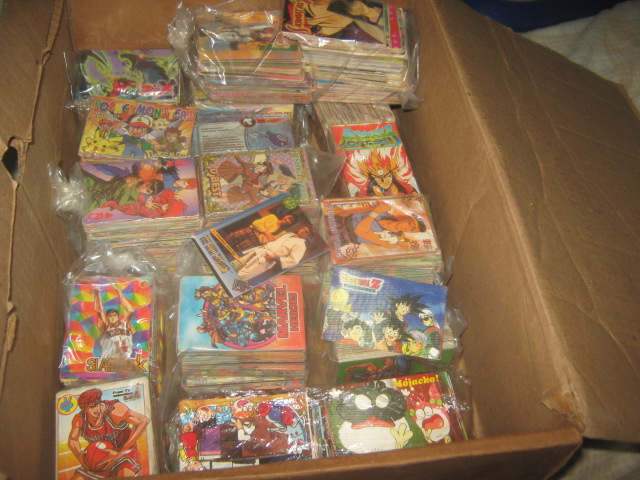
I was not able to enjoy the teks like how most children in the neighborhood do. I can remember buying a text and just admiring the wonderful artworks featured in both sides of a single piece. Later in elementary school, the popularity of Japanese animation (anime) and other US cartoons have changed the contents of most teks offered at that time. The once was comics like panels taken from actual Filipino films and were reminiscent of traditional Filipino Comics were then (and up to now) replaced by colorful scenes or special images of the characters from the popular animated series at that time. The teks as a game has still the same mechanics. the only changed noticed in the 90s were the siz of each teks. I can still remember that each card pack cost one peso with three to six individual pieces available in each cards. Thinking that it would be a complete waste to just use the cards in a regular game of teks, I decided to just keep it in good condition inside a super elastic ice bag which then is placed in a shoe box. I started collecting teks from grade school all the way up to my high school days. Up to this day, I still have my collection of anime themed teks: Dragon Ball series (original Dragon Balls, Z, GT,), Ghost Fighter (Yu Yu Hakusho), Marvel Series, Zenki, Pokemon, Mojacko, Fushigi Yuugi, Slam Dunk, Sailor Moon, etc.

What about you guys? What's your fondest memory of playing teks? What Filipino or foreign titled teks have you played with? Share your thoughts and experience with teks on the comments section below:
Read More