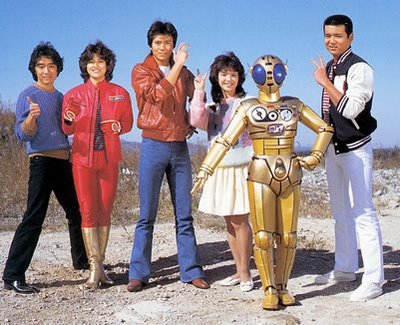
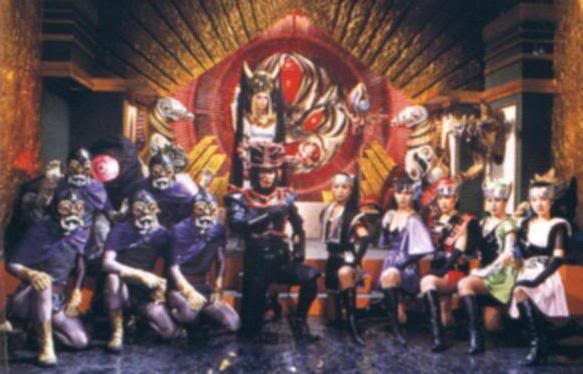
Showing posts with label Dubbed. Show all posts

Saban's Masked Rider — A Retrospective | ABC-5 90s American Adapted Superhero Kids Show

Saban's Masked Rider or simply Masked Rider was a syndicated live action show produced by Saban Entertainment (the same creators of the Mighty Morphin Power Rangers, VR Troopers, Tattooed Teenage Alien Fighters from Beverly Hills, and Big Bad Beetleborgs) and originally aired in Fox Kids block from September 16, 1995 to November 20, 1996. Masked Rider was an American adaptation of the 1988 Japanese tokusatsu show and (the then) ninth entry to the Kamen Rider series, Kamen Rider Black RX; which so happen to be a direct follow up to Kamen Rider Black (See our retrospective on Masked Rider Black for more details). In the Philippines, the Associated Broadcasting Company abbreviated as ABC-5 (now known as TV5) aired the Filipino-dubbed American series Saban's Masked Rider on a weekend primetime block. Let's go down memory lane and remember Saban's Masked Rider back in ABC Channel 5 here in the Philippines.

Saban's Masked Rider 90s Retro US Show ABC-5 Reto Pilipinas Feature

Saban's Masked Rider - The Story
Saban's Masked Rider Series Plot

In a distant planet called Edenoi was once a flourishing planet until a conquering evil tyrant uncle Count Dregon turned it upside down and now has set his eyes on conquering another planet, the Earth. It is up to the Edenoi Prince Dex to thwart the diabolical plans of his uncle with the help of the powers of the Masked Rider passed on to him by his Grandfather King Lexian.

Upon arriving to Earth, he is adopted and took under the roof of a wrm progresive American family, the Stewarts; headed by the couple Hal (American) and Barabara (Asian) couple living together with their two adopted children Albee (African-American son) and Molly (American teenager). Later on Dex along with the Stewart family was joined by Dex' furry friend which is a cross between a bear and a duck happens to be a dwarf bipedal, Ferbus.

Saban's Masked Rider Opening Theme
Saban's Masked Rider Series Intro


Ah the memories I had with Saban's Masked Rider! It was a bittersweet thing looking back at it now. On a time when a young me was hooked watching Filipino-dubbed tokusatsu shows which most are exported from the Land of the Rising Sun (Japan), this show came and somewhat gave a fresh look at things. It sure was very familiar and yet it has American actors on it. A departure from the usual Asian-centric sentai shows we were exposed to back then. Back then, we didn't have the internet and we were basically at the mercy of the local television networks and whatever foreign shows they managed to get their hands on. They decided to pick this up Fox Kids (American) Saban's Masked Rider rather than the original Japanese Kamen Rider Black RX. Maybe it is a cheaper syndication deal (or probably IS all that), but it was what we were exposed to back then. The Mighty Morphin Power Rangers was already on television back then, so it wouldn't hurt for a child to get hyped with another American superhero show, right?

Saban's Masked Rider Edenoi's Prince Dex and Pet Friend Ferbus


On a time with Mighty Morphin Power Rangers, VR Troopers, and Big Bad Beetleborgs, all of these were perfect for a nerdy child growing up in the 90s. It had (by then) a nice blend of action and silly moments. It had cool transformations and great monsters of the week. If my memory served me correctly, Saban's Masked Rider was aired in the Philippines at around 6:00 PM every Sundays. Well at least that is how I remember it as it is usually dark when I start watching it back then. I usually draw most of the information via Wikipedia, but it doesn't specify the details and history of the local syndication and further details about the show here in our country. Saban's Masked Rider could have aired in ABC-5 at the early 2000, but for now I will be sticking to a late 90s timeline for this feature. Back then, it was mere fun and games; not to mention cool super hero action poses, Masked Rider has all what was needed and it was understood as it was dubbed in Filipino. The cooler parts were the cool action scenes which can be traced more from its Japanese roots rather than its tone down American adaptation.


All the cool stuff from Magna, the talking car to Chopper (reincarnation of Battlehopper from the Kamen Rider Black RX version), the also talking motorcycle are present from its resource material, Kamen Rider Black RX. The only thing that the American adaptation/counterpart offered new is the introduction of Ferbus (which I think is just there to sell plushies, although personally speaking I find him uninteresting), that lighter tone that American kids have been so used to by then (no thanks to obsessive compulsive television censorship), and the somewhat progressive familial set-up of the Stewarts. Everything else is standard Japanese Kamen Rider fair. Oh there also was this special Saban's Masked Rider and Mighty Morphin Power Rangers cross-over episode in Mighty Morphin Power Rangers which was never reference to Masked Rider ever again. XD

Saban's Masked Rider Edenoi's Prince Dex and the Stewart family of Leawood


But as many shows from the past, adulthood and time has somewhat sour the experience. It later came to my attention that its Japanese origin was far superior in terms of tone and story as what earlier showa era Kamen Rider series were all about. Sometimes... no scrap that, most of the time, kids don't want to be treated as kids and just want their superhero kids entertainment as it is; even it ends up being dark and gritty. Hey, it worked for Batman The Animated Series, sow why not on a Masked Rider? Just look at the animation and kids shows nowadays. We (back then as kids) can handle those kinds of topics, so why dumb it down?

Kamen Rider Black RX was the inspiration of the American adaptation of Saban's Masked Rider

Later on, I managed to get my hands on the original source material which featured the same actor and character from Kamen Rider Black, Minami Kohtaro Minami (Tetsuo Kurata) continuing his story as Black RX. Afterwhich I started thinking that everything America touch was doing the original Japanese content a great disservice. Fast forward to many years later, the internet has made it possible for me to grab and finally follow the series which was deprived of us by local television networks and finally got my hands on the far superior Kamen Rider Black RX. I later accepted the fact that America will be America, and Japan will be Japan as they will do their own thing as observed from both Super sentai and Power Rangers series which is still continuing as of this very day (of me writing this).


While doing this episode I also managed to stumble over this Youtube channel that uses the same style used by the guys at Honest Trailers and make their own spin on tokusatsu and shows adapted by America. Check out Honest Trailers - Saban's Masked Rider while it hasnb't been taken down, because believe me Japanese corporations like to do copyright take downs for stuff that is clearly acceptable under the fair use act. I will make a future post about that and our experience here in Retro Pilipinas related to that, for now enjoy:


Saban's Masked Rider Title Logo A Retro Pilipinas Retrospective ABC-5 Philippines

How about you guys, have you watched Saban's Masked Rider? were you aware about the existence of its original source material Kamen Rider Black RX? Did you manage to see and watch them both? Any favorite episodes, memorabilias, characters, or merchandise that you have on the Americanized kids show? Share your thoughts and lets go down on a retrospective about Saban's Kamen Rider in the comments section below:
Read More

Ultraman Tiga | GMA Network 90s Filipino-Dubbed Tokusatsu

Ultraman Tiga was a Filipino-dubbed superhero kids show that aired in GMA Network every weekdays at 4:30 PM during the late 90's from January to July 1999. Ultraman Tiga Ultraman Tiga (ウルトラマンティガ Urutoraman Tiga) was a Japanese tokusatsu series and the 11th show in the Ultra Series. Ultraman Tiga was produced by Tsuburaya Productions originally ran from September 7, 1996 to August 30, 1997 with a total of 52 episodes and with 5 movies. Let's go down memory lane and remember Ultraman Tiga.

Ultraman Tiga late 90s Philippine Television Run on GMA Network Retro Pilipinas Feature

Ultraman Tiga - The Story
About Ultraman Tiga

Ultraman Tiga is a show set in an alternate universe in the year 2007-2010 wherein giant monsters and conquering aliens started appearing as was foretold by an apocalyptic prophecy. The Terrestrial Peaceable Consortium (TPC) along with its branch, the Global Unlimited Task Squad (GUTS) was created in response to this threat.

With the help of a holographic message in a capsule found by researchers, the GUTS where able to come by the knowledge about a golden pyramid built by an ancient civilization. Three statues of a race of giants who defended early human civilization on Earth about 30,000,000 years ago was present in the site. GUTS discovered that two of these were destroyed with the third one gaining 'life' from the spiritual energy of officer Daigo who happens to be a descendant of the ancient race. Daigo and the remaining statue merge into a single being, made of light. Defeating the two monsters responsible for destroying the other two giant statues, Daigo is later revealed by the hologram of the prophecy that a great evil that not even the giants could stop destroyed the ancient civilization 30 million years ago.

Ultraman Tiga and Ultraman Shakes Hands

Ultraman Tiga Opening Theme
Ultraman Tiga Series Intro


"Take Me Higher"
Performed by V6
Japanese Lyrics: Kazumi Suzuki
Arrangement: Yasuhiko Hoshino
String Arrangement: Mitsuo Hagida
Choral Arrangement: Hiroaki Suzuki

Ultraman Tiga Closing Theme
Ultraman Tiga Series Outro


"Brave Love, TIGA"
Artist: Earth Protection Force
Lyrics: Sunplaza Nakano
Composition: Barbe-Q Wasada
Arrangement: Yasuhiko Fukuda

Ultraman Tiga Philippines Ultra Man Tiga Scenes in GMA Network Philippine TV Run of Tiga


What can be said about Ultraman Tiga's run on GMA Network back in the late 90s? Well, as a 90s kid I can only remember that it was one awesome UltraMan series that featured a multi-formed or multi-suit Ultraman which was not observed in other Ultraman that came before it; well at least that was shown televised here in the Philippines back then. Well, besides that, I have vivid recollection of the story itself. Although the ending theme 'Brave Love, TIGA' has always been stuck in my memory. When making this look back, I thought that it was the opening as to how cool it sounded back then and still is now. when this ended it was later followed up by Ultraman Dyna which was picked up by rival network ABS-CBN. I think I will re-watch this series along with dyna as back then, we haven't had the internet or local stations didn't picked up the five movies that according to information online came out from this series. Who wouldn't want to see Dyna and Tiga in one movie, right?

Ultraman Tiga title card Retro Pilipinas feature on Tsuburaya Productions 11th Ultraman Series

How about you guys, do you have any memorable moments, episodes, experiences, or merchandise from this nostalgic Ultraman series? Share your thoughts and opinion about Ultraman Tiga's run in Philippine television back in the late 90s in the comments section below and let's discuss:
Read More

Hell Teacher Nube | Jigoku Sensei Nube | A GMA 90s Filipino-Dubbed Anime Retrospective

Hell Teacher Nube was a Filipino-dubbed anime which aired in GMA network's prime time television block during the late 90s in the Philippines. Hell Teacher Nube was originally titled Jigoku Sensei Nube that originally run from April 13, 1996 to August 7, 1997 on TV Asahi with a total of 49 episodes. Jigoku Sensei nube was first a manga written by Makura Shō and illustrated by Takeshi Okano published by Shueisha for the Weekly Shōnen Jump Magazine that originally run from September 1993 – May 1999 with 31 volumes. Let's go down memory lane and remember Hell Teacher Nube.

Hell Teacher Nube GMA Network 90s Filipino-Dubbed Anime in Philippines Retro Pilipinas Feature

Hell Teacher Nube - The Story
Hell Teacher Nube Series Plot

Nueno Daisuke, a new teacher moving into Domori Elementary School. Nueno Daisuke, often simply called Nube is an both a warm and caring professor and a yokai "expert" and exorcist. Trouble seems to follow Nube as he must learn to contend with being a guiding and inspirational figure to his students and his colleagues and fend off any yokai that dare harms them.

Jigoku Sensei Nube Nueno Meisuke 5-3 class teacher and yokai exorcist

Nūbē is usually forced to action when various yokai threatens and endangers his beloved students. Nube often use the power of the Demon's Hand (Oni no Te) to assist in solving the problem for the particular episode. The series follows an episodic format featuring different monster or yokai each episode which helps flesh out each characters in the show.

Hell Teacher Nube Opening Theme
Jigoku Sensei Nube Series Intro


"Baribari Saikyou No. 1" (The No. 1 Greatest Hard-Worker)
Performed by Feel So Bad

Hell Teacher Nube Closing Theme
Jigoku Sensei Nube Series Outro


"Mienai Chikara ~Invisible One" (Unseen Power ~Invisible One)
Performed by B'z

Nueno Meisuke in Jigoku Sensei Nube of Domori Elementary School

What is there to say about Hell Teacher Nube? Well, Hell Teacher Nube was one of those nostalgic anime that indirectly educated 90s kids (like myself that time) life lessons. It highlighted and taught about the value of friendship, respect, competitiveness, and valuing what matters most in life. Looking at it now, I personally find anime (thru this series) very fascinating as how effective it is as a form of entertainment and instrumental to shaping the minds, values, and morals of the youth. It has the perfect mix of humor (sometimes "naughty" humor) and seriousness which gives respect to the intellectual capacity of kids. I believe that it is better to not dumb down various shows in order to educate the children and it is up to parents to help and guide them through it. Hell Teacher Nube was also awesome and action packed thanks to the monsters featured each week which are usually "subdued" by the demon (oni) sealed in his left hand.

Domori Elementary School of Class 5-3 Students Under Nueno Meisuke - Hiroshi Tateno, Kyoko Inaba, Miki Hosokawa, Katsuya Kimura, Makoto Kurita

As a kid growing up in the 90s, there wasn't a single episode that I dare miss in Hell Teacher Nube's GMA Network television ran back in the late 90s or early 2000. Feel free to correct me about this if you know exactly it's original run here in the Philippines. Hell Teacher Nube was one of the five anime which was put into the primetime block (Mondays to Fridays at 7:00 or 7:30 PM) back in the days. A very bold and admirable thing by a television network when you look at it now. Back then, I could say that it was better that GMA took its younger audience seriously and featured anime first before getting on with the usual adult stuff like soap operas or movies. Looking at how television now, I somewhat miss those days. Now all kids have are those cliche'd local telenovelas that dumbs them down forcing morality, subliminally teaching them promiscuity not backed up by good sex education, and be "drama" kinds and queens. But I am digressing, we'll leave the state of television and social commentary for another day.

Favorite Jigoku Sensei Nube is  episode 47 about Nueno Meisuke against the god  yokai of poverty and friendship

Hell Teacher Nube episode 47 about Teacher Nube versus the god of poverty  and having friends to be always there for him


I remember doing sketches featuring Hell Teacher Nube characters in my notebook. Just recently I was able to relive what made it click as I re-watch Hell Teacher Nube episodes online (you can check out the series on the link there). There is also a Hell Teacher Nube Live action series available online if you are also interested. After re-watching the anime series, one particular episode stood out to me. It was Jigoku Sensei Nube episode 47 which was entitled "Strongest! Greatest! The final enemy! And his name is...God of Poverty!!" I will not spoil it for you but I highly recommend that you see it.

Hell Teacher Nube Title Card Filipino Dubbed Japanese Anime Jigoku Sensei Nube Aired in the Philippines

How about you guys? Did you remember how Hell Teacher Nube was like back in the days? Did you like the series or have other anime's in that GMA Anime Primtime block that you prefer (Monster Ranger, Master of Mosquiton, Vission of Escaflowne, etc.)? do you have any particular favorite episode, characters, yokai, merchandise, experiences and memories related to the show? Share your thoughts and experiences about Hell Teacher Nube in the comments section below:
Read More

Jetman | Chōjin Sentai Jetman | RPN & ABC 90s Filipino Dubbed Super Sentai Series

Jetman was a Filipino dubbed super hero kids show which first aired in RPN-9 every Sunday evening at around 6PM or 7PM in 1997, and later every weeknights on ABC-5 (now TV5) in 1998. Jetman was originally Chojin Sentai Jetman (鳥人戦隊ジェットマン Chōjin Sentai Jettoman), a Japanese tokusatsu television series by Toie Company and Bandai which is the 15th super sentai series. Chojin Sentai Jetman which translates to Bird Task Force Jetman originally aired on TV Asahi from February 15, 1991 to February 14, 1992 with a total of 51 episodes. Jetman pays homage to the Science Ninja Team Gatchaman 1972 anime series using a bird as its motif and some setup with its characters. Like most old school heisei series, Jetman was way ahead of its time with its darker tone, tragedies, and its emphasis on romance (love triangles). Let's go down memory lane as we look back at Jetman.

Chojin Sentai Jetman Filipino Dubbed Super Sentai Show 90s Run in the Philippines Retro Pilipinas Feature

Chojin Sentai Jetman - The Story
Chojin Sentai Jetman Series Plot

The story starts in Sky Force, an Earth Ship command center where scientists have developed "Birdonic Waves" technology which gives its subject superhuman abilities. The experiments was called the "J-Project" was successful with Ryu Tendoh, one of the Sky Force officers successfully being exposed to the Birdonic Waves and making him the first Jetman - the Red Hawk. The J-Project was lead by Director Aya Odagiri who chosed five elite Sky Force officials from Earth to use this technology.

Bird Task Force Jetman Ryu Tendoh, Kaori Rokumeikan, Raita Oishi, Ako Hayasaka, Gai Yuki

However, the Earth Ship gets suddenly attacked by Vyram, an evil outer-dimensional organization bent on inter-dimensional domination. Vyram successfully destroy the ship, apparently killing Ryu's lover and fellow candidate member Rie. In the process, the remaining Birdonic Waves for the other four official candidates were scattered on Earth, hitting four civilians. Odagiri and Tendoh successfully escape and begin searching on Earth for the four remaining Jetman, training them to aid them in stopping Vyram's plans of conquering Earth.

Kotaro Tanaka as Jetman Red Hawk Ryu Tendoh Toshihide Wakamatsu as Jetman Black Condor Gai Yuki
Rika Kishida as Jetman White Swan Kaori Rokumeikan

Kotaro Tanaka as Jetman Red Hawk Ryu Tendoh; Toshihide Wakamatsu as Jetman Black Condor Gai Yuki; and Rika Kishida as Jetman White Swan Kaori Rokumeikan.

Jetman Opening Theme
Chojin Sentai Jetman Series Intro


"Chōjin Sentai Jetman" (鳥人戦隊ジェットマン Chōjin Sentai Jettoman)

Lyrics by Toyohisa Araki
Composition and Arrangement by Gōji Tsuno
Artist: Hironobu Kageyama

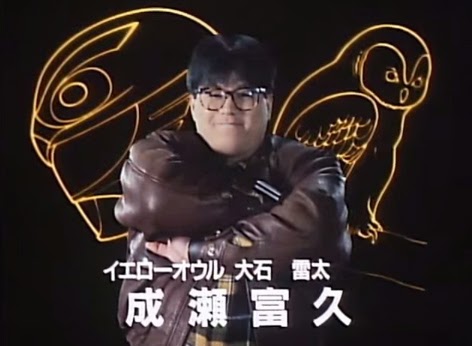
Ikko Tadano as Jetman Yellow Owl Raita OishiSayuri Uchida as Jetman Blue Swallow Ako Hayasaka

Ikko Tadano as Jetman Yellow Owl Raita Oishi and Sayuri Uchida as Jetman Blue Swallow Ako Hayasaka

Jetman Closing Theme
Chojin Sentai Jetman Series Outtro


"Kokoro wa Tamago" (こころはタマゴ?, "The Heart is an Egg")

Lyrics by Toyohisa Araki
Composition by Kōji Tsuno
Arrangement by Kenji Yamamoto
Artist: Hironobu Kageyama

Jetman was one of those super sentai shows that treat kids with respect and the seriousness they deserve with its dark and serious tones. I was a 90s kid who grew up watching tokusatsu shows and Jetman combined all those elements and added darker elements setting up an 11-year old kid on what life would probably be like in the not so far off future. It was a different time back in the 90s... it was awesome! Kids show started waning when Philippine television companies started patronizing more US kids shows and local teledramas than borrowing from our neighbor Japan. I can even say we can even blame media for making kids such drama kings and queens nowadays, Hahahaha. Looking back at it now, it sure is one of those nostalgic super sentai series that has always painted a smile on my face.

My favorite Jetman is Jet Blue or Blue Swallow Ako. It has been somewhat ingrained in my head an episode focusing on her and this cup noodle (ramen) monster. I like blue and she was also very cute. My 11-year old television infatuation. I also clearly remember playing a Jetman game on a gaming rental shop back in the days for the Family Computer (known in the US as the Nintendo Entertainment System or NES). I remember it was tough as hell coz I suck a bit at platforming back in the days (never finished a megaman or rockman game EVAR! Hahahaha). I have dug some footage of Jetman the Game online and here is what the game was like.


Retro Pilipinas on Jetman 90s Super Sentai Series on RPN

What about you guys? What are your fondest memories, favorite episode, character or merchandise from Jetman? Share your thoughts and experiences about 90s Chojin Sentai Jetman in the comments section below:
Read More

Mobile Cop Jiban | Kidou Keiji Jiban | IBC 90s Tokustatsu

Mobile Cop Jiban or simply Jiban was a Filipino dubbed super hero kids show that aired in Intercontinental Broadcasting Corporation or IBC around the 90s. Jiban had an original title of The Mobile Cop Jiban (機動刑事ジバン Kidō Keiji Jiban), a Japanese tokusatsu television series and the eighth entry in the Metal. Jiban was produced by Toei which originally aired on TV Asahi from January 29, 1989 to January 28, 1990 with 52 episodes and one feature movie. According to Jiban's creator Keita Amemiya, the premise for the series was almost entirely based on American character Robocop, as Jiban is often considered as RoboCop's Japanese counterpart. The opening catchphrase of the series is "This is the drama of a girl's and a young man's hearts which love people and protect justice." ("Kore wa Hito o Aishi, Seigi o Mamoru Wakamono to Shōjo no Kokoro no Dorama de aru."). Let's go down memory lane with The Mobile Cop Jiban.

Mobile Cop Jiban Retro Pilipinas Feature 90s Tokusatsu IBC-13

Mobile Cop Jiban - The Story
Mobile Cop Jiban Series Plot

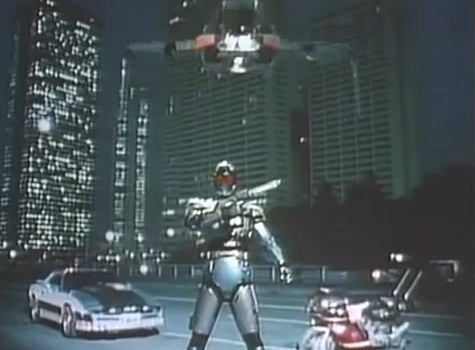
Naoto Tamura, a new detective in Central City, was killed by a Bionoid Monster in the line of duty. Doctor Kenzou Igarashi, a man whose experiments had been responsible for the Biolon syndicate's existence, brought the man back to life as a cyborg detective, Jiban. Mayumi Igarashi is the only person who knows the identity of Jiban and calls Jiban/Naoto her "big brother". Harry Boy on the other hand is Jiban's
robotic assistant along with Mayumi in their Secret Base. Jiban communicated with them via the Jiban's Badge.

Mobile Cop Jiban Retro Pilipinas Feature Kidou Keiji Jiban Naoto Tamura and Mayumi Igarashi IBC-13 Philippine Television Airing

Jiban gos against the Criminal Syndicate Bioron lead by Doctor Giba. The Bioron intends to take over Japan by means of narrow and more specified attacks rather than a more large-scale destruction. The use biochemistry as a means of their diabolical goals.

Doctor Giba Leader of the Criminal Syndicate Bioron Kidou Keiji Jiban The Mobile Cop Jiban Villain

Following the theme of a police theme, Jiban follows (or is programmed to abide) a certain set of rules. He literally cite out this code reminiscent of the Miranda Warning (Miranda Rights) when Jiban corners the villain of the episode.

Reource


Mobile Cop Jiban Opening Theme
Mobile Cop Jiban Series Intro


"Kidō Keiji Jiban"

Lyrics: Keisuke Yamakawa
Composition: Kisaburō Suzuki
Arrangement: Kazuya Izumi
Artist: Akira Kushida

Mobile Cop Jiban Closing Theme
Mobile Cop Jiban Series Outro


"Ashita Yohō wa Itsumo Hare" - "Tomorrow's Forecast is Always Sunny"

Lyrics: Keisuke Yamakawa
Composition: Kisaburō Suzuki
Arrangement: Kazuya Izumi
Artist: Akira Kushida

Mobile Cop Jiban Kidou Keiji Jiban 8th Metal Hero Aired Internationally Retro Pilipinas

Jiban is best remembered as that primetime metal hero series reminiscent of Robocop that aired after Ghost Fighter (Yu Yu Hakusho) back in IBC-13 during the 90s. If my memory served me right, Jiban was aired at a time when they stopped airing Masked Rider Black, so we 90s kid who grew fund watching the exploits of the "Black Son" were kept hanging. Jiban somehow addressed the longing... but not really quite to teh level of Masked Rider Black. I think the airing of Jiban was also cancelled in IBC-13. Correct me if I'm wrong fellow Filipinos, but I missed out the opportunity to watch this series up to the very end. It might be because of my poor memory or it was really cancelled. And during those times, when a show is cancelled, there is really no immediate way of us getting the whole series that time. Like any other tokusatsu series, Jiban had a very memorable opening and closing them which up to this day still keeps playing in my head from time to time. I remember back in grade school that we imitate Jiban by having our very own Jiban Badge and roleplaying that we are kicking each other butts just like in the show (Note: there were no physical harm applied to any of the parties involved :D)

Mobile Cop Jiban Tokusatsu Title Aired in the Philippines During the 90s in Intercontinental Broadcasting Company

How about you guys, do you have any memorable moments, experiences, or merchandise from the nostalgic show? Share your thoughts about Kidou Keiji Jiban - The Mobile Cop Jiban in the comments section below:
Read More

MagmaMan | Fireman | ファイヤーマン Faiyaman | ABS-CBN 90s Filipino Dubbed Tokusatsu

MagmaMan was a Filipino dubbed super hero kids show that aired in ABS-CBN around the 90s. MagmaMan is originally Fireman (ファイヤーマン Faiyaman), a Japanese tokusatsu television series which originally aired Nippon Television from January 7 to July 31, 1973. Let's take a look at MagmaMan, a classic Japanese tokusatsu that has successfully merged the essence of the Ultraman and Kamen Rider series.

MagmaMan Retro Pilipinas Feature ABS-CBN 90s Retro Tokusatsu


MagmaMan - The Story
Fireman - Series Plot

Fireman aka MagmaMan 1973 Japanese Tokusatsu


A strange phenomenon happened throughout the world, causing giant, mutant dinosaurs to suddenly appear. Deep under the Earth's surface lives the Agan, a race of people who will die if exposed to light of the sun for more than three minutes sends a courageous young man named Misakey to live as in the world of humans donning the identity of an archaeologist and SAF agent Daisuke Misaki. Whenever monsters and space aliens attack the world, Misaki transforms into Fireman by using the fire-stick, and defends the human race against them.

MagmaMan Opening Themes
FireMan Series Intros


"Fireman" (ファイヤーマン Faiya-man)

Lyrics by Yu Aku
Composition by Asei Kobayashi
Arrangement by Bob Sakuma
Artists: Masato Shimon


Misakey as Daisuke Misaki transforms to Fireman MagmaMan


MagmaMan Opening Theme
FireMan Series Outro

"Shutsugeki! SAF" (SAF Shutsugeki! Esu-e-efu, Go attack! SAF)

Lyrics by Hajime Tsuburaya
Composition and Arrangement by Toru Fuyuki
Artists: Columbia Yurikago-kai and The Photons


I have vivid recollections of this series but I can still remember me and my grade school classmates mimicking MagmaMan's finishers, the Magma Dash (Fire Dash). It was aired alongside the Ultrama on ABS-CBN back in the days so we have two super giants entertaining us every weekends. I also remember one particular scene when he sacrificed himself to save the planet, I believe it made me cry back then.

FireMan MagmaMan Finisher Fire Dash Retro Tokusatsu Japanese Show Aired in the  Philippines 90s


Doing the research of this classic retro tokusatsu that aired in ABS-CBN during the 90s, I can completely say that MagmaMan as I would like to call him, looks like the combination of Ultraman in terms of size but with the eyes of a Kamen Rider (Masked Rider). Looing at it now, it makes me want to get the DVD set just for the sheer nostalgic value of it. Maybe someday but for now, I will enjoy myself with these series of classic scene montage of MagmaMan:


How about you guys? Did you grew up watching this series? do you have a more clear idea or recollection of the monsters fought or episodes of MagmaMan? share your thoughts on the comments section below:
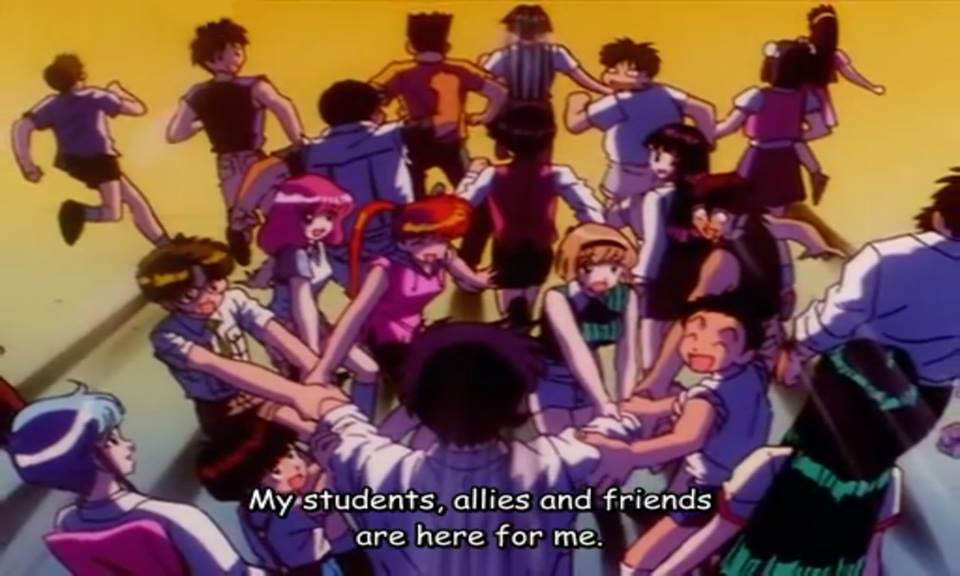
Magma Man Tokusatsu Title Philippine Television Run on ABS-CBN
Read More

Zenki | Kishin Doji Zenki | An ABS-CBN - 90s Filipino Dubbed Anime Retrospective

Zenki was an Filipino dubbed Japanese animated series which first aired in ABS-CBN around the late 90s. Zenki, originally 鬼神童子ZENKI Kishin Dōji Zenki,like many other Japanese anime, Zenki started as a manga series written by Kikuhide Tani and illustrated by Yoshihiro Kuroiwa. The manga was serealized in the Shueisha publication, Monthly Shōnen Jump from 1992 to 1996 and was later adapted into a fifty-one episode anime television series in 1995 by Studio Deen. Let's take the road down memory lane and remember this brat of a child but kick-ass eyeball-eating Demon, Zenki.

Zenki ABS-CBN 90s Anime Retro Pilipinas Feature


Zenki - The Story
Zenki Series Plot

Enno Ozuno, Master of the Enno temple used the demon guardian spirit Zenki to defeat the demon goddess Karuma. After defeating Karuma, he later sealed Zenki away in a pillar until needed again.

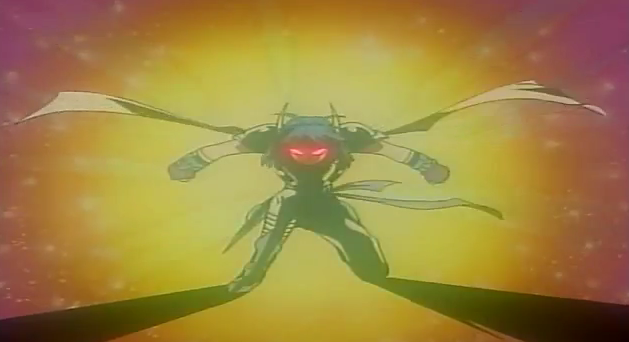
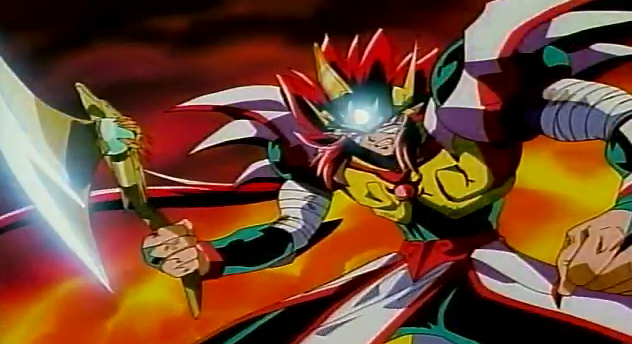
Two Forms of Zenki - Brat Kid Zenki and Demon Warrior Zenki


Centuries later, his descendant, a school girl named Chiaki Enno (Cherry) was able to free Zenki from his seal because of the return of the forces of Karuma (Karma). The seeds of karma which looks like eyeballs feeds on the greed and desire of humans later turning them into monsters. Zenki was freed because of this and needs to then again to eradicate this menace. Instead of the powerful yet defiant battle-born demon warrior, the freed Zenki has now taken the form of a brat demon child. To transform this extremely defiant demon into the form that made him useful by her ancestor, she was bestowed with a magical bracelet that appeared on her wrist.

Zenki Cherry Night Chiaki Enno 90s anime

Zenki Goki 90s anime


After defeating Karuma again, all seems well until a new evil rose, the threat of the Grand Lord with the help of Inugami. This time Zenki acquires a new power. Goki, an old companion joins him to battle this new powerful evil.

Zenki 2nd Armor Anime Series


Zenki Opening Theme 1
Zenki Series Intro


"Kishin Douji ZENKI" (Demon-God Child Zenki)
Performed by Ogata Megumi & Yokoyama Chisa

* Vajura on! Vajura on!
Vajura on! Vajura on!

Toki wa ima sennen no jubaku wa yaburareta
Fuku kaze ni tsukiagero jiyuu no Vajura wo
Yomigaeru riyuu sae seigi no imi sae mo
Ima wa shiranai omae da keredo

** Hoero ZENKI ZENKI
Itsu ka deau Kitto
Mune ni sasaru you na
Inori wo kometa hitomi ni
Sou sa ZENKI ZENKI
Sono kagayaki koso
Ai to iu mugen no chikara da

* Repeat

Wazawai ga uchiyoseru jaaku wa hanatareta
Hateshinai yokubou no uzumaku umi e to
Shikkoku no nami no soko yagate hito wa horobi
Sono rekishi sae shizumeru darou

Tatake ZENKI ZENKI
Subete no yami ute
Ten ga kureta sono
Saikyou no ude ni kakete
Sou sa ZENKI ZENKI
Futatabi kono yo ni
Eien no asu wo terashidase

* Repeat
** Repeat
* Repeat


Zenki Opening Theme 2
Zenki Series 2nd Intro


"Chou-Kishin Douji Zenki Raigou Shourin" (Super Demon-God Child Zenki, Coming of Buddha Looking Down from the Heavens)

Yami ni sasaru hito-suji no hikari
Yatsu no me ga gira-tsuku no wo mita ka
Yatsu wa warau tsuyoi teki na hodo
Kiba wo muki "Fuzakeru na" to hoeru

* Oo Jidai wa seikimatsu
Aku wa sakae Chi wo oou
Aa Yatsu nara iu darou
"Hyakuman-nen hayai ze"

** Yatsu wa ZENKI! ZENKI!
Inori no wa no majiwaru tokoro
Raigou! Shourin! Yatsu wa kuru
Kishin ZENKI! ZENKI!
Furikazashita honoo to tomo ni
Raigou! Shourin! Kikoete kuru no sa
"Rajasu" no koe ga

Yatsu wa ikaru Sore wo seigi da to
Yonda nara ano me de furikaeru
Gura-tsuite 'ru kono yo no mashin ni
Ikazuchi wo kureta dake to niramu

Oo Sennen seikimatsu
Megurasareta wana no soko
Aa Yatsu nara tachiagaru
Hyakuman-kai ochite mo

Yatsu wa ZENKI! ZENKI!
Yabou megake tsukawareshi mono
Raigou! Shourin! Toki wa kita
Kishin ZENKI! ZENKI!
Yagate hareta mirai no sora ni
Raigou! Shourin! Hito-kiwa fuku no sa
Rajasu no kaze ga

* REPEAT
** REPEAT


Zenki was probably the most memorable anime character for a 90s kid. He was a brat but packs a lot of power when unsealed to his true form. Not to mention he eats the seeds of Karuma after each kills. I remember getting excited to go home back in grade school to just watch this series which aired every weekdays afternoon on ABS-CBN.

Zenki Palakol ni Diva


I remember being one of those kids who usually role plays acting like Zenki and shouting "PALAKOL NI DIVA" (Axe of Diva) picking up sticks and swaying it like crazy to my friends acting like Karuma monsters or fellow Zenki themselves, or placing a stick between our middle and ring finger with our hands closed shoutng "KUKO NI DIVA" or "APOY SA KUKO NI DIVA!". This was one of the many definitive anime of the 90s and Zenki was that memorable of a series. Looking back at it now, I can say that the animation and music still rocks.

Zenki ABS-CBN Tagalized Filipino Dubbed Anime 90s Title


How about you guys? What's your fondest and most memorable moments, episodes, character, monsters, or merchandise you have of Zenki. Share your memories of Zenki in the comments section below:
Read More

Bioman | Choudenshi Bioman | ABS-CBN 80s, IBC 13 - 90s English Dubbed Tokusatsu

Bioman was an English dubbed super hero kids show which first aired in ABS-CBN back in 1986 and later in Intercontinental Broadcasting Company (IBC) around the 90s. Bioman was originally Choudenshi Bioman (超電子バイオマン Chōdenshi Baioman), a Japanese tokusatsu television series by Toie Company and the 8th super sentai series title which originally aired on TV Asahi from February 4, 1984 to January 26, 1985. Bioman was the last super sentai series that got an English dubbed, the localized sentai series that followed are all dubbed in Filipino. Even in its 90s rerun, it was still dubbed in English. But it was the series that most 90s Filipino kids are familiar with and has the same charm as Maskman. Let's go down memory lane as we look back at Bioman.

Choudenshi Bioman English Dubbed Super Sentai Show Run in the Philippines Retro Pilipinas Feature


Choudenshi Bioman - The Story
Choudenshi Bioman Series Plot

The once prosperous Bio Star is destroyed after a world war erupted over the use of a scientific discovery called "Bio Particles". The Bio Star Peacekeeping Alliance, which sought to use Bio Particles for peaceful purposes, sends the giant robot Bio Robo and an assistant robot named Peebo in order to prevent the same tragedy from happening to Earth. Bio Robo arrives on 15th century Japan, where it showers Bio Particles on five young individuals. Centuries later, the descendants of these individuals, infused with Bio Particles, are chosen by Peebo and Bio Robo to become the Bioman team: Shiro Go became Red One, Shingo Takasugi became Green Two, Ryuta Nanbara became Blue Three, Mika Koizumi, who was later replaced by Jun Yabuki became Yellow Four, and Hikaru Katsuragi became Pink Five.

Doctor Man of Neo Gear Empire Bioman


The Bioman team are asked to protect the Earth from the Neo Gear Empire, an organization led by the cyborg mad scientist Doctor Man from his Neo Grad fortress at the South Pole. Doctor Man believe that Neo Gear Empire to be a technologically advanced society with the right to rule Earth. Big Three (Mason, Farrah, and Monster), Farrah Cat, Prince and Mecha Clones.

Bioman Team Mecha Bio Robo Biorobot


Bioman Opening Theme
Choudenshi Bioman Series Intro


Bioman Team in Bioman Suits together with Peebo Retro Super Sentai


"Choudenshi Bioman" (超電子バイオマン Chōdenshi Baioman)

Lyrics by Chinfa Kan.
Composition by Kunihiko Kase.
Arrangement by Tatsumi Yano.
Artist: Takayuki Miyauchi


Takayuki Miyauchi Live Perfomance of Bioman Opening Theme
Takayuki Miyauchi Sings Choudenshi Bioman - Series Intro


Bioman Team in Human Form Shiro Go - Red One, Shingo Takasugi - Green Two, Ryuta Nanbara - Blue Three, Mika Koizumi - Yellow Four, and Hikaru Katsuragi - Pink Five, and Peebo


Bioman Closing Theme
Choudenshi Bioman Series Outro


The only Bioman Closing Theme I found that showed the original TV Ending Theme Sequence. This Closing Theme is in French but stayed true to its original arrangement.

"Biomic Soldier" (バイオミック・ソルジャー Baiomikku Sorujā)

Lyrics by Chinfa Kan.
Composition by Kunihiko Kase.
Arrangement by Tatsumi Yano.
Artist: Takayuki Miyauchi.


Takayuki Miyauchi Live Perfomance of Bioman Closing Theme
Takayuki Miyauchi Sings Biomic Soldier - Series Intro


For a 90s kid, I have considered Bioman as the "bio brain" of all super sentai series during its run. Of course this was not true, but you really can't blame a kid who has just started to grow awareness about his surrounding during the 90s. We don't have Wikis or the internet to inform us that time, so this was really my first exposure to the super sentai (tokusatsu) series. Besides the usual storyline, monsters, mechas and story, Bioman's greatest and lasting influence was both its memorable catchy opening and closing themes. As a sign of its lasting influence, I still seldom randomly hear its theme everytime I'm out doing my regular stroll. Whether it is in a form of a ring tone or a music being played in a CD, Bioman truly has became a part of everyone (mostly its male audience) who grew up with the series. I am bit ashamed to say that I never really got into the series due to the fact that it was dubbed in English and it has erratic airing television schedule back in IBC-13. I believe I have never seen the show's finale. I preferred Maskman later, because of the obvious... being in Filipino. I somewhat understood Maskman "more" back then(?). I wasn't that fully into Star Wars back as well, so Peebo was my first lovable gold robot. CRPO was just a runner up. Bioman became memorable a series and probably a part of my childhood now. Thus it always brings me back to the worry-free moments of my life when I was just watching retro tokusatsu shows in our local Philippine television.

Choudenshi Bioman in the Philippines

What about you guys? What's your fondest memories, favorite episode, character or merchandise about the Bioman? Share your thoughts and experiences in the comments section below:
Read More

Shaider | Space Sheriff Shaider | ABS-CBN 80s, IBC 90s

Shaider was a Filipino dubbed super hero kids show that first aired in ABS-CBN from 1988 to 1991 and later at Intercontinental Broadcasting Corporation or IBC from 1992 to 1994 which was the very first Japanese Tokusatsu series dubbed in Tagalog (Filipino). Shaider had an original title of Space Sheriff Shaider (宇宙刑事シャイダー Uchū Keiji Shaidā), a Japanese tokusatsu television series and the third part of the Metal Hero Series (the last of the Space Sheriff Trilogy) which originally aired on TV Asahi from March 2, 1984 to March 1, 1985. Being the first ever Taalized tokusatsu series, Shaider holds a very special place in Philippine television. There had been reruns of the show but the series was never finished due to its contsant cancellation by the television stations that hosted it. It suffered the same fate as the Masked Rider Black series run.

Space Sheriff Shaider 80's Tagalized Tokusatsu Metal Hero Series in the Philippines Retro Pilipinas Feature


Space Sheriff Shaider - The Story
Shaider Plot

In college studying archaeology, Dai Sawamura, known in the Philippines as Alexis deciphered the figures on the Nazca Plains in Peru. Impressed by this feat, the Galactic Union Police recruited him and trained him to be Earth's third Space Sheriff, after which he was given the code name 'Shaider' in memory of an ancient warrior who defeated the villain Emperor Kubilai and brought down the Fuuma 12,000 years ago. When the Fuuma returns, Alexis is deputized as he returns to Earth to battle the Fuuma with the help of Annie, Alexis' classmate, whose homeworld of Mount was annihilated by Fuuma.

Space Sheriff Shaider Villains  Fushigi World Fuuma


Commander Hessler aka Drigo in Shaider


Girl's Army aka Amasona in Shaider


The Fuuma aspires to ultimately conquer the universe through psychological attacks on many planets using fushigi beasts hatched from pearls which are given birth to by the Great Emperor Kubilai (Fuuma-Lear) ultimately destroying worlds. Together with other followers of Fushigi World Fuuma religion followers like Priest Poe (Babaylang Ida), Kubilai's 15,000 year old transvestite grandson who serves as advisor, high priest and strategist known for his "Phantom Showtime" or most popularly known as the Time-Space Warp... the "Time Space Warp Ngayon Din!" become an iconic pop culture line; Commander Hessler (Drigo), and the Girls' Army (Amasona).

Priest Poe aka Babaylang Ida in Shaider


Space Sheriff Shaider Opening Theme
Shaider Intro


"Uchū Keiji Shaider"
Lyrics by Keisuke Yamakawa.
Composition and Arrangement by Michiaki Watanabe.
Artist: Akira Kushida


Space Sheriff Shaider and Vavilos (Babilos)


Space Sheriff Shaider Closing Theme
Shaider Outro


"Hello! Shaider"
Lyrics by Keisuke Yamakawa.
Composition and Arrangement by Michiaki Watanabe.
Artist: Akira Kushida


I watched the first rerun of Shaider around the 90s and like everyone else I was hooked with this weekly superhero show just like Masked Rider Black. It featured interesting characters especially Annie and her yellow and white attire (winks), Ida known for her time- space warps and odd monotone voice, catchy opening and closing theme songs (seen above), and who can not forget that psychedelic, mysterious, creepy and kick-ass all at the same time theme of the "Fushigi Song" that plays everytime Lear/Kubilai gives birth to a Fushigi Monster:


Looking back at Shaider, the show might look silly. Imagine an ancient alien religious sect who wants to conquer the universe through psychological attacks? But Shaider will forever be part of Filipino geek pop culture history.

Shaider in the Philippines Annie and Alexis


What about you guys? Share your fondest memories of the Filipinized Metal Hero series? Do you have any favorite fushigi monsters, episodes, or memorabilias? Share your thoughts and experiences on Space Sheriff Shaider on the comments section below:
Read More