Batman: The Animated Series | An ABS-CBN - 90s Animated Series Retrospective

Batman: The Animated Series or simply Batman was a US animated television series that aired on ABS-CBN during the 90s. Batman: The Animated Series was an American action animated television series based from the DC Comics character Batman that originally run from September 5, 1992 to September 15, 1995 on the Fox Network as part of its Fox Kids lineup in the United States. With its mature themes, effective writing, and animation presentation, Batman: The Animated Series was a favorite amongst everyday television audience (from children to adults) and DC comics fans alike. Let's take a look back on this nostalgic superhero animated series from the 90s.

Batman The Animated Series Retro Animated Series 90s ABS-CBN Retro Pilipinas


Batman: The Animated Series - The Story
Batman The Animated Series Plot

Bruce Wayne as The Batman


Batman: The Animated Series chronicles the adventures of a multi-billionaire bachelor Bruce Wayne as he took it upon himself the responsibility to protect and preserve the city that he and his parents loved the most, Gotham City. Witnessing the death of his parents right before his eyes, the heir to the multi-billion corporation Wayne Industry, young Bruce Wayne was left broken. One fateful day, he finally finds the answer to all his questions, to take the disguise of a crime fighter and become's Gotham's dark knight. With his seemingly unlimited resources, he uses technology, martial arts expertise, and superb deducting skills and intelligence to fight the evil that looms around Gotham City.

Batman The Animated Series Villain Roster


Batman: The Animated Series Opening Theme
Batman The Animated Series Instrumental Intro


Batman: The Animated Series
Theme music & composer: Danny Elfman


On a time when animated shows were heavily censored out and catered for kids to appreciate alone, Batman: The Animated Series was a breath of fresh air. As a child growing up during the 90s, I have to admit that Batman: The Animated Series featured some very mature content for the era for a kids show and it was the animated series' biggest strength. Kids need an icon to look up to and they somewhat know that criminals are not as goofy as other superhero television kids show portray them to be back in the 90s. Dark themes and violence are very common in animated shows nowadays, but back then it was pretty rare, so when Batman somehow effectively portrayed the likeliness of the violent nature of real life crime and crime fighting, plus the fact that Batman had no super powers, kids felt that they were taken seriously and he was the hero that kids can become, a bad ass brawler who uses cool gadgets and a smart detective. It was awesome! Well, at least that was what I felt back then. If my memories served me right, Batman aired every Friday nights in ABS-CBN which is a perfect weekend primetime treat for a grade school student like me. One of my favorite villain in Batman the Animated Series was Clayface because he has the ability/power that I've always dream of having, to shapeshift.

Batman The Animated Series Run in ABS-CBN During the 90s Retro Show


What about you guys? What's your fondest memory of Batman: The Animated Series? Any favorite episode or characters? Share your thoughts on Batman: The Animated Series on the comments section below:
Read More

Masked Rider Black | Kamen Rider Black | An IBC - 90s Tokusatsu Series Retrospective

Masked Rider Black was a Filipino dubbed super hero kids show that aired in Intercontinental Broadcasting Corporation or IBC back in the 90s. Masked Rider Black has an original title of Kamen Rider Black (仮面ライダーBLACK Kamen Raidā Burakku), a Japanese tokusatsu television series and the 11th Kamen Rider series title which originally aired on Mainichi Broadcasting System and the Tokyo Broadcasting System from October 4, 1987 to October 9, 1988. Besides its popularity on its 80's run in Japan, it is highly probable that IBC picked this series up because it is the only Kamen Rider series in that time (Showa Era)that didn't feature its predecessors in any of the series 51 episodes. Masked Rider Black was a perfect Tagalized super hero series from Japan that appealed to both children and adults alike. The show's weekly super hero versus monster formula appealed to kids, while the shows characters brooding background and character progression appealed more to the adult market during its Philippine run.

Masked Rider Black 90s Filipino Dubbed  Japanese Tokusatsu IBC Retro Pilipinas Feature


Masked Rider Black - The Story
Kamen Rider Black Plot

Every 50,000 years, the life of a Century King who ruled the entire universe will come to an end. Before that happens, a new Century King must be decided upon. The job to do so lies in the hands of Gorgom, a dark and evil organization.

IBC 13 Masked Rider Black Robert Akizuki (Minami Kotaro) Retro Pilipinas


19 years ago, on a day of a solar eclipse, Minami Kotaro (known in the Philippines as Robert Akizuki) and Akizuki Nobuhiko (Stephen) were born. 3 years later after the solar eclipse, Kotaro's parents were murdered by Gorgom. The Akizuki family took Kotaro in and treated him like their own family member. Kotaro and Nobuhiko grew up together like brothers.

On their 19th birthday, Gorgom made an appearance once again and abducted Minami Kotaro and Akizuki Nobuhiko. Both of them were brought to Gorgom's Secret Lair. Little did they know that they were going to be transformed into Cyborgs for Gorgom to choose a new Century King between the 2 of them. In order to do so, Gorgom had to operate on both Kotaro and Nobuhiko to erase their memories. The present Century King gave Gorgom 2 Holy Kingstones. Both Kingstones were to be operated into Kotaro and Nobuhiko to fully changed them into Cyborgs. Since both Kotaro and Nobuhiko were born on the day of a solar eclipse, Gorgom referred to Minami Kotaro as "Black Sun" while Nobuhiko as "Shadow Moon".

Professor Akizuki, Nobuhiko's father, who also happened to be one of Gorgom's scientists, arrived at Gorgom's lair. He did not want Gorgom to erase away his children's memories of him. The operations still continued. Professor Akizuki interfered in the operations, giving the perfect opportunity for both Kotaro and Nobuhiko to escape. Kotaro managed to escape but not Nobuhiko, who suffered some injuries during the interference during the operations.

Kotaro had to escape, leaving his foster father and Nobuhiko behind. A Holy Kingstone had already been fitted into Kotaro's body.

Kamen Rider Black Gorgom Daishinkan to Daikaijin Darom, Baraom, Bishium

The entire story was about the evil Gorgom trying to get back the Kingstone from Minami Kotaro. However, Kotaro soon realized that the Kingstone in his body had special and unique powers. Using the name of Kamen Rider Black (Masked Rider Black), Kotaro (Robert) made full use of the Kingstone's powers to transform himself into a Masked Cyborg. With that power, he battled Gorgom and its Monsters and hoped that one day, he could rescue his brother, Nobuhiko. However, later in the series, Nobuhiko emerged as Shadow Moon to fight Kotaro with the survivor becoming the next Creation King.


Masked Rider Black's Battlehopper and Roadsector


Masked Rider Black Opening Theme
Kamen Rider Black Intro


"Kamen Rider Black"

Lyrics by Yoko Aki.
Composition by Ryudo Uzaki.
Arrangement by Eiji Kawamura.
Artist: Tetsuo Kurata


Masked Rider Black Tagalized and Dubbed Tokusatsu Series During the 90s in the Philippines Intercontinental Broadcasting Company


Masked Rider Black Closing Theme
Kamen Rider Black Outro


"Long Long Ago, 20th Century"
Lyrics by Yoko Aki.
Composition by Ryudo Uzaki.
Arrangement by Eiji Kawamura.
Artist: Norio Sakai


Masked Rider Black was and still is my favorite Japanese tokusatsu series to date. A super hero series that took all audiences seriously engaging both children and adults alike. I have so many memorable episodes of this series: Robert mastering his improved rider punch and kick versus the Lobster Mutant, The transformation sequence of the Gorgom High Priests into Great Monster Leader; and the part when Masked Rider dies and a Gorgom Whale Mutant took care of him until his miraculous revival. This is one of those 90s show that complete our Sundays. Adding up to Masked Rider Black's charm is both its catchy opening theme and melodramatic closing theme. My biggest gripe with IBC-13 back in the days was the frequent cutting and rewinding of the series on the part where Shadow Moon confronts Robert Akizuki. Fastforward to many years (about two years ago), I managed to watch the series again but this time from beginning up to to the very end. I was finally able to witness the show's epic conclusion.

Kamen Rider Black Kujira kaijin Masked Rider Black Kujira Mutant


What about you guys? What are your fondest memories of Masked Rider Black's IBC-13 run? Share your thoughts on the comments section below:

Masked Rider Black Philippine Run on IBC 13 the 90s
Read More

Yosi Kadiri - Department of Health's Iconic Anti-Smoking Campaign Mascot

Yosi Kadiri was a Department of Health anti-Smoking Campaign Mascot back in the 90's. Yosi Kadiri was an iconic 80s and 90s mascot that puts a face to smoking, and its detrimental effects to the health of both smokers and non-smokers. The Yosi Kadiri campaign was heavily marketed to spread awareness and warn about the effects of smoking via outdoor signs, commercial center signages, television, call/home radio, newspapers, magazines, school organs, comic books, and premium items.


Department of Health's Yosi Kadiri Campaign Mascot Retro Pilipinas Feature


Yosi Kadira - The Mission
Yosi Kadiri Campaign


Yosi Kadiri Mascot

The prevalence of smoking and its detrimental effect on the health of smokers and non-smokers have alarmed government authorities. It is in this context that Yosi Kadiri Information and Education Anti-Smoking Campaign has been conceptualized and implemented.

Yosi Kadiri Campaign aims to reduce the prevalence of smoking among the youth in the 7 to 19 age bracket from 22.7% in 1987 to at least 12% by the end of 1997. Its audience includes non-smoking male and female children and teenagers with emphasis on the 12 to 16 age group.

A mascot called Yosi Kadiri is the Campaign’s spokesman together with a media network composed of outdoor signs, commercial center signages, television, call/home radio, newspapers, magazines, school organs, comic books, and premium items.

The campaign hopes to change the predisposition and predecision to go into the habit of smoking at a certain age at a certain time.


The grim face of Yosi Kadiri and the actual mascot somewhat disturbed me as a grade school student back in the early 90's. This is probably what the Health Department was aiming for back in the days, to start them young. It somehow helped educating the newer generation (back then) of the dangers of smoking. This campaign and probably my father (even if he is a smoker) warning me that I shouldn't smoke made me not turn into a smoker. In the end, it is still up to the nearest influences that could deter one to engage in such vices.


Yosi Kadiri Outdoor Signage Wag magYOSI, Wag KADIRI


But like I said, what if one is exposed to an environment tolerating such vices? What you get is Yosi Kadiri becoming the "real face of smoking", and not in the same sense that the Department of Health envisioned the mascot to be. Yosi Kadiri was eventually dropped by the Department of Health in early 2000, and not long, appearing once again in "Inuman Na" music video of by-then rising Filipino pop rock band Parokya ni Edgar. In the world of the young innocent and susceptible students, Yosi Kadiri may have been that malignant face to stop their natural curiosity to try things out, specifically smoking. On the world of adults on the other hand, Yosi Kadiri could very well be the face of how society views them, and that has probably made them relate more to this mascot rather than be scared of it.


Yosi Kadiri in Parokya ni Edgar's Inuman Na Music Video


Parokya Ni Edgar "Inuman Na" Music Video Featuring The Yosi Kadiri Mascot
Yosi Kadiri in Inuman Na Music Video


To those who grew up around the late 80s and early 90s Yosi Kadiri will forever be instilled in their minds. That disturbing and malicious face of a mascot, what was he DOH thought of that time when they came up with such designs for a mascot? It probably helped with the government's campaign against smoking, but eventually the mascot, just like the 90's has moved on.


Yosi Kadiri DOH Anti-Smoking Campaign Mascot 80s - 90s


What about you guys? How doyou remember Yosi Kadiri? Share your thoughts about the iconic DOH anti-smoking campaign mascot of the late 80s to early 90s on the comments section below:
Read More

Bayani | An ABS-CBN 90s Educational Show Retrospective

Bayani was a popular educational television show for Filipino children from ABS-CBN Foundation Inc. in cooperation with the Department of Education Culture and Sports (DECS) back in the 90s. Bayani aired from 1995-2001 on Philippine television network, ABS-CBN. Bayani, as the title state is a weekly edutainment kids show that follows the adventure of two children as they magically travel back in time to retrieve historical items from the collection of a from a mysterious old person living in a cave.

Bayani Educational Television Show ABS-CBN 90s Retro Pilipinas Feature


Bayani ABS-CBN Foundation's Educational Television Show - The Story
Bayani Plot

ABS-CBN's Bayani follows two elementary school students Noli (played by child actor Angelo Cometa) and Aya (Celine Lirio) as they accidentally stumbled on a mysterious cave to evade a group of school bullies after them. They saw a mysterious light which lead to a similarly mysterious old man played by Rolando Santos Tinio who tells them that he is the guardian of the mysterious cave which holds the memories of Philippine history and the spirit of the country.

ABS-CBN Educational Television Show Bayani 90s Time Travel


The old man tells them that they were destined to discover the cave and are chosen ones of pure heart to access the Aklat ng Kasaysayan (Book of History). The old man asks them for their consent to go on this magical adventure through time to retrieve various lost and stolen historical items from different time periods. Bayani's pilot episodeis entitled "Abaniko" (fan) which follows the adventure of Noli and Aya back in Andres Bonifacio's timeline to retrieve the first fan the the national hero created he created. On later episodes, Rolando Santos Tinio was replaced by various actress and later with Caridad Sanchez as "Lola" (grandmother) in Bayani. Lola also guided the children and gave them missions on what items to retrieve back in various points in Philippine history.

Bayani ABS-CBN Foundation's Educational Television Show Opening Theme
ABS-CBN's Bayani Intro


Praise ABS-CBN Foundation Inc. for creating an entertaining educational television show Bayani for Filipino children back in the 90s in Philippine television network, ABS-CBN. As a student, the show did what it is suppose to, and in flying colors... to teach history to kids in a fun and effective way. I personally learned new things about the lives of some of our national heroes which sometimes were not taught in school. The show also introduced more national historical heroes besides what we (students) knew that time. Having quality television shows like this, I can say that I am happy and proud to grow up in the 90s.

Bayani Educational Kids Show from ABS CBN Foundation Inc and the Department of Education Culture and Sports 90s


What about you guys? What do you think about ABS-CBN's Bayani? What are your most unforgettable and memorable episode in the educational show? Share your thoughts about Bayani on the comments section below:
Read More

X-Men: The Animated Series | An ABS-CBN 90s American Super Hero Animated Series Retrospective

X-Men: The Animated Series or simply X-Men was a US animated television series that aired on ABS-CBN during the 90s. X-Men: The Animated Series was an American action animated television series that debuted on October 31, 1992 on the Fox Network as part of its Fox Kids Saturday morning lineup in the United States. The series dealt with mature themes which made it appeal to both kids and adults alike during its run in the Philippine airwaves. Let's reminisce this dark but yet awesome kids show from the 90s.

X-Men The Animated Series 90s Retro Animated Series on ABS-CBN Retro Pilipinas Feature


X-Men: The Animated Series - The Story
X-Men Plot

The show features X-Men similar in look and line-up to the early 1990s X-Men drawn by Jim Lee, composed of Cyclops, Wolverine, Rogue, Storm, Beast, Gambit, Jubilee, Jean Grey, Professor X, as well as an original character, Morph.

X-Men The Animated Series Mutants vs Mutants 90s Retro Cartoons Aired in ABS-CBN


X-Men: The Animated Series was loosely based on how the story and events unfolded on its Marvel comics popular counterpart. A number of famous storylines and events from the Marvel comics were loosely adapted in the series like the "The Dark Phoenix Saga", "Days of Future Past", the "Phalanx Covenant", and the "Legacy Virus". Beyond faithfully recreating many of the popular characters and stories from the comic books, the series also dealt fairly openly with mature social issues. The ills of prejudice, intolerance, isolation, and racism were all frequent themes in the animated series, as they were in the comics. Anti-mutant prejudice and discrimination was depicted through minor characters as well as more prominent ones, including Senator Robert Kelly, the Friends of Humanity and robotic Sentinels. X-Men featured the clash of two idealism mainly through the show's two main groups lead by two distinct mutants. Professor Charles Xavier (head of Mutant Academy for the Gifted and leader of the secret mutant group X-Men) advocates non-violence in the struggle for equality, while Magneto takes on a more aggressive 'by any means necessary' stance; the duo's differing views are the source of much discussion throughout the series.

X-Men: The Animated Series Opening Theme
X-Men 90s Instrumental Intro


As someone who at that time was not familiar with the long history and fanbase that Marvel has established with the X-Men and other popular titles alike, 90s X-Men: The Animated Series blew my mind and made me the geek that I am right now. The X-Men introduced me to mutants which were pretty rad. Almost every episode featured one new mutant with unique mutant powers that kids usually dream of having. X-Men has pretty iconic characters like the bad ass Wolverine, the later powerful Phoenix (Jean Grey), the sinister Apocalypse, and that poor old Morph which has the ability I've always dreamed off, shape shifting. X-Men features adult themes which probably appealed to me that time even though I failed to appreciate some of it during those time, I am still thankful for X-Men for subliminally educating me to never discriminate others because they are different. Accompanied by a rocking instrumental as its opening slash main theme, X-Men is one of the most nostalgic 90s animated series and one of my best super hero group and animated series of all time. Some of my most memorable episodes include those under the Phoenix Saga and a cross-over from an also familiar 90s Marvel superhero Spider-Man.

X-Men 90s Animated Series Protagonist Professor Charles Xavier


X-Men 90s Animated Series Villain Magneto

What about you guys? Who's your favorite X-Men or villain in the 90s retro cartoons? How about your fondest memories and favorite episode of X-Men? Share your thoughts about 90s X-Men: The Animated Series on the comments section below:
X-Men The Animated Series 90s Animated Television Series Title on ABS-CBN Philippine TV Network Airing
Read More

Fiveman | Chikyu Sentai Fiveman | ABC - 90s Tokusatsu Filipino Dubbed Kids Show

Fiveman was a Filipino dubbed super hero kids show that aired in Associated Broadcasting Company or ABC-5 (now TV5) back in 1994. Fiveman is originally Chikyu Sentai Fiveman (地球戦隊ファイブマン Chikyū Sentai Faibuman), a Japanese tokusatsu television series and the 14th super sentai series title which originally aired on TV Asahi from March 2, 1990 to February 8, 1991. The popularity of the Japanese super sentai series amongst the Filipino television audience (adults and children alike) that started with the Tagalized version of Hikari Sentai Maskman was inherited by ABC-5's Fiveman. This is the Super Sentai Series that helped ABC-5 gain additional televiewers.

Chikyu Sentai Fiveman Retro Super Sentai Series Aired in the Philippines 90s Retro Pilipinas Feature


Fiveman - The Story
Chikyu Sentai Fiveman Plot

Chikyu Sentai Fiveman siblings civilian form


Doctor Hoshikawa was researching a technology on how to transform the dessert-like planet Sedon into a green, lush world, testing it by attempting to grow flowers. On the day the first flower bloomed, the Zone Empire launched an assault on the planet, he and his wife were separated from their five children. Arthur G6 took the five children back to Earth and raised them there.

Twenty years later, the five are now grownups. teachers in New Town School. They pose as teachers at New Town School, planting a garden of Sidon Flowers which they brought from planet Sidon. The Zone Empire now prepares to invade Earth as its thousandth target and as they begin the attack, three vehicles appear and counter the offensive, five warriors descend from the vehicles and confront Zone.

Chikyu Sentai Fiveman Siblings Super Sentai Form


The Hoshikawa siblings have been developing the Fiveman technology and training hard upon the possibility of Zone invading Earth. Now the five siblings are ready to battle with the familiar foes as Fiveman. The Fivemen are five siblings of the Hoshikawa family (three brothers and two sisters) mainly Gaku Hoshikawa (Five Red), the eldest and leader of the team at 27 years old, and a Science teacher skilled in kendo; Ken Hoshikawa (Five Blue),the second born at 25 years old, second leader to the team, a Physical Education teacher skilled in judo; Fumiya Hoshikawa (Five Black), the fourth born, youngest son and twin brother of Remi at 20 years old, a Japanese teacher skilled in karate; Kazumi Hoshikawa (Five Pink), the third born and oldest daughter at 23 years old, a Math teacher skilled in fencing; Remi Hoshikawa (Five Yellow), the twin sister of Fumiya and the youngest of the Hoshikawa siblings at 20 years old, a music teacher skilled in kung fu.

Fiveman Opening Theme
Chikyu Sentai Fiveman Intro


"Chikyu Sentai Fiveman" (地球戦隊ファイブマン Chikyū Sentai Faibuman)

Lyrics by Masao Urino.
Composition by Yasuo Kosugi.
Arrangement by Kenji Yamamoto
Artist: Kenji Suzuki (鈴木 けんじ Suzuki Kenji)


Fiveman Ending Theme
Chikyu Sentai Fiveman Outro


Chikyu Sentai Fiveman ABC-5 Tagalized Super Sentai Series 90s


"Fiveman, Ai no Thema" (ファイブマン、愛のテーマ Faibuman, Ai no Tēma, "Fiveman, Theme of Love")

Lyrics by Masao Urino.
Composition by Yasuo Kosugi.
Arrangement by Kazuya Matsushita (松下 一也 Matsushita Kazuya).
Artist: Kenji Suzuki.


Fiveman is probably one of the most adorable super sentai series shown in the Philippines in terms of the show's main heroes are all siblings, and teachers out to protect Earth. I want to believe that in some strange way that children who watched the series gained a few degree of respect towards their grade and high school teachers. There are some very mushy and touchy episodes in Fiveman including Fiveman's beloved robot Arthur. I also remember having a young crush on the Zone Empire's Galactic Empress Meadow.

Chikyu Sentai Fiveman Robot Arthur G6


What about you guys? What's your fondest memory of Fiveman? Any favorite episode, character, or moment in the Philippine dubbed super sentai series? Share your thoughts about Chikyu Sentai Fiveman in the comments section below:

Chikyu Sentai Fiveman ABC-5 90s Kids Show Title in the Philippines
Read More

Ober Da Bakod | A GMA 90s Sitcom Retrospective

Ober Da Bakod was a popular GMA Network sitcom produced by Viva Television and co-produced and broadcast by GMA Network from 1992–1997. The weekly situational comedy features the misadventures of two brothers Mokong and Bubuli as they successfully overcome every devious plans created by the sinister and filthy rich father of the two girls that they are courting. Let's go down memory lane and reminisce this hilarious Philippine retro sitcom.

Ober Da Bakod GMA Network 90s sitcom retro pilipinas feature


Ober Da Bakod - The Story
Ober Da Bakod Synopsis

The brothers Mokong (Janno Gibbs) and Bubuli (Anjo Yllana), sons of Lucring Dayukdok (Malou de Guzman) have feelings for the rich sisters Honey Grace (Gelli de Belen) and Barbie Doll (Donita Rose), daughters of the infamous Don Robert Dinero (Leo Martinez); Mokong for Honey Grace and Bubuli for Barbie Doll. Don Robert doesn’t like the brothers because they are poor. In order to freely court Honey Grace and Barbie Doll, Mokong and Bubuli climbs over the fence and thus the title Ober Da Bakod (Over the Fence).

Don Robert, usually with the aid of his blundering fool of a right hand man, Brownie (Danny Pansalin) always makes plans to prevent Mokong and Bubuli to get close to his daughters. Nonetheless, he fails due to the intervention of his mortal enemy and former girlfriend, Aling Lucring who happens to be Mokong and Bubuli's overprotective mother. As a result, total mayhem ensues between the two families. A running gag of the series is that in the end of every episode, two policemen, Officers Tedera and Officer Ginto, arrest Don Robert fbased on whatever schemes he had concocted. As Don Robert tries to explain his way out of this arrest, the police officers always tell him, "Sa presinto ka na lang magpaliwanag." ("Explain everything at the precinct.") Those words have now become a semi-common Filipino catchphrase.

Ober Da Bakod has a hip and catchy opening theme also entitled "Ober Da Bakod" was written and performed by 90s popular comedic actor and Filipino rapper Andrew E. I can not find the exact opening theme for the popular Philippine sitcom, only this movie theme song of Ober Da Bakod:

Ober Da Bakod 90s Sitcom Television Theme
Ober Da Bakod written and performed by Andrew E


Ober Da Bakod The Movie VHS Cover


The sitcom spun two movies under its 90s run mainly Ober Da Bakod: The Movie (1994) and Ober Da Bakod 2 (1996). I personally consider this as one of the most hilarious 90s sitcom. The chemistry amongst the comedy show's cast flowed naturally which made the humor much more natural, if not effortless. Aling Lucring was the perfect representation of a probinsyana Filipino tiger mom usually to her elder son Mokong whom she usually smacks her mischievious son at the back of his head (accompanied by a hitting a frying pan sound effects) everytime Mokong commits a mistake, teasing his younger brother Bubuli, or just to complete her day. I can somehow relate to Mokong although my mom didn't hit me in the head to discipline me back then, she sure is a probinsyana tiger mom. Just like Aling Lucring's signature frying pan hit, every episode would not be complete without Don Robert getting arrested. If there was something that the show thought us (children in the 90s) it was that crime or doing harm against people will always get you in trouble with the law, specifically the police. Even in the two Ober Da Bakod movies, Don Robert was still man-handled by the two arresting police officers before the film cut to its ending credits.


Here is an idea of what Ober Da Bakod was like back in the days, a Youtube clip of best of Ober Da Bakod the Movie. Although the TV sitcom was way much better than its movie counterparts.


What about you guys? What are your fondest and most memorable momments of the GMA Network sitcom Ober Da Bakod? share your thoughts in the comments section below:
Read More

He-Man and the Masters of the Universe | GMA - 80s , ABC 90s

He-Man and the Masters of the Universe was a US cartoon series aired on Philippine television network, GMA Network on the late 80's and later in ABC (Associate Broadcasting Company) now known today as TV5. He-Man and the Masters of the Universe was an American action adventure animated television series produced by Filmation based on Mattel's successful toy line Masters of the Universe that first aired 1983-1985 in the USA.

He-Man and the Masters of the Universe 90s Animated Series Kids show on ABC Channel P Retro Pilipinas Feature


He-Man and the Masters of the Universe - The Story
He-Man and the Masters of the Universe Synopsis


He-Man and the Masters of the Universe Skeletor and Castle Grayskull


The show takes place on the fictional planet of Eternia, a planet of magic, myth and fantasy. The show's lead character is Prince Adam, the young son of Eternia's rulers, King Randor and Queen Marlena. Whenever Prince Adam uses the Power Sword, and when he holds it aloft and says the magic words "By the Power of Grayskull, I HAVE THE POWER" he is transformed into He-Man, the most powerful man in the universe. Together with his close allies, Battle Cat (who undergoes a similar transformation from being Adam's cowardly pet tiger Cringer), The Sorceress, Teela, Man-At-Arms and Orko, He-Man uses his powers to defend Eternia from the evil forces of Skeletor. Skeletor's main goal is to conquer the mysterious fortress of Castle Grayskull, from which He-Man draws his powers. If he succeeds, Skeletor would conquer the whole of Eternia, and possibly the whole universe.

He-Man and the Masters of the Universe Cringer the Cowardly Tiger Transforms to Battle Cat


He-Man and the Masters of the Universe Opening Theme
He-Man and the Masters of the Universe Intro


He-Man and the Masters of the Universe The Sorceress, Man-At-Arms and Orko


He-Man and the Masters of the Universe first aired in the Philippines via GMA Network in the late 80's. Thanks to fellow blogger Mark Santos, author of Heerosan's Den and Robot Pilipinas for the info. I personally became aware and got familiar with the animated series on its Sunday afternoon run on ABC-5 back in the early 90s. And if my memory still served me right, the Filmation produced cartoon show aired alongside The Pink Panther (1993-1996 US Run), Taz-Mania (Warner Bros. Tazmanian Devil animated series 1991-1993 US Run), and She-Ra: Princess of Power (1985-1987 US Run). He-Man and the Masters of the Universe has a pretty strange set-up looking at it now, it has fantasy elements but there are also spacecrafts and lazer guns. It is a chaotic mix of sci-fi and medieval fantasy. Looking back at it, Prince Adam's transformation to He-Man is as absurd as when Clark Kent changes to Superman. Well at least with the Man of Steel we have those glasses and hair to cover up his Clar Kent alter-ego, but just look at He-Man? He is just Adam stripped down only wearing a wrestling outfit with little change to what he looks like whatsoever. Oh well, at least it was a fun ride to the mindless kids of the 90s including myself. It was entertaining, has moral lessons (forced after each episode), and some "kid-friendly" censored out violence. Today He-Man has now became a cult classic and have been use as material in internet memes and various jokes.

He-Man and the Masters of the Universe Prince Adam Transforms to He-Man


What about you guys? Doyou still remeber He-Man and the Masters of the Universe? Share your thoughts about this kids show that ran on ABC Channel 5 back in the days on the comments section below:

He-Man and the Masters of the Universe animated series title 90s Run on ABC-5 Philippines
Read More

MachineMan | Seiun Kamen Machineman | IBC - 90s

MachineMan was a Philippine dubbed super hero kids show aired in Intercontinental Broadcasting Company or IBC back in the early 90s in the Philippines. Originally from Japan, Seiun Kamen Machineman (星雲仮面マシンマン Seiun Kamen Mashinman) or Nebula Mask Machineman was a tokusatsu series created by Shotaro Ishinomori and produced by Toei which ran from January 13 until September 28, 1984. The super hero kids show follows the story of Ken Takase, a college student from the Ivy planet to study the behavior of the Earthlings but later take the guise of Earth's mighty protector MachineMan. Each episode follows the adventures of MachineMan with his robotic sidekick BallBoy known in the Philippines as Buknoy the Fighting Ball against the evil Tentacle Organization led by Professor K.

MachineMan IBC Philippine Dubbed Television Series Retro Pilipinas


MachineMan - The Story
Seiun Kamen Machineman Plot


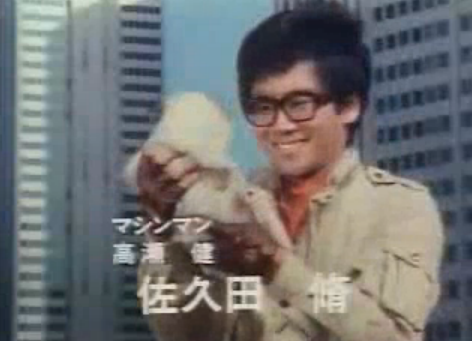
Seiun Kamen Machineman Osamu Sakuta as Ken Takase, Machineman


Travelling in the ship Space Colony, Nick, with the help of tiny robot called Ball Boy (which looks exactly like a baseball) comes to Earth to spend a week studying the behaviour of human beings for his doctorate. Under the human name of Ken Takase, he saves a photographer, Maki Hayama, from an accident, and ends up developing a relationship with her throughout the series. Maki was taking photographs for a report on a building which had been mysteriously demolished. Later, she and Ken find out those responsible: the Tentacle Organization, a gang led by the unscrupulous Professor K, a man who hates children and just wants to get rid of them all, not caring about World domination. Due to this, Nick decides to extend his stay on Earth and use his advanced technology and superior powers to protect his beloved Maki, as well as the children of Earth, under the guise of Machineman. His main weapon, apparently an ordinary sword, is actually a powerful weapon that, when energized, is able to wipe out the deadliest of Professor K's cyborgs. Aside from the sword and its transparent layer, Machineman counts also on the quick Dolphin car that could be changed into a species of spurt. Some episodes later, Machineman succeeds in dismantling Tentacle; however, after that, Professor K flees to Spain and his niece, Lady M, appears. With her aide TonChinkan, they establish a new gang, called "The Octopus". Like her uncle, she too has an allergic reaction to children - so much so that, whenever she is next to one, her nose goes red. In the beginning, she calls up various thieves and legendary criminals from around the world, but later robotic drones are assembled to combat Machineman. By the end of the series, the missing Professor K returns, bringing with him the biggest threat the hero had ever faced: Golden Monsu, a fortified version of Tetsujin Monsu.


MachineMan Opening Theme
Seiun Kamen Machineman Intro


Seiun Kamen Machineman BallBoy Buknoy the Fighting Ball


Looking back at MachineMan now puts a big grin on my face. The show has an absurd set of villains who just wanted to rid the world of all children (facepalm), what strange diabolical plot right? I guess it was a worthy enough cause for a "college student" from another planet to stay on Earth and save the children right? I still remember imitating Machineman by putting cardboards on my head and wearing a spare plastic book cover lying around the house as my MachineMan cape. It was really a show for kids, for only kids can somehow stomach that premise. Its biggest selling point would probably be the effects which was pretty "advanced" during that time, not to mention almost every kid following the series either had a baseball that they called "Buknoy" (BallBoy) in one or more times asthey brought it to school, or drew a pair of eyes on various sports ball (from Tennis balls to even Basketballs) imitating Buknoy. MachineMan was one of the show I personally grew up with, sadly I have little recollections of the show's episodes now. Although the opening theme and what he looks like is stuck on my head.


Seiun Kamen Machineman Kiyomi Tsukada as Maki Hayama


MachineMan IBC 13 Tagalized Tokusatsu Machineman and Buknoy Retro Pilipinas


What about you guys? what are your fondest memories on MachineMan? Share your thoughts in the comments section below:


Seiun Kamen Machineman 1984 Japanese tokusatsu series dubbed in Filipino in IBC 13 90s
Read More

Pintados | GMA 90s Filipino Superhero Show

Pintados, Painted Ones is a Philippine action-adventure super hero television series from GMA Network which ran from September 1999 – April 2000. Pintados follows five ordinary teenagers from all walks of life who also came from families victimized by heinous crimes. The five teenagers were trained in various armed and technological combat and ultimately became part of a secret crime fighting group to preserve, protect and fight for justice.


Pintados GMA Network Super Heroe TV Series Retro Pilipinas Feature


Pintados - The Story
GMA Network's Pintados Plot

After several rich Filipino families become victims of terrible crimes, they agree to set up and fund a foundation to battle the criminals. Under the command of "Guro", an unsanctioned agency of the government sets up a clandestine crime fighting unit. Each of the members is themself a victim of hideous crimes. This elite unit taken from all walks of life take a leaf from Filipino warriors of old, and cloak themselves in armour, ethnic war paint and tattoos, gaining the name "The Pintados" (Painted Ones). Opposing Pintados is the army of the human/reptile hybrid Katana.


Pintados 1999-2000 Pinoy TV Super Hero Group


The Pintados are mentored by Guro (Robert Seña). The Pintados is comprise of Daniel Cervantes a.k.a. DATU (Michael Flores), a swordsman with Kris as his main weapon, a master of Jui-Jistu, and is able to project an energy wave "Enerhiyang Alon" that is capable of knocking people out or blasting through objects; Reewa Zulueta a.k.a. DIWATA (Angelica Dela Cruz), skilled thai kick boxer, has a neutraliser whip as her main weapon, and uses the "Salaming Salamanka" Holographic Imager that is capable of emitting both convincing holograms and holographic force fields; Antonio Sto. Domingo a.k.a. TATTO (Vandolph Quizon), computer expert and genius, uses a Taser Blaster and a Titanium Yo-yo, he uses his stealth shield generator, the "Kalasag ng Hunyango" Chameleon Shield; Maya Feliciano a.k.a. MAYUMI (ASSUNTA DE ROSSI), skilled in Aikido, uses of Nunchuks and is also armed with a yellow laser -the Yellow Flame; and Pido Zapata a.k.a. KIDLAT (Sherwin Ordoñez), specialist in street fighting, armed with the "Latigong Kidlat" Electromagnetic Pulse Blast which can disrupt any electronic or mechanical devices in it's blast radius. Their villains roster includes Anak Araw - Albino Crime Syndicate leader, Manananggal, Katana - a human-reptile hybrid, Dr. Virus, Damarama, Uno Dos Tres, and Thundara.


Pintados Datu, Diwata, Tatto, Mayumi, Kidlat


Pintados could very well be the first time that GMA Network adapted the fantasy series genre, not to mention adapting the popular super sentai series format of Japan. Just look at them, a group comprises of five teenagers transforming into crime fighters. Pintados also featured a kick-ass opening theme from Philippine's Master rapper himself, Francis Magalona. Too bad as I haven't seen any Pintados opening theme videos over at Youtube.


Pintados GMA Network Series Retro Pilipinas Pintados Show Title Logo


What are you fondest memory or how about most memorable episode of Pintados? Share your thoughts about Pintados in the comments section below:

Read More

Saber Rider and the Star Sheriffs | IBC - 80s , RPN - 90s

Saber Rider and the Star Sheriffs was another Japanese animated series (anime) entitled Star Musketeer Bismarck (星銃士ビスマルク Seijūshi Bisumaruku) adapted and dubbed by World Events Productions for its US audience. The cartoon show was heavily censored that time the once was conservative USA, but still made the series one of the most popular cult classics to date. Saber Rider and the Star Sheriffs was first picked up by IBC (Intercontinental Broadcasting Network) here in the Philippines.

Saber Rider and the Star Sheriffs Philippines IBC 13 Run 80s 90s


Saber Rider and the Star Sheriffs
Americanized Show's Premise

In the distant future humans have spread beyond Earth and colonized planets across the universe, creating a New Frontier of man. In order to protect these new settlers and maintain laws and regulations in the New Frontier, Earth's Cavalry Command was created. Cavalry Command is in essence a military organization, maintaining an army and fleet of ships to protect the New Frontier. Within Cavalry Command is a unit of special operatives known as Star Sheriffs that functioned as field agents, investigating crimes and plots against the security of the New Frontier.

Saber Rider and the Star Sheriffs Americanized Japanese Anime 80s


The main foe of Cavalry Command and the Star Sheriffs is a race of non-human creatures known as Vapor Beings (or Outriders) that jumped into our dimension in order to conquer it. They attack the settlers, destroy settlements, and kidnap humans in order to mine various metals or crystals from the soil.

Outriders are superior to humans in battle technology, possessing a legion of gigantic robots with uncanny firepower against which the space-going fleets of Cavalry Command are no match. In order to have a chance against such supremacy, Cavalry Command develops a prototype ship known as the "Ramrod Equalizer Unit" (or just Ramrod) that has the ability to turn from a spaceship into a powerful robot that can fight the Outriders on equal terms.

Saber Rider and the Star Sheriffs 80s Cartoon Series


Saber Rider occasionally referred to by the nickname of 'Top Sword' in the American version) is the leader of the group and often rides a robotic horse named Steed. Fireball was once a race car driver and the youngest champion of all time. He drives a race car he calls the Red Fury Racer/Turbo, which is armed with an extensive arsenal of weapons. He has a somewhat quick temper and at one time boasted of his perfect memory. Colt is introduced in the series as a bounty hunter on the trail of Vanquo, an Outrider spy. He holds an almost infallible accuracy with firearms and serves as the gunner on board Ramrod, controlling the six-iron while Fireball controls the chest cannons. For personal transportation and solo battles he uses a blue and white one-man spaceship he calls the Bronco Buster. April Eagle is the daughter of Commander Eagle, and the engineer who designed and was in charge of Project Ramrod. She was trained at Cavalry Command under General Whitehawk.

Saber Rider and the Star Sheriffs Opening Theme
Saber Rider and the Star Sheriffs Intro


"Saber Rider"
Composed by Dale Schacker
Artist: Dale Schacker


Saber Rider and the Star Sheriffs 80s 90s Cartoon Show Kids Show Characters


Like any other Americanized cartoons, Saber Rider and the Star Sheriffs featured a catchy and memorable upbeat main theme. It is a tokusatsu series but in animation, so there are transformations and mechas. What about you guys, what's your fondest memory of the Saber Rider and the Star Sheriffs? Share your thoughts in the comments section below:
Read More